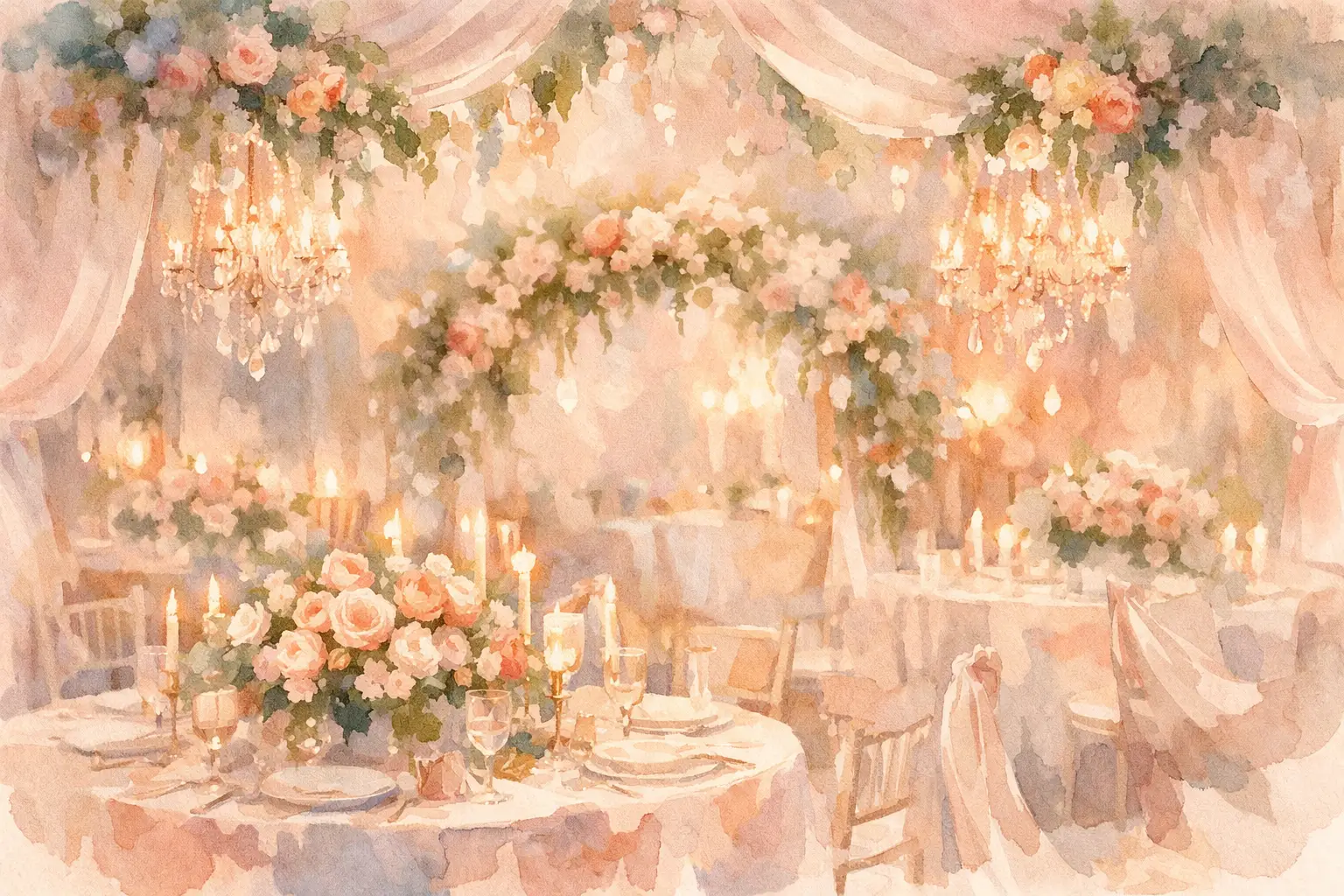
A beautiful room rarely comes together because of one dramatic piece. The wedding decor that guests remember is often the feeling created by many details working in harmony: welcoming tables, soft floral textures, thoughtful color, a meaningful focal point, and enough breathing room for each element to be seen.
For couples planning a wedding in Greater Boston or elsewhere in Massachusetts, décor is an opportunity to shape the atmosphere before the first toast is made. It can feel romantic and layered, modern and clean, richly celebratory, or quietly elegant. The goal is not to fill every corner. It is to make the space feel intentional, personal, and complete.
Start Wedding Decor With the Feeling, Not the Pieces
It is tempting to begin with a list of items: centerpieces, candles, a backdrop, flowers, charger plates. Those details matter, but they make stronger design choices when they are guided by a clear feeling first.
Think about how you want guests to experience the room. A formal ballroom may call for elevated centerpieces, reflective accents, and a color palette with depth. A light-filled venue can feel beautiful with softer florals, gentle candlelight, and table styling that does not compete with the natural surroundings. A more intimate gathering may benefit from low arrangements and warm details that encourage conversation across the table.
A design direction does not need to be complicated. It may begin with a few words: soft and romantic, classic with gold accents, modern neutrals, garden-inspired, or bold and celebratory. These words give every décor decision a purpose. They also help prevent the room from feeling as though each table was decorated separately.
For cultural weddings and family celebrations, the visual direction can also make room for meaningful colors, ceremonial seating, textile details, or a focal display that reflects the occasion. There is no single look that represents a Sudanese or Arab wedding, a henna night, or an Eid celebration. The most thoughtful styling begins by listening to what matters to the family and translating those details into a cohesive setting.
Let the Tables Carry the Room
At most receptions, guests spend more time at their tables than anywhere else. That makes table décor one of the most powerful parts of the overall design. A well-styled table does more than look polished in photographs. It gives guests a sense that they have arrived somewhere cared for.
Centerpieces are often the visual anchor. Their height, shape, color, and texture influence how the entire room feels. Tall arrangements can add drama and make a spacious room feel more elevated. Lower floral designs can create a warm, conversational atmosphere and allow guests to see one another easily. A mix of heights can add movement, especially in a larger reception space, but it needs a consistent color story and vessel style to avoid looking busy.
The surrounding layers matter just as much. Linens establish the base. Chargers, napkins, candleholders, glassware, and floral accents add dimension. A simple palette can still feel rich when the textures are considered: matte linen beside clear glass, soft blooms beside metallic details, or crisp white table settings warmed by candlelight.
It depends on the room, of course. A venue with patterned carpeting, ornate chandeliers, or colorful walls may need a more restrained table design. In a clean, neutral space, the tables can carry more color or texture. Good wedding décor responds to what is already there rather than trying to compete with it.
Choose Centerpieces for Beauty and Comfort
The right centerpiece is not only attractive from across the room. It should work for the guests seated around it. Very tall designs should have open space beneath the florals so sightlines remain clear. Low arrangements should stay compact enough that guests do not have to look around them throughout dinner.
Candlelight is another useful layer, but it should support the centerpiece rather than disappear beneath it. A grouping of candles at varied heights can give the table a soft evening glow. During daytime receptions, glass, greenery, and floral texture may have more visual impact than candles alone.
When choosing between one centerpiece style and a mix, consider the scale of the event. A single repeated design creates a calm, formal rhythm. Two or three coordinated styles can feel more layered and custom, particularly when they share the same blooms, vessels, and color palette. More variety is not automatically better. Consistency is what makes the room feel polished.
Create One or Two Meaningful Focal Moments
Not every wall needs décor. Instead, focus attention where guests naturally gather, enter, or take photographs. A ceremony backdrop, sweetheart table, stage, head table, welcome area, or cultural seating display can become a visual moment that gives the celebration its own identity.
The strongest focal displays are connected to the table design without duplicating it exactly. If the tables feature soft ivory florals and gold details, the backdrop might introduce fuller floral groupings, layered draping, or a warm metallic frame. If the reception palette is bold, the focal area can use that color with more scale while keeping the supporting details refined.
Scale is especially important here. A small backdrop in a large ballroom can feel lost, while an oversized installation in a more intimate room can overwhelm the space and leave little room for guests. The architecture, ceiling height, and placement of the focal point all affect what will feel balanced.
For henna nights, engagement celebrations, and other culturally meaningful events, a styled seating area or backdrop can become a natural center of attention. It can frame traditional attire, family photographs, and ceremonial moments while still feeling connected to the rest of the room. The design should reflect the hosts’ preferences, rather than relying on a generic version of cultural décor.
Use Color With Restraint and Purpose
A wedding color palette does not need to be limited to two colors, but it does need a hierarchy. Choose a main tone that appears throughout the room, one or two supporting colors, and a small accent that adds contrast. This approach gives the design depth without making the space feel scattered.
Neutrals are often misunderstood as plain. Ivory, champagne, taupe, soft gray, and black can be exceptionally expressive when paired with texture and thoughtful floral choices. Similarly, richer colors such as burgundy, emerald, cobalt, plum, or deep red can feel elegant when balanced with a quieter base.
Florals are a natural place to introduce variation, but they should not be asked to do all the work. Repeating a color through napkins, candles, menu details, stage accents, or backdrop elements allows the room to feel connected from every angle. Even a small repeated detail can make the design feel deliberate.
Make the Décor Feel Personal Without Overcrowding It
Personal style is not always about monograms or custom signs. It can show up in the color choices that feel most like you, the flowers that remind you of home, a meaningful fabric, or the way a focal display honors a family tradition. These touches are often more memorable when they are placed thoughtfully instead of added everywhere.
A common décor mistake is treating every surface as an opportunity to add something. More candles, more flowers, more signage, more color, more props. Yet an elegant room needs negative space. Guests should be able to notice the centerpiece, appreciate the place setting, and see the architecture of the venue without visual clutter.
This is where professional styling can make a real difference. It is not simply about selecting beautiful pieces. It is about understanding proportion, layers, lighting, and how every element will read once the room is full of people. The finished space should feel natural, even though each visual choice has been considered.
A Thoughtful Look From First View to Final Toast
Wedding décor has a quiet way of setting the tone. Guests notice it as they enter, feel it as they sit down, and carry it with them in the photographs and memories made throughout the celebration.
At Sue’s Elegant Events, the focus is on creating coordinated centerpieces, table décor, backdrops, and focal displays that help a wedding space feel warm, refined, and true to the people celebrating in it. Begin with the feeling you want to create, then let every detail support it. That is how a room becomes more than decorated – it becomes memorable.