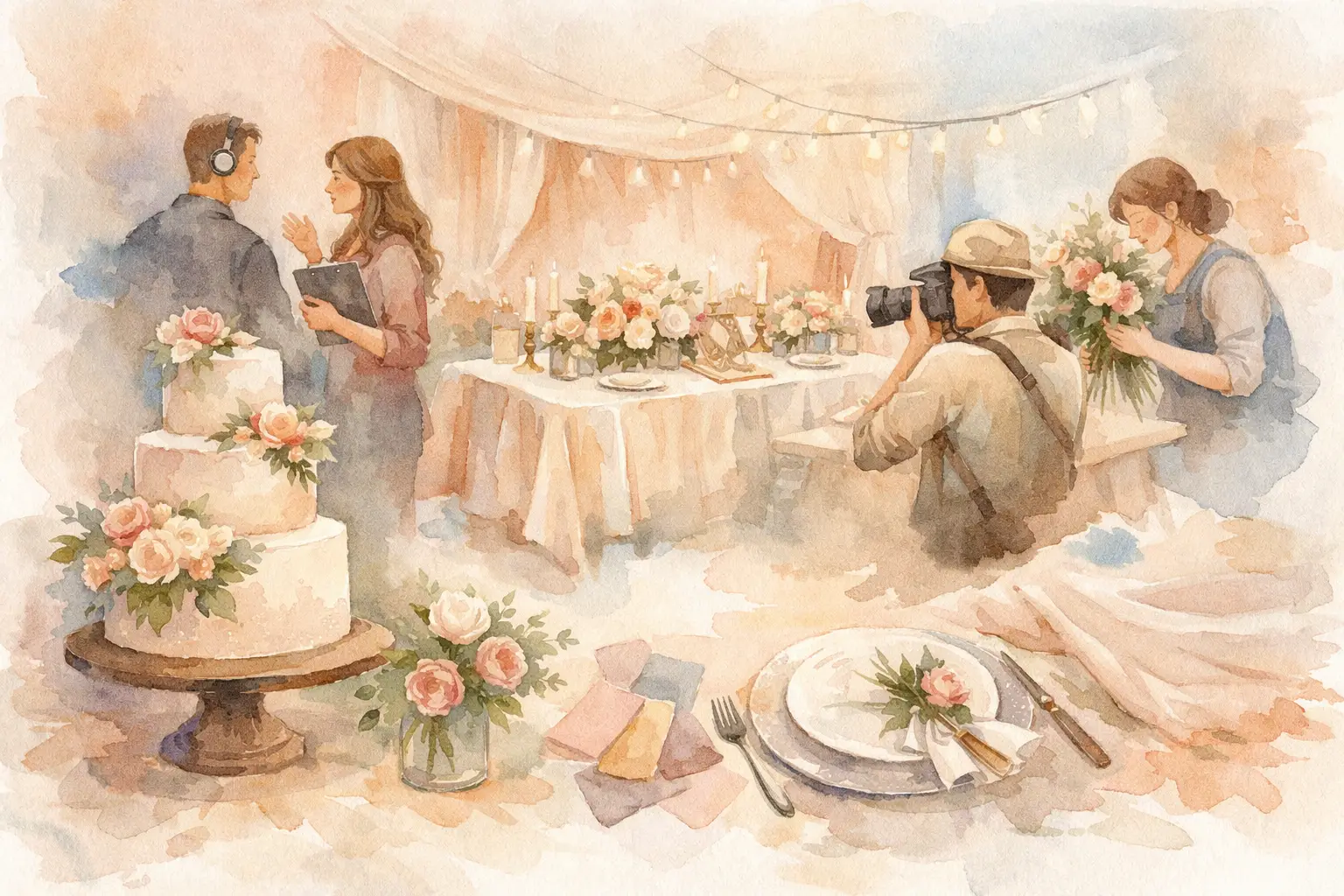
A reception can have beautiful flowers, lovely rentals, excellent lighting, and a talented photographer, yet still feel visually disconnected. The difference is often in how to coordinate event vendors around one clear design direction. When every creative partner understands the atmosphere you want to create, the room feels intentional from the first guest arrival through the last photograph.
For weddings, henna nights, Eid celebrations, baby showers, and milestone gatherings, vendor coordination does not have to mean managing every detail yourself. It means giving the people shaping the event a shared visual reference, clear information, and enough lead time to make thoughtful choices. A décor and styling team can help define that visual direction, while you or your event planner remains the point person for logistics and vendor decisions.
Begin With the Feeling, Not a Shopping List
Before discussing centerpieces, chair styles, linen colors, or backdrop dimensions, describe how you want the celebration to feel. Words such as warm, formal, romantic, modern, joyful, intimate, or grand give your vendors a starting point that a long list of individual décor items cannot.
For a wedding reception, you may want soft candlelight, layered ivory linens, full floral arrangements, and an elegant focal display behind the sweetheart table. For a henna night, your vision may center on rich color, intricate details, comfortable lounge seating, and a backdrop that honors the significance of the gathering. The visual choices will be different, but the principle is the same: start with the feeling and let each element support it.
Create a simple design brief with your event date, venue, guest count, key colors, inspiration images, and the areas that matter most to you. Include notes on what you do not want as well. Saying that you prefer refined and airy over rustic, or colorful and celebratory over minimalist, can prevent well-meaning but mismatched suggestions later.
Give Every Vendor the Same Visual Reference
The most useful tool for coordinating event vendors is a focused inspiration board. It should not be a collection of every beautiful image you have saved. Choose images that consistently show the color palette, floral mood, table style, lighting, stationery tone, and overall level of formality you want.
Try to include a few images of complete spaces rather than only close-ups. A single centerpiece may look beautiful on its own, but it needs to work with the ballroom carpet, tables, chairs, stage, ceiling height, and natural light. Wide images help a florist, rental company, décor stylist, photographer, and stationery designer understand the larger picture.
Share the same current version with everyone involved in the visual experience. If your palette changes from blush and gold to ivory and soft green, tell each vendor promptly. Small changes can affect flower availability, napkin selection, candle colors, signage, draping, and even which details photograph most naturally.
Keep the palette flexible, but defined
A cohesive palette does not require every item to match perfectly. In fact, too much matching can make a room feel flat. Choose two or three main colors, then identify the supporting tones and finishes that will tie the look together. For example, ivory, sage, and muted gold might be supported by clear glass, warm candlelight, and natural greenery.
This approach gives creative professionals room to work while protecting the overall vision. If every vendor receives only the instruction to use “green,” one may choose emerald, another may choose olive, and a third may use blue-green. Those differences may be beautiful individually, but they can compete in the finished space.
Make the Room Part of the Conversation
Venue details shape décor more than many clients expect. Ceiling height, wall color, table size, built-in carpeting, lighting, entrances, and the location of the dance floor all influence what will look balanced. A centerpiece designed for a bright room with round tables may not have the same effect in a dim ballroom with long banquet tables.
Provide your décor professional with the venue’s floor plan, room photographs, and any available table or chair information as early as possible. This helps determine how table décor, floral styling, backdrops, stages, and focal displays can be placed with purpose. It also helps avoid a common disappointment: selecting an inspiration image created in a very different type of space.
If the venue has a strong existing feature, work with it rather than against it when possible. Tall windows may call for designs that preserve the view. A dramatic staircase may need only a refined floral moment rather than extensive décor. A large stage may benefit from a backdrop that gives it presence without overwhelming the room.
How to Coordinate Event Vendors Around Key Design Moments
Not every event area needs equal attention. Identify the places guests will see first, gather around most, and photograph often. These are usually the ceremony area, welcome table, head or sweetheart table, guest tables, stage or backdrop, cake display, and entrance.
Once you identify those moments, communicate who is responsible for each visual layer. For example, the décor stylist may create the centerpiece plan and backdrop, the florist may provide personal flowers or selected blooms, the rental company may supply linens and chairs, and the stationer may create menus and place cards. There can be overlap, but it should be discussed before items are ordered or designed.
A shared visual plan is especially valuable for focal areas. If a backdrop includes floral styling, draping, signage, furniture, and lighting, all contributors need to understand the dimensions, colors, and placement. One additional element can improve the display, but too many competing details can make it feel crowded.
Think about scale, not only color
Visual coordination is also about proportion. Low centerpieces allow easy conversation and work well when the room already has height through draping, chandeliers, or a statement backdrop. Tall arrangements can add drama in a spacious room, but they need appropriate table size and sightlines.
The same is true for signage, cake stands, candles, and lounge furniture. A small welcome sign can disappear in a large entrance, while an oversized floral installation may overpower an intimate gathering. Ask vendors to reference room dimensions and surrounding elements when discussing scale.
Set Clear Communication Boundaries
A thoughtful design process benefits from one person who gathers approvals and shares updates. For some events, that person is the client. For others, it is a wedding planner, family member, or designated host. The role is not to control every creative decision. It is to make sure changes are communicated consistently.
If you are working with several vendors directly, keep messages specific. Confirm final colors, quantities, dimensions, and what each person is providing. When you make a change, send it in writing to everyone affected. A revised guest-table count may change linens, centerpiece quantities, place cards, and table assignments. A new stage layout may affect the backdrop and floral placement.
It is also helpful to respect each professional’s area of expertise. A décor stylist sees how the tables, focal displays, and room details connect. A photographer can advise on lighting and photo locations. A florist understands seasonality and flower behavior. Clear collaboration gives each person the information needed to do their best work without asking one vendor to take responsibility for services outside their role.
Allow for Thoughtful Alternatives
Some design choices depend on availability, venue rules, weather, or timing. Flowers may be seasonal, a venue may restrict open flames, or a particular rental item may no longer be available. These moments do not have to derail the look when the underlying vision is clear.
Instead of approving substitutions one item at a time, return to the design brief. If the goal is soft, romantic texture, there may be several floral or candle options that create that feeling. If the goal is a rich, celebratory cultural display, color, fabric, metallic accents, and layered details can be adjusted while maintaining the intended atmosphere.
Ask your creative vendors to explain how an alternative supports the overall design. The best replacement is not always an exact copy of the original idea. It is the option that still belongs in the room.
Protect the Final Details
As the event approaches, confirm the visual details that are easy to overlook: table numbers, menu colors, napkin folds, charger plates, candle holders, welcome signage, cake display styling, and any personal items you want included. These smaller pieces often appear together in guest photos, so they deserve the same attention as the larger installations.
For clients in Greater Boston and throughout Massachusetts, venue styles can vary widely, from classic ballrooms to waterfront spaces and intimate private settings. A design that feels right should respond to the room while still reflecting the people being celebrated. Sue’s Elegant Events approaches décor with that balance in mind, creating centerpieces, table styling, backdrops, and focal details that feel connected rather than assembled one piece at a time.
The goal is not for every vendor to create the same thing. It is for every contribution to feel as though it belongs to the same celebration. When the design vision is clear and communication stays focused, guests may not be able to name every detail that works, but they will feel the beauty of the room the moment they step inside.