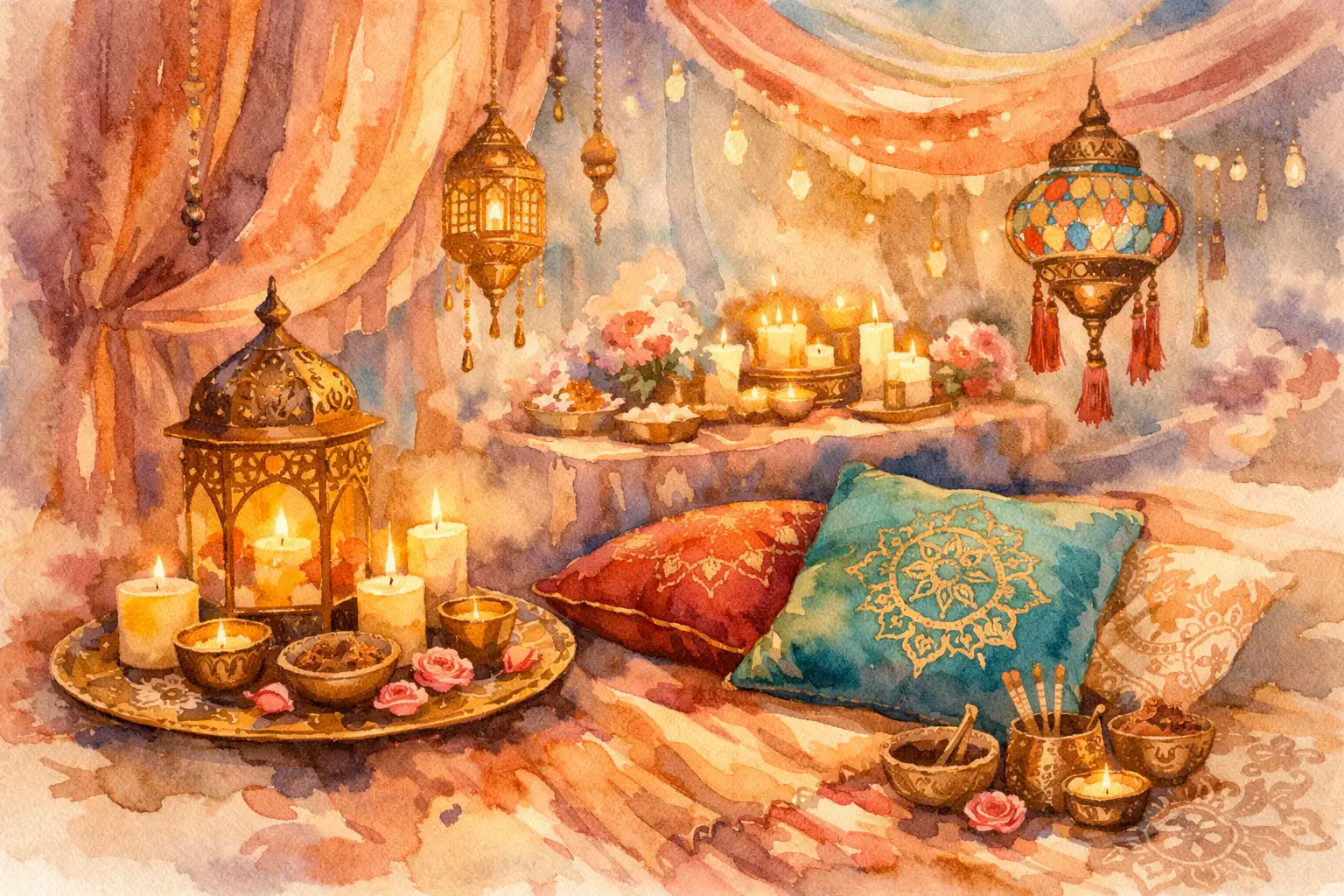
A henna night is often one of the most expressive gatherings surrounding a wedding celebration. It is filled with color, family, music, beautiful clothing, and meaningful tradition. The right henna night decor should support that energy, creating a setting that feels festive and layered while still leaving room for the people, rituals, and joyful moments at the center of the evening.
Rather than treating the space as a collection of separate decorations, begin with the feeling you want guests to have when they arrive. A polished henna night can be vibrant and full of detail without feeling crowded. The difference is a clear visual direction carried through the backdrop, seating, tables, florals, lighting, and smaller finishing touches.
Start With the Focal Moment
Most henna night decor begins with one visual anchor: the seating area for the bride, couple, or guest of honor. This is where photographs gather, family members take turns offering their blessings, and the room naturally directs its attention. It deserves more than a backdrop placed against a bare wall.
A well-styled focal area usually brings together height, texture, and color. Draping can soften the room and create an immediate sense of occasion. Floral arrangements add movement and dimension, while lanterns, patterned rugs, pillows, or low tables make the space feel welcoming rather than staged. A statement settee or pair of chairs can give the seating area presence without overwhelming the rest of the room.
The best approach depends on the venue and the celebration’s style. In a ballroom or event hall with high ceilings, a taller backdrop and fuller florals may be needed to hold the space visually. In a home gathering or intimate room, a lower, more layered design can feel warmer and more appropriate. Scale matters as much as color.
Let Color Lead the Design
Henna nights offer room for rich color, but that does not mean every shade needs to appear at once. Choose a primary palette, then build supporting tones around it. Jewel tones such as emerald, ruby, sapphire, plum, and deep teal create a dramatic atmosphere. Blush, peach, gold, ivory, and soft sage can feel lighter while still honoring the celebratory character of the occasion.
Gold is often a natural accent because it reflects candlelight and pairs beautifully with warm textiles, metallic lanterns, and floral styling. Still, gold works best as a detail rather than the entire design. It can appear in table vessels, charger plates, candleholders, backdrop trim, or signage, giving the room a consistent thread without making every surface compete for attention.
When the bride’s outfit is especially colorful or detailed, consider how it will look against the focal backdrop. A backdrop that is too similar can cause the clothing to disappear in photographs. A complementary shade, softer neutral layer, or contrasting floral frame helps the bride remain visually distinct.
Build Henna Night Decor in Layers
A beautiful room has depth. This is especially true for henna night decor, where textiles, patterns, lighting, and florals often work together. The goal is not to fill every available area. It is to create intentional layers that make the room feel complete from every angle.
Start with the largest surfaces. Draping, a backdrop, wall panels, or a floral installation establish the setting. Then add mid-level elements such as chairs, pedestals, lanterns, side tables, and floral arrangements. Finally, bring the design closer to the guest with tabletop details, candles, napkins, and small decorative accents.
Pattern can add personality, particularly through rugs, fabric, table runners, or cushions. It is usually strongest when balanced with solid-colored pieces. For example, a richly patterned rug beneath a more streamlined seating area can feel grounded and elegant. Several unrelated patterns across the backdrop, linens, and tables may make the overall look feel busy.
Use Lighting for Warmth, Not Just Brightness
Lighting changes the way every decorative choice is seen. Warm candlelight and softly glowing lanterns can make saturated colors feel richer and create a welcoming atmosphere around the seating area and guest tables. They also add dimension to evening photos, especially when paired with reflective metallic details.
There is a practical side to this choice. If the room is already strongly lit, a large number of small lights may get lost. In that case, use lighting near focal areas, tables, and entry moments where it has a clear visual purpose. If the gathering takes place later in the evening or in a dimmer space, layers of lanterns and candles can become a more central part of the design.
For safety and ease, flameless candles may be the better fit for some venues or family gatherings. They can still create a soft, celebratory glow when styled thoughtfully among florals, glass vessels, and metallic accents.
Give Guest Tables Their Own Sense of Occasion
The stage or backdrop may draw attention first, but guest tables shape the experience for the majority of the evening. They should feel connected to the focal display without becoming smaller copies of it.
Centerpieces are an opportunity to repeat the color palette in a way that feels refined. Low floral arrangements keep sightlines open and make conversation easier. Taller centerpieces can bring drama to a spacious room, especially when paired with clear stands, gold vessels, or hanging elements. Mixing heights across the room can be beautiful, but the repetition should be deliberate so the tables still read as one design.
Linens play a quieter but essential role. A simple tablecloth may be the right foundation when flowers, chargers, and glassware are already detailed. If the room needs more color or texture, a runner or overlay can add interest without competing with the centerpiece. Small elements such as napkin presentation, votives, and place settings are where a cohesive design feels especially considered.
Honor Tradition Through Meaningful Details
Every henna celebration is personal. Customs, family heritage, preferred colors, and the size of the gathering can differ greatly. Decor should never assume that one visual formula represents every Sudanese, Arab, South Asian, Middle Eastern, North African, or Muslim celebration. The most meaningful designs begin with listening to what matters to the family.
That may mean making space for a cherished tray, incorporating colors with personal significance, styling a dedicated display for gifts or sweets, or choosing florals that connect with the family’s vision. These details do not need to be explained to every guest to make an impact. When placed with care, they make the event feel like it belongs to the people celebrating it.
A custom sign can also be lovely when it fits the atmosphere, whether it features the bride’s name, the couple’s names, or a simple welcoming message. Keep the wording and styling clear enough to read in photographs. Ornate details are beautiful, but legibility still matters.
Avoid a Decorated-but-Disconnected Look
The most common styling challenge is not a lack of decorations. It is too many pieces that do not relate to one another. A bright backdrop, unrelated table linens, different metallic finishes, and disconnected florals can make a room feel assembled rather than designed.
Choose two or three elements to repeat throughout the setting. This could be a particular floral color, a gold finish, a fabric texture, or a motif. Repetition gives the eye somewhere to rest and makes even a detailed design feel intentional.
It is also worth protecting open space. Guests need room to move, greet one another, and enjoy the celebration. A grand focal area can feel more striking when it is not surrounded by competing displays. The same principle applies to tables: a centerpiece should enhance conversation, not block it.
Create a Setting Worth Gathering In
A polished henna night does not need to follow a single aesthetic. It may be bold and jewel-toned, soft and floral, modern and minimal, or richly layered with traditional-inspired details. What matters is that the decor reflects the family and creates a setting that feels generous, welcoming, and thoughtfully composed.
For celebrations in Greater Boston and surrounding Massachusetts communities, Sue’s Elegant Events approaches henna night styling with attention to the full visual picture, from the first focal moment to the final tabletop detail. When the colors, textures, and meaningful elements work together, the room becomes more than a backdrop for the evening. It becomes part of the memory guests carry home.