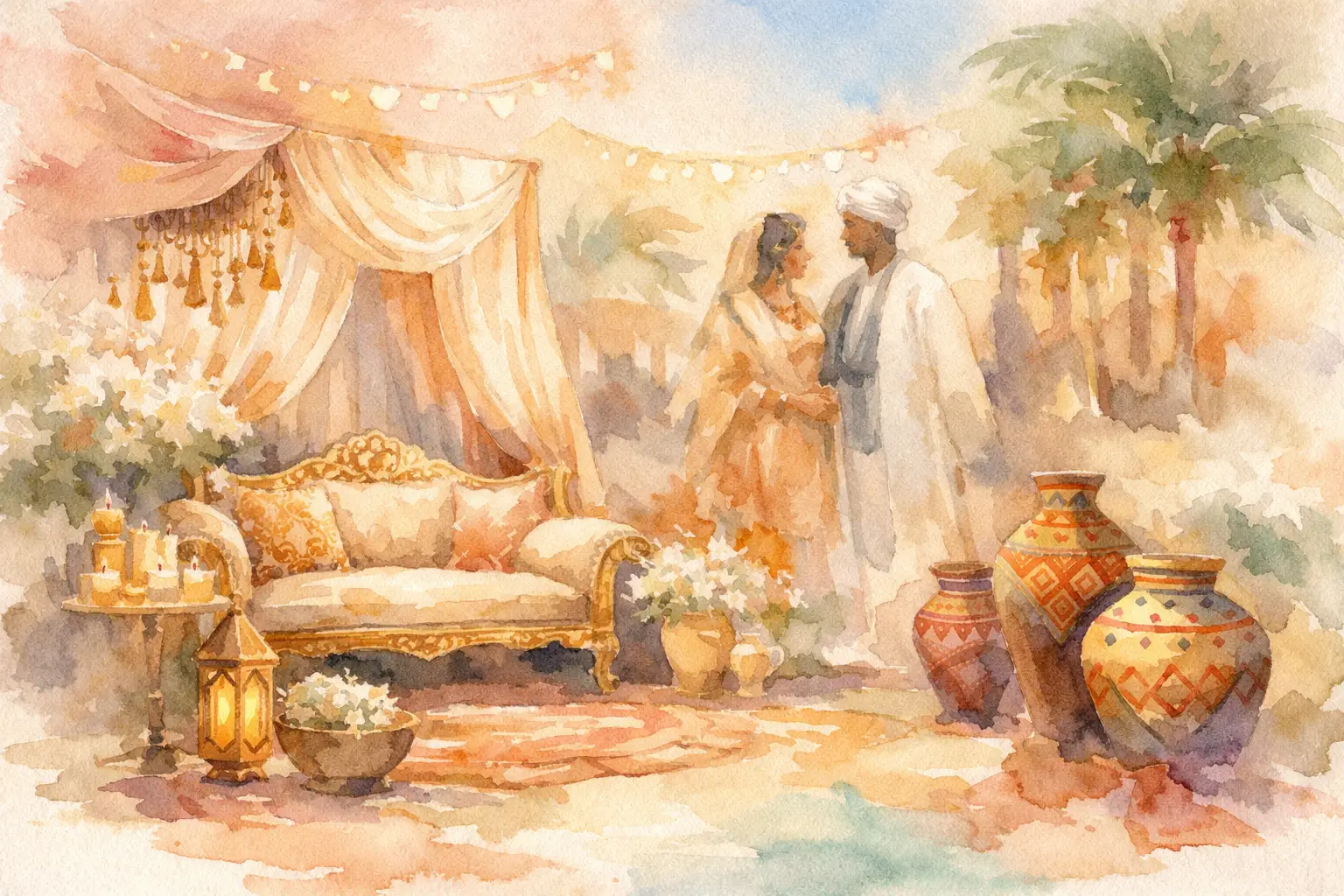
A Sudanese wedding can hold many beautiful visual moments at once: a welcoming entrance, richly dressed tables, a stage that draws the eye, and a room filled with color, light, and family. The most memorable Sudanese wedding decor does not treat those pieces as separate decorations. It gives them a shared feeling, so the room looks polished while still reflecting the couple and the celebration around them.
For couples and families in Greater Boston, the goal is often not to make a reception look like a copy of someone else’s wedding. It is to create a setting that feels festive, graceful, and personal from the first photograph to the final gathering of loved ones. That begins with thoughtful styling choices, not simply more décor.
Start With the Feeling You Want Guests to Notice
Before choosing flowers, linens, or a backdrop, consider the feeling the space should carry. Some couples are drawn to a formal, romantic look with ivory florals, candlelight, and soft gold details. Others want a brighter palette with rich jewel tones, warm metallics, or floral color that brings energy to the room. Neither approach is more authentic than the other. The right direction depends on the couple’s taste, family preferences, venue setting, and the particular events being celebrated.
Sudanese wedding celebrations can be beautifully varied. Traditions, regional backgrounds, and family customs are not identical from one wedding to another, so décor should never rely on a single assumption about what a Sudanese celebration must look like. Instead, meaningful references can be introduced through color, pattern, fabrics, floral choices, or the way a focal area is styled.
A strong design has a clear point of view. It might be soft and luminous, dramatic and glamorous, or clean and modern with a few richly detailed accents. Once that feeling is established, every visual element has a role to play.
Sudanese Wedding Decor Begins With a Cohesive Palette
Color is one of the fastest ways to transform a ballroom, banquet hall, or private event space. A thoughtful palette keeps the room connected, especially when there are several areas to style. The reception tables, sweetheart table or stage, welcome display, and backdrop should look as though they belong to the same celebration.
Gold remains a natural choice for many elegant wedding designs because it brings warmth without competing with florals. It pairs beautifully with white, blush, champagne, emerald, burgundy, black, or deep navy. Used with restraint, gold can appear in chargers, candleholders, table accents, backdrop details, or pedestal pieces without making the design feel overly formal.
For a softer room, ivory and white flowers with glassware and warm candles create a clean, elevated foundation. For more depth, introduce one or two accent colors through blooms, napkins, draping, or select table details. Keeping the palette focused is often more effective than trying to feature every favorite color at once.
Lighting changes how every color reads. A reception space with warm lighting may make gold and cream feel especially inviting, while a brighter room can support stronger floral color and bolder contrast. This is why the venue’s existing walls, carpet, chairs, and lighting should be considered early in the décor process. Beautiful pieces can lose impact if they are selected without the room in mind.
Let the Tables Carry the Reception Design
Guests spend much of the celebration at their tables, which makes tablescape design central to the overall experience. A well-styled table feels complete from every angle, but it also leaves room for conversation, food service, and guests to see one another comfortably.
Centerpieces are often the visual anchor. Tall arrangements can give a room a grander feeling and help fill a space with high ceilings. Low, lush arrangements create intimacy and allow open sightlines across the table. Mixing heights can make a larger reception feel layered and dynamic, as long as the elements repeat with purpose rather than appearing random.
The base of the table matters just as much as the flowers. Linens set the backdrop, while chargers, napkins, candles, and small accent pieces bring structure and texture. A clear glass vase may suit a light, airy design; gold pedestal vessels can create a more traditional sense of occasion; a modern floral compote can soften a contemporary room.
There is a practical trade-off with elaborate centerpieces. Larger designs make a strong statement, but they require enough table space and should not crowd place settings or block guests’ view. The most effective choice is not automatically the tallest or fullest arrangement. It is the one that supports the room’s scale and the comfort of everyone seated there.
The Head Table or Sweetheart Table Deserves a Different Layer
The couple’s table is usually photographed often and seen from across the room. It should connect to the guest tables while receiving a little more visual attention. That might mean fuller florals, a floral runner, layered candles, a custom backdrop, or coordinated draping behind the couple.
The key is proportion. If the head table has a major floral installation, a simpler backdrop may allow the flowers to remain the focus. If the backdrop is the statement piece, the table design can be more restrained. Giving every element equal visual volume can make the area feel busy rather than elegant.
Create a Focal Display That Feels Worth Gathering Around
A focal display gives guests a visual destination. It may frame the couple’s seating area, welcome guests at the entrance, or create a beautiful setting for family photographs. Backdrops, floral walls, layered panels, draping, plinths, and statement arrangements can all work well when they are designed as part of the larger room.
For Sudanese wedding décor, a backdrop can be especially meaningful because it creates a setting for important moments and portraits. The best designs balance presence with flexibility. A detailed floral wall may be perfect for a ballroom with a simple stage, while a more architectural backdrop can bring definition to a plain wall without covering the entire room.
Scale should guide the decision. A small backdrop may disappear behind a long head table or in a large venue. On the other hand, a very large installation can overwhelm a more intimate room. Looking at the space as a whole helps determine whether the design needs height, width, color, texture, or simply a stronger central frame.
Add Cultural Detail With Care, Not Decoration for Its Own Sake
Personal details often make wedding décor feel most meaningful. They may be inspired by family heirlooms, favored flowers, treasured colors, traditional dress, or the atmosphere of a henna night held alongside the wedding festivities. These references do not need to be literal to be felt.
For example, a rich fabric texture, a warm brass finish, or a vivid floral accent can echo the celebration’s personality without turning the design into a theme. This approach tends to photograph beautifully because it feels intentional rather than staged.
Conversations matter here. Couples and families may have strong preferences about color, formality, and the visual setting for particular traditions or gathering spaces. A décor professional should listen closely, ask thoughtful questions, and make room for the details that carry personal meaning. Respectful design is not about applying a preset cultural look. It is about creating an environment that feels right to the people celebrating in it.
Choose Décor That Looks Beautiful in the Room and in Photos
Photographs capture details guests may only notice briefly, but the room must still feel beautiful in person. Candlelight, reflective surfaces, floral texture, and layered linens add dimension that cameras tend to love. Yet décor should not be designed for photos alone. Guests should be able to move through the space comfortably and enjoy the celebration without navigating around oversized displays.
A good balance includes one or two high-impact areas, such as the couple’s table and a photo-ready backdrop, supported by well-finished guest tables. This creates visual rhythm across the venue instead of concentrating every decorative decision in one corner.
At Sue’s Elegant Events, styling begins with seeing how these details can work together: the flowers, tables, backdrop, colors, and focal moments that turn an event space into a setting that feels welcoming and complete. For a Sudanese wedding, the most beautiful décor is never just a collection of pretty pieces. It is a thoughtful frame for the joy, family, and memories already filling the room.