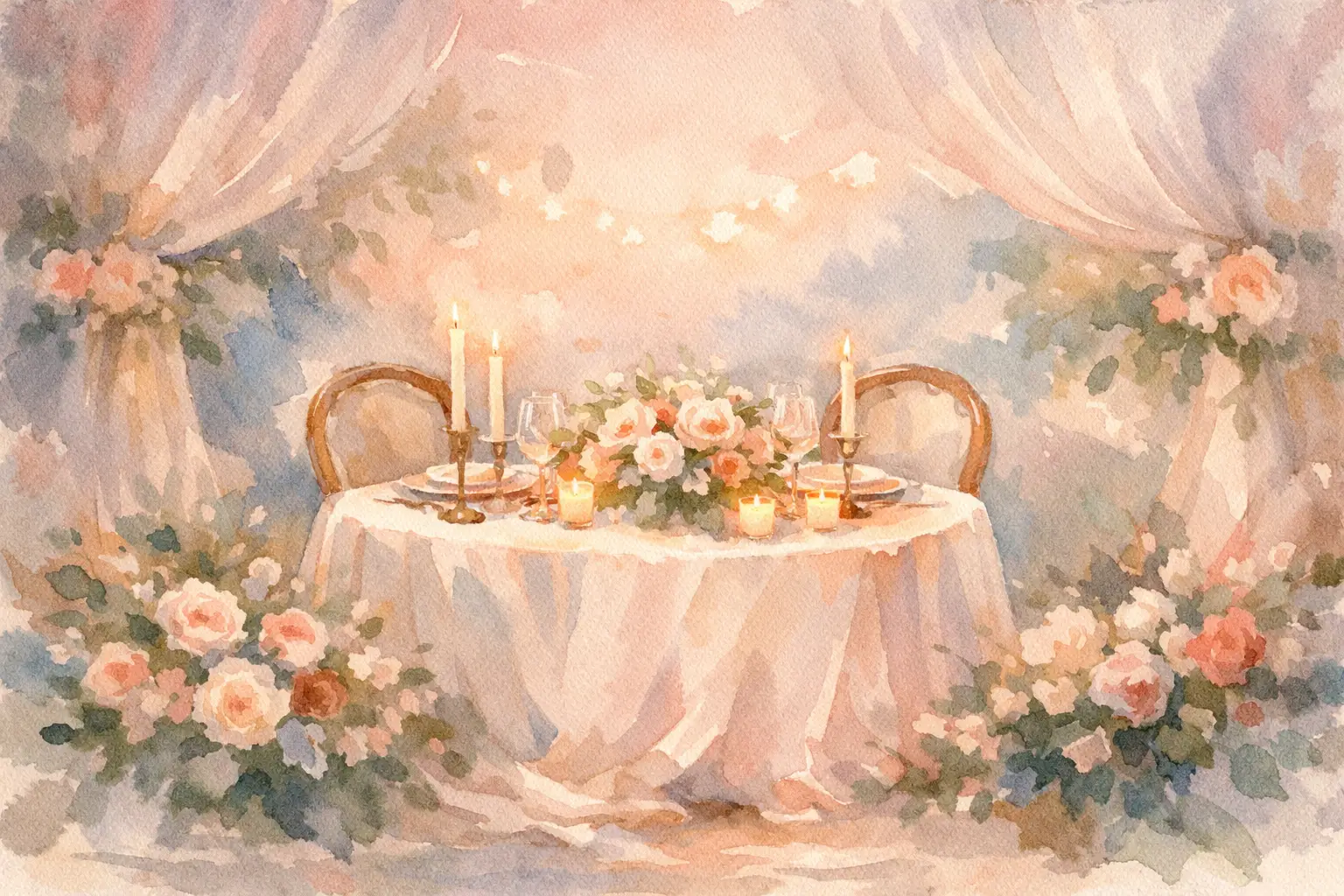
A sweetheart table is a small setting with a very visible role. It is where the couple pauses between greetings, speeches, and dancing, and it often becomes the visual center of the reception room. Knowing how to style sweetheart table décor thoughtfully means creating a beautiful focal point without making the space feel crowded, disconnected, or difficult to enjoy.
The most memorable sweetheart tables feel like a natural extension of the wedding design. Their flowers, linens, candles, and backdrop relate to the room around them, while a few intentional details set the couple’s place apart.
Begin With the Room, Not Just the Table
Before choosing flowers or signage, consider what will sit behind and around the sweetheart table. A beautiful arrangement can lose its impact if it is placed against a blank wall, beneath distracting fixtures, or too far from the rest of the reception décor.
Look at the table as part of a full visual frame: the chairs, the floor, the backdrop or draping, surrounding florals, and the guest tables within view. In many ballrooms and banquet spaces around Greater Boston, a focal backdrop or softly layered draping helps give the sweetheart table definition. In venues with striking architectural details, large windows, or warm brick walls, the room itself may provide enough interest, allowing the styling to remain more restrained.
Scale matters here. A wide stage or tall ceiling can support a larger floral installation, candle grouping, or backdrop treatment. In a smaller room, a lighter design with thoughtful layering may feel more elegant than trying to fill every open inch.
Choose a Design Direction Before Adding Details
A sweetheart table should carry the same visual language as the rest of the celebration. That does not mean it needs to match every guest table exactly. It means the colors, materials, and overall mood should feel connected.
For example, a classic white-and-gold wedding might use ivory blooms, gold candleholders, and soft textured linens at the sweetheart table, then repeat those finishes in the centerpieces. A garden-inspired reception may feature looser florals, taper candles, and a romantic mix of greenery. For a modern celebration, clean floral groupings, sleek chairs, and one strong color accent can make a confident statement.
The strongest designs usually rely on a focused palette. Select a main color story, one or two supporting tones, and a finish such as gold, silver, clear glass, or black. Adding too many unrelated colors, textures, and décor pieces can make even beautiful items compete with one another.
Let the Couple’s Style Lead
The sweetheart table is personal, but it does not need to be overly literal. A monogram, custom sign, or meaningful fabric detail can work beautifully when it feels integrated into the design rather than added as an afterthought.
For cultural weddings and celebrations, the table can also reflect the importance of the occasion through color, textiles, florals, or a carefully styled stage. The right approach depends on each family’s preferences and traditions. Thoughtful décor creates room for meaningful details while keeping the overall setting cohesive and refined.
Build Height and Depth With Flowers
Florals are often the first thing guests notice at a sweetheart table, especially in photographs. The goal is not simply to place flowers on the tabletop. Instead, create layers that draw the eye from the front of the table upward and outward.
A low floral runner across the table can feel romantic and intimate while preserving sightlines. Larger arrangements at each end offer more structure, particularly for a long rectangular table. For a fuller, more dramatic look, a floral meadow along the floor or at the base of the table adds depth and helps connect the table to the backdrop.
Overhead florals or a floral frame can be striking, but they work best when the venue and layout allow enough breathing room. A large installation should feel intentional, not like it is pressing down on the couple or blocking the room’s natural beauty.
Flower choice affects the mood as much as color. Roses and hydrangeas can create a classic, full look. Orchids add a more sculptural, polished feel. Delicate blooms and trailing greenery bring softness and movement. Seasonal availability, the room’s temperature, and the overall shape of the arrangement all influence what will look best on the day.
Use Linens and Chairs to Create a Finished Look
The tablecloth is a quiet but important foundation. A plain linen may be exactly right when the florals and backdrop are more elaborate. If the surrounding décor is minimal, a textured linen, soft drape, or layered runner can bring dimension to the setting.
Think beyond color alone. Matte fabric feels different from satin, sequins, velvet, or sheer overlays. A soft ivory linen paired with candlelight can feel warm and timeless. A champagne or taupe textile can add depth without introducing a strong new color. When using a bold hue, balance it with simpler florals or neutral tabletop pieces so the design remains composed.
Chairs deserve the same attention. The couple’s seating can be an easy way to distinguish the sweetheart table, whether through upholstered chairs, a pair of statement chairs, or chair backs dressed with subtle florals. The key is proportion. Very ornate chairs paired with a large floral backdrop and heavily patterned linen can become visually busy. Let one or two elements carry the statement.
Add Candlelight for Warmth and Dimension
Candlelight makes a sweetheart table feel inviting, especially for evening receptions. It also gives florals and linens more depth than overhead lighting alone.
Varying the height of candleholders creates a softer, layered look. Glass hurricanes, taper candles, and votives can be combined in a way that feels elegant rather than overly formal. Keep the arrangement concentrated enough to feel intentional, with open space left for the couple’s place settings, drinks, and natural movement.
Always consider venue rules and safety requirements when selecting candles. Where open flame is not permitted, quality flameless candles can still create a warm glow. What matters most is the effect: gentle light that frames the table rather than overpowering it.
Make Room for the Couple to Enjoy It
A sweetheart table is décor, but it is also where two people will sit, eat, laugh, and greet loved ones. Styling should never make the table unusable.
Avoid tall arrangements directly in front of the couple if they will obstruct conversation or photographs. Leave enough clear tabletop space for place settings and glassware. Make sure floor florals do not extend so far forward that dresses, shoes, or chairs catch on them. If a sign is included, position it where it can be seen without covering the floral design or the couple themselves.
This is also why editing matters. A table with beautiful linens, floral layers, warm candlelight, and a supportive backdrop usually needs very little else. A few well-chosen elements have more presence than a crowded collection of signs, favors, and tabletop décor.
Coordinate the Sweetheart Table With Guest Tables
The sweetheart table should feel special, but it should not look like it belongs to another event. Repeat a few design notes throughout the reception, such as the same candleholders, flower varieties, linen tones, or metallic finish. Even when guest centerpieces vary in height or style, these shared details create visual continuity.
Consider the view from the sweetheart table as well. The couple will spend part of the evening facing their guests, so the room should feel balanced from both directions. Centerpieces, table linens, and focal décor work together to make the full reception feel considered from every angle.
At Sue’s Elegant Events, we often see that the most beautiful sweetheart tables are not necessarily the largest. They are the ones that feel connected to the room, personal to the couple, and carefully layered with the right amount of detail. Choose the elements that make you feel at home in the celebration, then allow the design enough space to be seen.