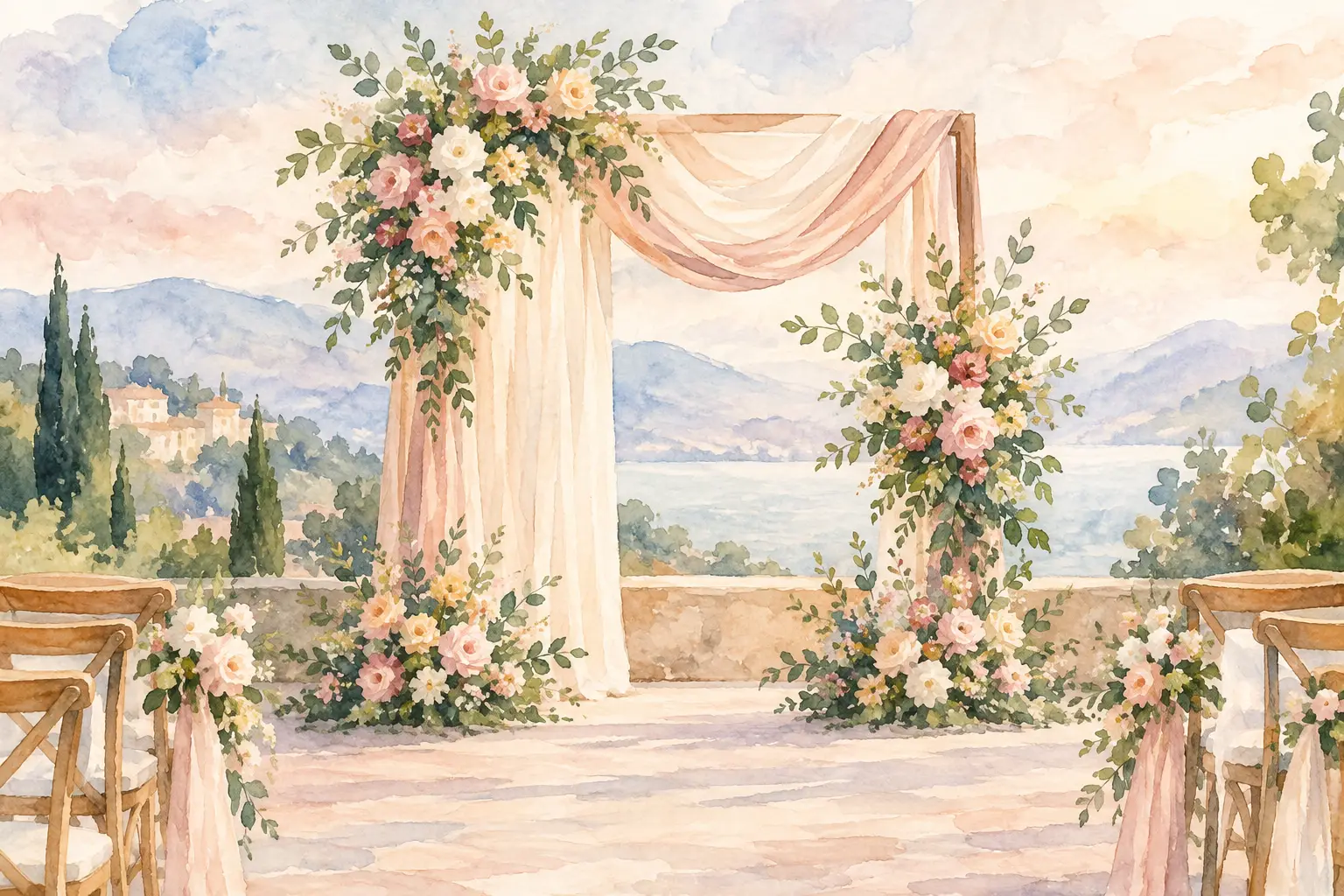
A wedding backdrop is often the first visual moment guests notice and the setting that quietly appears in hundreds of photos. Learning how to choose wedding backdrops is less about picking the largest floral wall or the trendiest color and more about choosing a focal point that belongs in the room, supports the celebration, and feels like you.
A well-styled backdrop can frame a ceremony, give a sweetheart table presence, define a stage, or create a beautiful setting for family portraits. The right choice brings the rest of the décor into focus, from centerpieces and table linens to florals, candles, and place settings.
Start With the Backdrop’s Purpose
Before selecting colors, flowers, draping, or signage, decide what the backdrop needs to do. A ceremony backdrop has a different role from a reception focal display. At the ceremony, it should frame the couple without blocking the view of guests or competing with the setting. At a reception, it may create a strong visual anchor behind the sweetheart table, head table, stage, or cake display.
Photo backdrops deserve their own consideration. They need enough visual interest to look intentional in pictures, but they should still leave room for people to be the focus. Dense florals, layered draping, architectural panels, soft fabric, or a balanced mix of these elements can all work beautifully depending on the wedding style.
For cultural weddings and celebrations, a backdrop may also serve as the setting for meaningful entrances, family photographs, seating traditions, or ceremonial moments. In that case, its placement and visual presence matter even more. The design should feel respectful of the occasion and leave appropriate space for the moments taking place in front of it.
Look Closely at the Room First
The venue gives you important design clues. A backdrop that looks lovely in a bright ballroom may disappear against a dark wall, while a dramatic display can overwhelm an intimate restaurant space. Consider the existing colors, ceiling height, wall finishes, windows, architectural details, and available floor space before committing to a style.
High ceilings can support taller installations, fuller draping, or a layered design with height. In a lower-ceiling room, a wide backdrop with texture may feel more balanced than one that reaches too high. If the venue already has a striking fireplace, window wall, molding, or statement architecture, the best backdrop may be one that enhances those features instead of covering them.
Natural light matters as well. Daytime ceremonies near large windows often benefit from materials with softness and depth, such as florals, fabric, and greenery. Evening receptions may call for thoughtful lighting, reflective details, or candles that bring warmth to the backdrop after sunset. A design should look considered in person and remain beautiful as the light changes.
Choose the Right Scale, Not Just the Biggest Design
Scale is one of the most common reasons a backdrop feels either underwhelming or overwhelming. A small arrangement behind a large head table can get lost in the room. On the other hand, an oversized floral wall behind a petite sweetheart table can make the table feel disconnected from the rest of the design.
Think about the backdrop in relation to what sits in front of it. A ceremony structure should comfortably frame the couple and allow for movement. A sweetheart-table backdrop should feel proportionate to the table, chairs, florals, and surrounding space. A stage backdrop needs enough width and height to read clearly from across the room without becoming visually heavy.
This is also where a custom approach makes a difference. The same backdrop concept can be adjusted through panel placement, draping, floral concentration, or open space to suit the dimensions of a particular venue. More is not always better. The goal is a focal point with presence, not a design that crowds the room.
Let the Backdrop Connect to the Full Décor Story
The most memorable wedding spaces feel coordinated rather than matched too literally. Your backdrop does not need to repeat every flower or color from the tables, but it should clearly belong to the same visual story.
If the reception features soft ivory linens, blush florals, and gold candlelight, a backdrop with warm draping, gentle floral movement, and subtle gold details can carry that feeling forward. If the design is modern and clean, structured panels, sculptural arrangements, and a more restrained color palette may feel more appropriate. Rich jewel tones, layered fabrics, and fuller floral details can create a beautiful sense of celebration for an evening wedding or a cultural event where color and presentation are especially meaningful.
Consider repeating two or three key elements across the space. This could be a flower variety, a color family, a metallic finish, a fabric texture, or a particular shape. Those repeated details help the backdrop feel connected to centerpieces, table décor, welcome displays, and other focal areas without making the room feel overly decorated.
Think About Color in Photographs
A backdrop may look beautiful on its own and still photograph differently than expected. Very pale details against a pale wall can blend together, while extremely dark colors can lose texture in dim lighting. Contrast helps define the design, especially in photos of the couple, family members, and wedding party.
That does not mean every backdrop needs bold color. A neutral backdrop can be striking when it uses dimension: layered ivory draping, tonal florals, textured greenery, or panels with subtle depth. Likewise, a colorful design benefits from areas of visual rest so the faces and attire in front of it remain noticeable.
Attire should be part of the conversation. A white gown against a very light backdrop can look soft and romantic, but the design may need greenery, shadow, or texture to create separation. If either partner is wearing richly colored formal attire, a carefully chosen neutral or complementary backdrop can allow those colors to stand out naturally.
Select Materials That Match the Feeling You Want
The materials in a backdrop affect how formal, relaxed, modern, or romantic the space feels. Draping offers softness and movement. Florals bring color, freshness, and dimension. Greenery can add an organic note, while panels, arches, and structured elements create definition and shape.
A floral-heavy display is beautiful when flowers are central to the overall décor vision, but it is not the only elegant option. A design with fabric, candles, and thoughtfully placed floral accents can feel just as finished and may better suit a venue with strong architecture. The best choice depends on the room, your tablescape, and the atmosphere you want guests to feel when they enter.
Texture is especially valuable when working within a limited color palette. Satin, chiffon, velvet, acrylic, wood, greenery, and floral layers all reflect light differently. Combining a few complementary textures prevents a backdrop from looking flat while keeping the design refined.
Keep Sightlines and Guest Experience in Mind
A beautiful backdrop should not create practical visual problems. Ceremony designs should allow guests to see the couple. Reception installations should not interfere with pathways, table access, or the feeling of openness in the room. If the backdrop is behind a head table or stage, consider what guests will see from different angles, not only from the front.
For a photo moment, location matters. A display placed near a busy entrance or directly beside the buffet may not give guests the relaxed space they need to enjoy it. A more intentional corner or dedicated wall can make the backdrop feel inviting and keep photographs cleaner.
How to Choose Wedding Backdrops With Lasting Style
Trends can be useful inspiration, but they should not be the only reason to choose a backdrop. A design is more likely to feel timeless when it reflects your color palette, the feeling of the venue, and the moments you want to highlight. You may love a dramatic floral wall online, yet find that soft draping and garden-inspired florals better suit your reception room. That is not settling. It is thoughtful styling.
Bring inspiration images to a décor conversation, but focus on what you like within each image. Perhaps it is the color combination, the fullness of the florals, the open arch shape, or the way the display frames a table. Those details help turn inspiration into a backdrop designed for your celebration rather than a copy of someone else’s.
For couples in Greater Boston and throughout Massachusetts, venue styles can vary widely, from classic ballrooms and waterfront spaces to historic settings and modern event rooms. Sue’s Elegant Events approaches backdrops as part of the larger visual experience, considering how the focal design will work with tables, centerpieces, florals, and the atmosphere of the room.
Choose the backdrop that makes the space feel more like your celebration the moment you see it. When its scale, color, texture, and purpose are working together, it will do more than fill a wall. It will give the day a setting that feels intentional, welcoming, and distinctly yours.