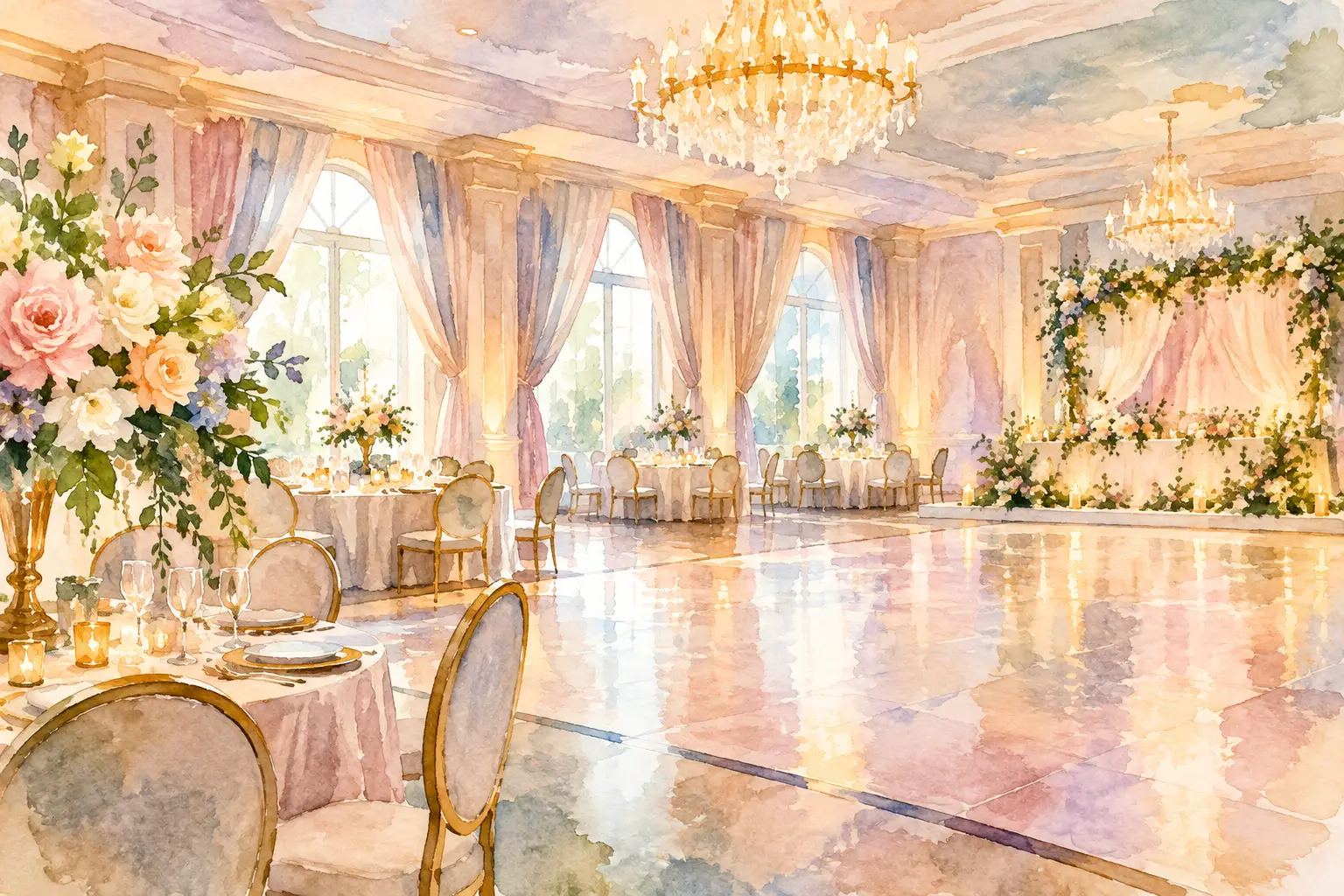
A ballroom can feel formal, spacious, and even a little impersonal before the first table is dressed. A thoughtful ballroom decor transformation changes that impression by giving the room a clear visual point of view. The goal is not to fill every open corner. It is to create layers of color, texture, height, and light that make guests feel they have entered a celebration designed with care.
For a wedding reception, henna night, Eid gathering, graduation, or milestone birthday, the most memorable ballrooms feel connected from the entrance to the final table. The details do not need to match perfectly, but they should speak the same visual language.
Start With the Room You Have
Ballrooms come with built-in features that influence every design choice: patterned carpet, mirrored walls, chandeliers, tall ceilings, dark drapery, or warm-toned woodwork. Rather than treating those elements as obstacles, begin by deciding what should be softened, highlighted, or balanced.
A room with dramatic chandeliers may call for a more restrained tablescape, allowing the overhead lighting to remain part of the design. A ballroom with lower ceilings may benefit from fuller, lower centerpieces and a strong backdrop rather than very tall arrangements that crowd the sightline. Neutral walls offer freedom with color, while a richly colored carpet may look best with a palette that complements it instead of competing with it.
This is where a room begins to feel intentional. The décor should respond to the ballroom, not arrive as a collection of unrelated pieces.
Create a Ballroom Decor Transformation With a Focal Point
Every large room needs a place for the eye to land. For many weddings, that may be the couple’s sweetheart table, a head table, a ceremony backdrop, or a floral installation behind the dance floor. For cultural celebrations, it may be a stage, family seating area, henna backdrop, or a display that honors the occasion in a meaningful way.
A focal point gives the room direction. It also helps other décor choices feel purposeful. When the backdrop includes soft ivory draping, warm candlelight, and touches of gold, those ideas can continue through the centerpieces, charger plates, linens, and welcome display without repeating the exact same look everywhere.
Scale matters here. In a large ballroom, a small backdrop can disappear in photographs and leave the space feeling unfinished. At the same time, an oversized installation in a more intimate room can overwhelm the tables and make movement feel tight. The strongest designs are proportionate to the room and visible from the guest perspective.
Think Beyond the Stage
A focal point does not need to be limited to one wall. A floral moment at the ballroom entrance, a styled seating chart area, or a candlelit display near the doors can shape the first impression before guests reach their tables. These details are especially helpful in ballrooms with long corridors or pre-function spaces that might otherwise feel separate from the celebration.
Let Table Décor Carry the Design
Guests spend much of the event at the table, which makes table décor one of the most powerful parts of the room. A well-styled table creates intimacy within a grand ballroom and gives the overall transformation a sense of richness without making the room feel busy.
Centerpieces are often the first element people notice, but they work best as part of a complete composition. Linens, napkins, chargers, candleholders, floral vessels, and place settings all influence the final effect. A tall floral centerpiece may bring needed height to a room with soaring ceilings, while a low, lush arrangement can create a warm, conversational feeling at a wedding dinner or family celebration.
There is no single “right” centerpiece style. Tall designs create drama and can fill a large room beautifully, but they need to preserve clear views across the table. Low designs feel inviting and photograph well from above, though they may need layered candles or complementary details to carry enough visual presence in an expansive ballroom. Mixing heights can add movement, provided the palette and vessels remain consistent.
Use Repetition, Not Uniformity
Cohesion does not mean every table must be identical. Alternating between elevated floral arrangements and lower candle-and-floral groupings can make a ballroom feel more dimensional. The connection comes from repeated colors, floral varieties, metals, or textures.
For example, soft white florals, clear glass, and gold accents may appear in different arrangements across the room while still feeling like one complete design. This approach gives guests something beautiful to notice at each table without creating visual clutter.
Choose a Color Story That Holds the Room Together
A ballroom has more surfaces than most people realize: ceiling, walls, carpet, tables, chairs, stage, and often a large dance floor. A color story keeps those surfaces from pulling in different directions.
Start with two or three core colors, then add one or two supporting tones through texture and detail. A classic palette might pair ivory, champagne, and soft green. A more expressive celebration could use deep emerald, gold, and cream, or shades of blush, burgundy, and warm neutrals. For an event with cultural significance, color can be especially personal. It may reflect family preferences, meaningful textiles, or the feeling the hosts want to create, without relying on assumptions about any tradition.
The key is balance. If the linens are richly colored, lighter florals or clear vessels may give the table breathing room. If the room itself is neutral, a bolder runner, napkin, or floral palette can provide the energy. Metallic accents can add polish, but too many competing finishes can make a design feel disconnected. Choosing one dominant metal, such as gold, silver, or black, usually creates a cleaner result.
Add Warmth Through Light and Texture
Ballrooms are often designed for flexibility, which can mean their lighting feels practical rather than personal. Décor helps soften that feeling. Candlelight, reflective glass, layered fabrics, and florals bring warmth to a room that may otherwise feel very open and structured.
Candles are particularly effective because they create atmosphere at table level, where guests experience the celebration most closely. They can also help connect a ballroom’s grand overhead lighting with the more intimate mood of the tables. The right approach depends on venue guidelines and the room’s existing light. In a bright ballroom, candles may need to be grouped generously to make an impact. In a dimmer space, a lighter touch may be enough.
Texture adds another quiet layer. Satin, velvet, sheer draping, ribbed glass, delicate floral petals, and polished chargers each catch light differently. The room does not need every texture at once. A few intentional contrasts are more elegant than a table filled with competing materials.
Give the Entrance and Empty Areas a Purpose
The transformation is most convincing when it begins before guests see the main ballroom. A styled welcome area, floral arrangement, framed sign, or soft draping can establish the mood at the door. It signals that the celebration has been considered as a whole, not only at the dining tables.
Within the ballroom, look at areas that can feel empty in photos or disconnected from the main design. This might include the space near the stage, the cake or dessert display, a lounge corner, or the edges of a dance floor. Not every open area requires décor. Sometimes leaving space open is what allows a focal display to stand out. But a few well-placed decorative moments can make the room feel finished from every angle.
Keep the Design Personal, Not Overdone
The most successful ballroom décor does more than look beautiful in a wide room photograph. It reflects the people being celebrated. That may come through a favorite flower, a family color palette, meaningful wording on a backdrop, or table details that feel connected to the occasion.
For Boston-area weddings and celebrations, ballrooms can range from traditional hotel spaces to modern event rooms and grand banquet halls. Each setting asks for a slightly different response. A classic room may shine with layered florals and candlelight, while a contemporary ballroom may feel strongest with clean lines, sculptural arrangements, and a more edited palette.
At Sue’s Elegant Events, the focus is on bringing those visual layers together so the room feels cohesive, welcoming, and worthy of the moment. The final effect should feel like more than decorated tables. It should feel like a space where the celebration belongs.