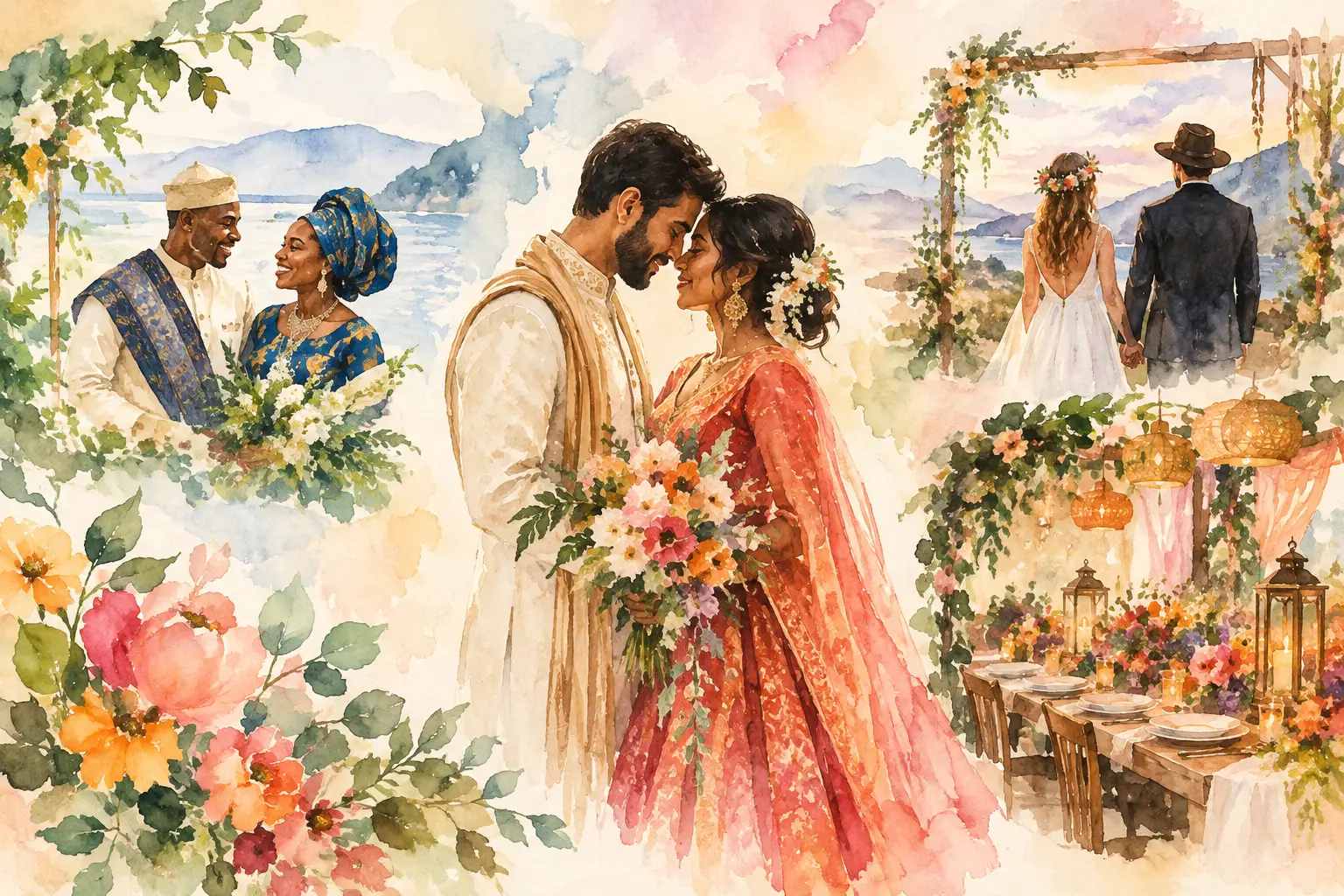
A wedding can honor family history without looking like it belongs to another generation. That balance is at the heart of cultural wedding trends 2026: spaces that feel current, refined, and deeply personal while leaving room for the colors, symbols, textiles, and gathering traditions that matter to each family.
For couples and families, the most memorable designs are moving away from a one-size-fits-all wedding look. Instead of adding a few cultural details to a standard reception, the décor begins with the celebration’s own story. The result may be soft and understated or richly layered and vibrant. What matters is that the room feels intentional from the entrance through the final table setting.
Cultural Wedding Trends 2026 Start With Meaning
The strongest trend is not one particular color, flower, or backdrop. It is personalization with context. A meaningful textile, a favorite family color, an heirloom-inspired pattern, or a ceremonial seating area can become the visual starting point for the entire design.
This approach requires thoughtfulness. Cultural traditions are not interchangeable décor themes, and no two celebrations within the same community need to look alike. A Sudanese wedding, an Arab wedding, a henna night, or a multicultural celebration can be styled with great beauty when the design reflects the couple and their families rather than relying on broad assumptions.
For décor, that often means choosing one or two elements with real significance and allowing them to guide the palette and materials. A deep emerald fabric may inspire gold vessels and warm candlelight. A family preference for white and blush may be elevated with sculptural floral styling, textured linens, and a softly layered stage. The goal is cohesion, not adding every possible detail.
Reception Tables Are Becoming More Layered
Centerpieces remain one of the clearest ways to transform a reception room. In 2026, cultural wedding tables are expected to feel fuller and more considered, with an emphasis on dimension rather than a single item in the center of the table.
A well-styled table may combine low florals with candlelight, metallic accents, colored glass, elevated vessels, or patterned details that echo the wider room. The combination should still allow guests to see one another and enjoy the celebration comfortably. Tall centerpieces can create drama in a ballroom, while low, expansive arrangements often make long tables and intimate receptions feel warm and inviting.
Color is also being used with more confidence. Neutrals will always have a place, especially for couples who prefer a classic reception, but they are increasingly paired with richer tones. Burgundy, saffron, olive, deep blue, plum, terracotta, and antique gold can bring depth to a table without making it feel heavy. A restrained color story is usually more elegant than competing shades at every place setting.
A coordinated room matters more than matching everything
A cohesive design does not mean every table must be identical. Alternating centerpiece styles can add movement to a large reception, as long as the flowers, vessels, linens, and candlelight belong to the same visual family. This is particularly effective for celebrations with formal dining tables, lounge areas, dessert displays, or a prominent head table.
The same principle applies when blending cultural references with a modern venue. A traditional pattern might appear in selective accents rather than covering every surface. Metallic finishes can repeat across centerpieces, table décor, and the stage without making the room feel overly formal. Thoughtful repetition is what helps a space look designed rather than pieced together.
Statement Stages and Backdrops Feel More Architectural
The ceremony focal point, sweetheart table, stage, or cultural seating area is becoming more dimensional. Rather than relying only on a flat backdrop, couples are choosing layered draping, curved panels, soft floral framing, plinths, arches, and carefully placed lighting to give the space depth.
For cultural celebrations, a stage can hold particular importance. It may be a place for portraits, ceremonial moments, family seating, or simply a visual anchor in the room. Its design should respect that role while supporting the rest of the décor. A dramatic stage can be beautiful, but it should not visually overwhelm the tables or make the room feel divided.
Curved shapes are especially appealing for 2026 because they soften formal spaces. Arched panels, crescent floral arrangements, rounded seating vignettes, and flowing drapery work well alongside both contemporary and traditional details. The look is polished without feeling rigid.
Lighting makes a major difference here. Candles, warm pin lights, and illuminated focal areas can make florals and fabrics appear richer in photographs and in person. However, lighting should support the color palette. Cool lighting can flatten warm golds, creams, and deep reds, while overly bright lighting can take away from the intimacy of a candlelit table design.
Heritage Colors Are Being Used With More Restraint
Many couples want color that feels connected to their culture or family celebration, but they do not necessarily want every surface to be bold. One of the most elegant ways to use heritage colors is to choose a dominant shade and build contrast around it.
For example, a vivid jewel tone can be balanced with ivory florals, champagne linens, clear glass, and soft candlelight. A more neutral room can gain personality through colored napkins, floral accents, or a patterned backdrop. This allows the color to feel purposeful instead of scattered.
There is also a renewed appreciation for mixed materials. Velvet, satin, sheer draping, reflective glass, natural greenery, polished metal, and textured floral arrangements can all belong in the same design when the palette is controlled. The trade-off is that layered materials need visual discipline. Too many finishes can compete, especially in venues with existing patterned carpet, dark walls, or ornate chandeliers.
Intimate Details Are Still Worth Designing
Even in a large ballroom, guests remember the moments closest to them: the table in front of them, the entry display they first see, the backdrop where family photographs are taken, and the candlelight that changes the mood after sunset.
In 2026, personalized signage, welcome displays, family photo moments, and styled dessert or favor tables can carry the same design language as the reception. These pieces do not need to be oversized to be effective. A small display with coordinated florals, draping, and meaningful wording can make guests feel welcomed while strengthening the look of the room.
For henna nights and other pre-wedding celebrations, the visual experience may call for a more relaxed, layered setting than the wedding reception. Floor-level details, plush textiles, lantern-inspired accents, floral arrangements, and a dedicated focal backdrop can create an inviting atmosphere. The best direction depends on the family’s traditions, the venue, and how the gathering will be experienced – not on a trend alone.
How to Make a Trend Feel Like Your Celebration
When choosing wedding décor, start with the feeling you want guests to have when they enter. Perhaps it is warm and celebratory, elegant and romantic, vibrant and joyful, or modern with traditional touches. Then identify the elements that are most meaningful to you: a color, fabric, floral style, pattern, or focal space.
From there, prioritize the visual areas that will shape the room most: guest tables, the stage or sweetheart area, the entrance, and any meaningful ceremonial or photo space. This keeps the design focused and makes each detail feel connected. Not every trend will fit every wedding, and that is a good thing.
For couples and families in Greater Boston and throughout Massachusetts, working with a décor specialist who listens closely can make the process feel more personal. At Sue’s Elegant Events, the focus is on bringing together centerpieces, tablescapes, backdrops, floral styling, and focal displays into a setting that feels beautiful from every angle.
Choose the details that make your guests recognize your story the moment they walk into the room. That is the kind of wedding style that stays meaningful long after 2026 has passed.