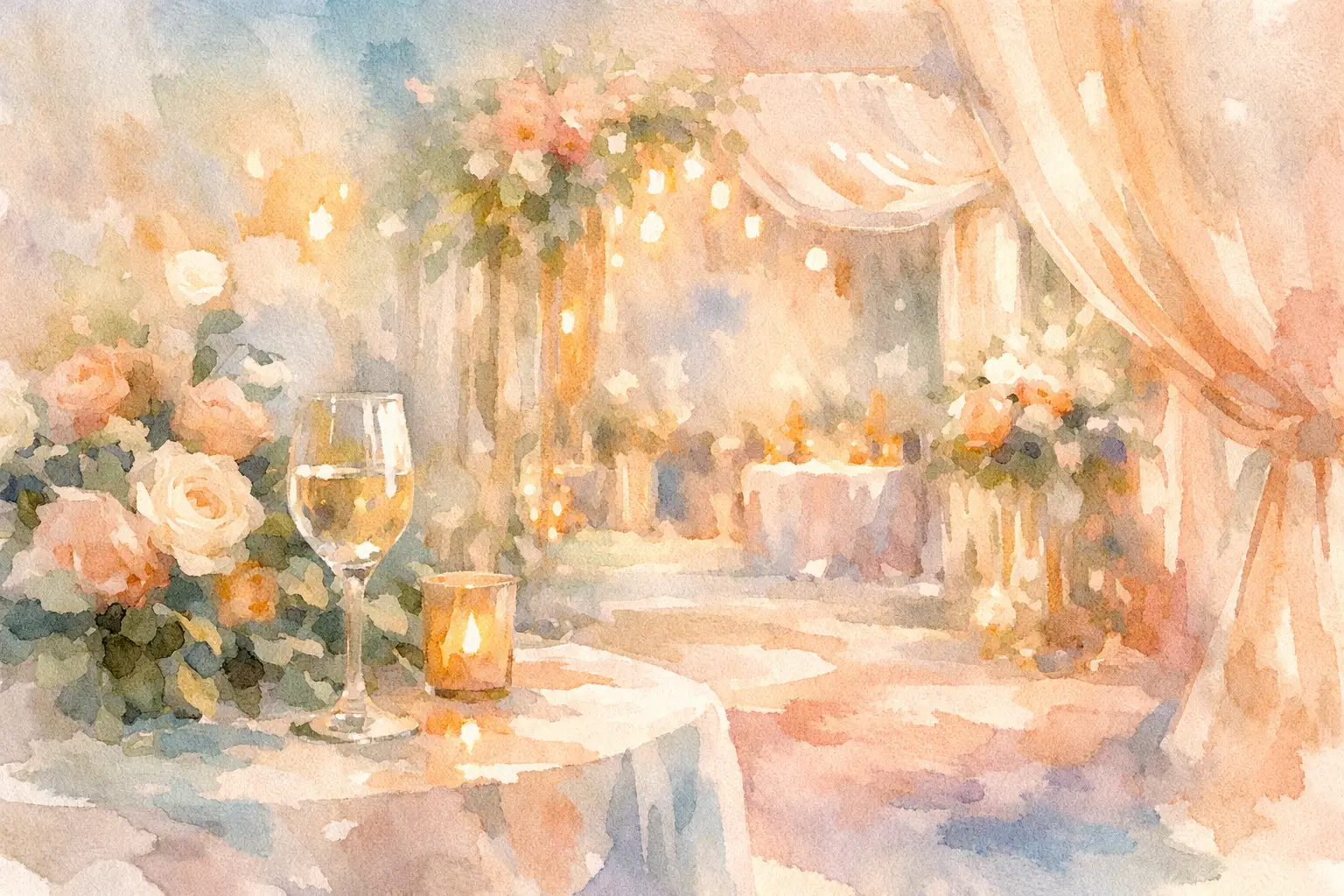
A reception room can have beautiful flowers, lovely linens, and a striking cake, yet still feel disconnected. The difference is often event design: the thoughtful visual direction that helps every element feel as though it belongs in the same celebration. It is the work of turning a collection of décor pieces into an atmosphere guests can feel from the moment they enter.
For weddings and meaningful family celebrations, that atmosphere should do more than look polished in photos. It should reflect the people being celebrated, honor the occasion, and make the space feel inviting, intentional, and memorable.
What Event Design Really Does
Event design is not simply choosing a color palette or adding flowers to tables. It is the process of shaping the visual experience of a room. A designer considers what guests see first, where the eye naturally travels, how tables look together from across the room, and which details deserve a closer look.
At a wedding, the head table, sweetheart table, ceremony backdrop, guest tables, and entrance area each have a different role. They should not all compete for attention. Instead, they should create a visual rhythm, with a few focal moments supported by details that carry the design throughout the space.
This is why coordinated décor often feels more elevated than a room filled with individually beautiful items. The centerpiece vase may echo a detail in the backdrop. The candlelight on guest tables may soften the same colors used at the head table. A floral arrangement might connect the ceremony setting to the reception without making the two spaces look identical.
The goal is cohesion, not repetition.
Begin With the Feeling, Not Just the Color
Many clients begin with a color: emerald green, blush, gold, champagne, burgundy, or black and white. Color is useful, but it is only one part of the design. Two events can use the same colors and feel completely different depending on texture, lighting, scale, florals, and how formal or relaxed the décor feels.
A warm ivory and gold wedding, for example, can lean traditional with tall floral centerpieces, soft draping, and classic candlelight. The same palette can feel modern when paired with clean-lined vessels, sculptural arrangements, and a minimal backdrop. Neither approach is automatically better. The right choice depends on the couple, the room, and the feeling they want their guests to experience.
Before selecting individual pieces, it helps to describe the atmosphere in a few clear words. Consider whether the celebration should feel romantic, refined, joyful, dramatic, soft, contemporary, or rooted in a particular cultural aesthetic. These words create a stronger design direction than a long list of décor items.
Let the Venue Shape the Design
A ballroom, restaurant private room, tented celebration, and cultural hall each offer a different visual starting point. Ceiling height, wall color, existing lighting, table shape, and the amount of open space all influence what will look balanced.
Tall centerpieces can create beautiful impact in a spacious room with high ceilings, but they may overwhelm a more intimate setting. A detailed backdrop can transform a plain wall, while a room with ornate architectural features may need a lighter touch. Event design works best when it responds to the space rather than trying to cover every surface.
This is also where scale matters. A small arrangement may look lovely up close but disappear in a large reception room. On the other hand, oversized décor in a compact venue can make guest tables feel crowded. Good styling accounts for the full view of the room, not only the close-up photograph.
The Details That Carry a Room
A cohesive event does not require every area to match exactly. It needs a consistent visual language. That language may be carried through color, floral choices, materials, shapes, or a repeated detail such as gold accents, crystal, soft greenery, or layered candlelight.
Centerpieces Set the Tone at Every Table
Guest tables make up much of the visual landscape at a reception. Centerpieces should feel special, but they also need to work with the table setting and allow guests to enjoy one another’s company. Height, fullness, vessel style, and candle placement all affect the final result.
A mix of tall and low centerpieces can add movement to a large room, especially when the designs share similar flowers, colors, or materials. In other settings, one beautifully executed centerpiece style may create the calm, clean look the event needs. It depends on the room and the overall design direction.
Table décor extends beyond the flowers. Chargers, napkins, runners, candles, menu details, and small accent pieces can make a table feel finished. The strongest tablescapes do not rely on one expensive-looking item. They use layers with intention, giving guests something beautiful to notice without making the table feel busy.
Backdrops and Focal Displays Create a Moment
Certain parts of an event naturally invite attention: a ceremony setting, a sweetheart table, a stage, a cake display, or an entrance. These focal areas are opportunities to create a memorable visual moment and establish the tone of the celebration.
A backdrop can be soft and romantic, bold and architectural, floral and textured, or elegantly simple. Its purpose is not merely to fill a wall. It gives the room a point of view. When designed in conversation with the tables, florals, and surrounding space, it becomes part of the setting rather than a separate decoration.
For cultural celebrations, focal displays may hold particular meaning and deserve especially thoughtful attention. A henna night, Eid gathering, Sudanese wedding, Arab wedding, engagement, or family celebration may call for colors, seating, patterns, or presentation details that reflect what matters to the hosts. The best approach is always personal: listen first, then create décor that feels respectful, celebratory, and true to the occasion.
Where to Invest Visual Attention
Not every decorative element needs equal emphasis. A well-designed event usually has a few areas with stronger visual impact, supported by simpler, coordinated details elsewhere. This keeps the room from feeling overdone and allows the important moments to stand out.
For many weddings, the head table or sweetheart table is a natural priority because it appears in many photographs and draws attention throughout the reception. Guest tables deserve care because they shape the experience for everyone in the room. An entrance display or welcome focal point can also set the mood before guests reach their seats.
The right priorities vary. If the celebration includes a stage or dedicated cultural seating area, that may be the visual center. If the venue has a dramatic ceremony space, florals and backdrop styling there may have the greatest effect. The answer is not to decorate more. It is to place attention where it will be felt most.
Common Design Choices That Can Feel Disconnected
A room can lose its sense of harmony when too many ideas are competing. Mixing several unrelated metallic finishes, combining different floral styles without a common thread, or choosing décor one piece at a time can create a scattered look. This often happens when each decision is attractive on its own but has not been considered as part of the whole room.
Another common issue is treating the backdrop, centerpieces, and table décor as separate projects. They do not need to be identical, but they should have a relationship. A refined event design creates that relationship through repeated tones, compatible textures, and a clear sense of proportion.
There is also a trade-off between fullness and openness. More florals, candles, and layers can feel abundant and celebratory, but too much density can hide the beauty of individual details. A more minimal look can feel modern and elegant, but it needs enough scale and texture to avoid feeling unfinished. The best balance is the one that matches the event’s personality and setting.
Bringing a Personal Vision Into Focus
Clients do not need to arrive with every detail decided. A few inspiration images, a favorite color, a meaningful tradition, or a clear feeling can be enough to begin shaping a direction. The important part is identifying what should remain consistent as the décor comes together.
Sue’s Elegant Events approaches styling as a complete visual picture, from custom centerpieces and table décor to floral styling, backdrops, stages, and focal displays. For celebrations throughout Greater Boston and beyond, thoughtful design can help a familiar venue feel personal and a meaningful occasion feel beautifully expressed.
The most lasting event spaces are not always the ones with the most décor. They are the ones where guests notice that everything feels connected, welcoming, and created for the people at the center of the celebration.