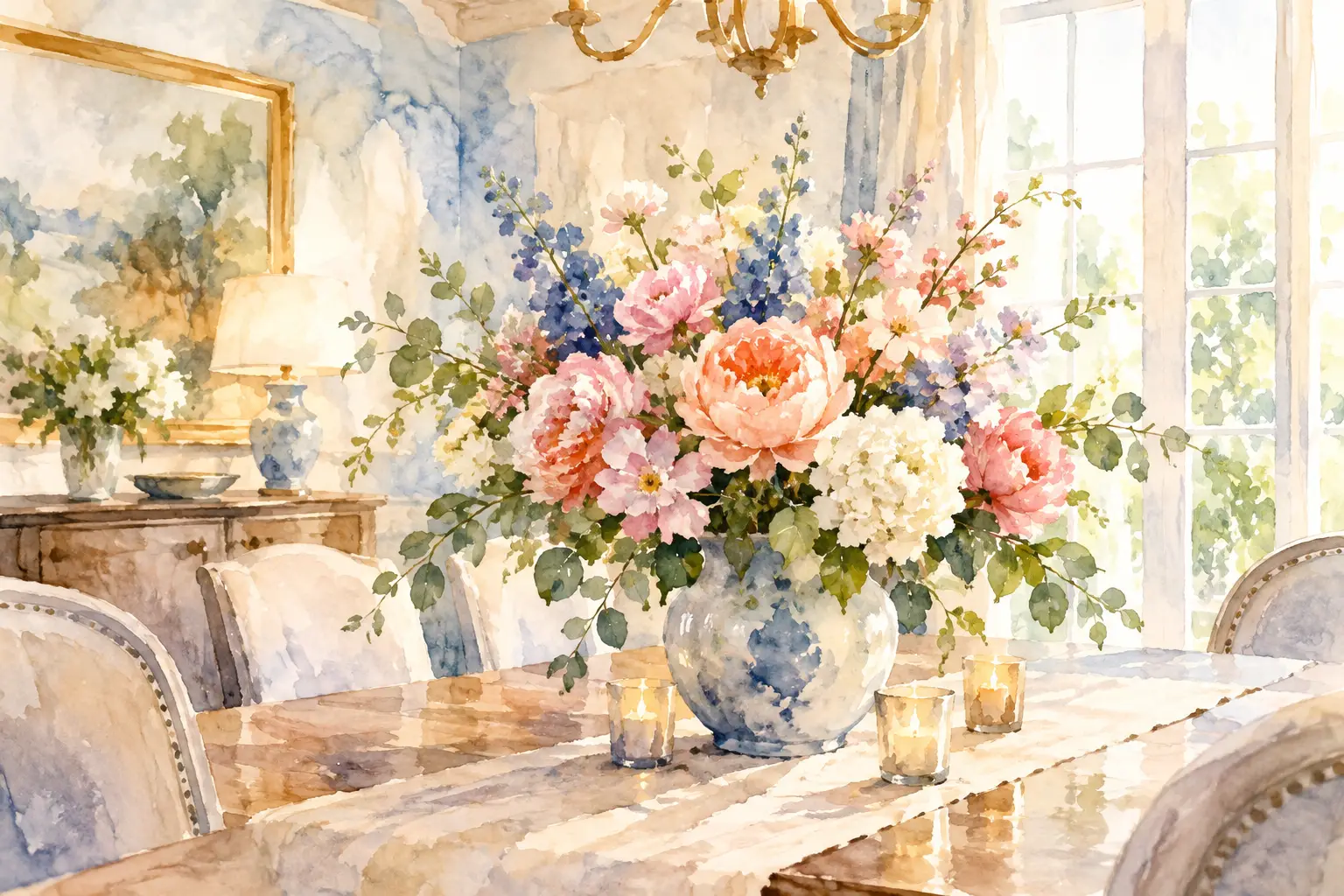
A reception table can be beautifully dressed and still feel unfinished until the flowers arrive. Floral centerpieces do more than decorate the middle of a table. They bring color into the room, create rhythm from one table to the next, and help guests immediately understand the feeling of the celebration.
For a wedding, henna night, Eid gathering, baby shower, graduation, or milestone birthday, the right centerpiece design should feel connected to the occasion rather than simply placed on the table. The most successful arrangements consider the room as a whole: the linens, chairs, place settings, backdrop, lighting, and the way guests will experience the space from the moment they enter.
Floral Centerpieces Set the Visual Direction
Centerpieces are often one of the most repeated design elements at an event. A single arrangement may be lovely, but its real effect appears when every table is dressed and the room begins to feel intentional. This is why centerpiece choices have such a strong influence on the overall atmosphere.
Soft white blooms with candlelight can support a romantic, classic wedding setting. Layered roses, orchids, or hydrangeas in warm neutrals may feel refined and welcoming. A richer palette of burgundy, plum, gold, or deep green can give an evening celebration more depth. For a cultural celebration, color, texture, and table details can be selected with care to complement the family’s vision and the character of the gathering.
The goal is not to make every table compete for attention. It is to create a visual language that carries through the room. Flowers may echo a backdrop, pick up a color from the stage décor, or soften a room with clean architectural lines. When those details speak to one another, guests notice the difference even if they cannot name every individual element.
Choosing the Right Centerpiece Height
Height is one of the first decisions to make because it affects both the room and the guest experience. Tall floral centerpieces can make a ballroom or large reception space feel more complete, especially when ceilings are high or the room needs stronger vertical interest. They can also create a dramatic effect in photos by drawing the eye upward.
But taller is not always better. An elevated arrangement needs a slender enough base and a clear enough design that guests can still see across the table. If the flowers feel heavy at eye level, they can interrupt conversation and make a table feel closed in.
Low centerpieces create a different kind of elegance. They keep the table open, allow place settings and candlelight to remain visible, and often suit intimate receptions or tables where the food presentation is part of the experience. Low designs can be lush and full without becoming overwhelming, particularly when paired with layered votives, textured linens, or delicate table accents.
A mix of high and low arrangements is often the best choice for larger celebrations. Alternating heights creates movement across the room while keeping the design cohesive. The key is repetition in the right places: related flowers, a consistent palette, complementary vessels, or shared candle details. Variety should feel intentional, not accidental.
Consider the Table Shape First
Round tables are naturally suited to a centered floral moment, whether that is a full low arrangement or a tall design on a pedestal. Long banquet tables invite a different approach. Rather than one centerpiece in the middle, they often look best with florals placed in a considered sequence, allowing the design to travel down the table.
For sweetheart tables, family tables, dessert displays, or head tables, the floral treatment can be more layered. These are often focal areas within the room, so flowers may be combined with candles, draping, elevated stands, or a coordinated backdrop. They should relate to the guest tables without looking like a smaller version of them.
Color Should Work With the Room, Not Against It
A floral palette is more than a selection of favorite flowers. It needs to work with the venue’s existing finishes, the event’s lighting, the table linens, and the colors that will appear throughout the space. A pale arrangement can disappear in a bright room with white walls, while a very dark palette may need candlelight or metallic details to retain warmth.
For many weddings, a layered neutral palette is more interesting than a single shade of white. Cream, ivory, soft blush, champagne, and gentle greenery can create dimension while remaining timeless. Couples who love color do not need to limit themselves to one strong tone, either. A thoughtful blend can feel polished when one color leads and the others support it.
Season matters, though it does not have to dictate the design. Spring-inspired shades may feel fresh for a May wedding, while deeper florals can bring richness to a fall celebration. Still, the right palette depends more on the desired mood than the calendar. An airy garden-inspired look can work beautifully in winter, and a modern monochromatic design can be striking in any season.
The Details Around the Flowers Matter
Floral centerpieces are strongest when they are treated as part of a complete table design. The vase or stand, chargers, napkins, menus, candleholders, and linens all influence how the flowers read. A clear vessel feels different from matte gold, crystal, mirrored glass, or a textured ceramic base. None is automatically better. The right choice depends on whether the event calls for softness, glamour, modern simplicity, or a more traditional finish.
Candlelight is especially valuable because it gives flowers another dimension after daylight fades. A few well-placed votives can make a low arrangement feel fuller and more inviting. On tall tables, candles help bring visual interest back down to guest level. The balance matters: too many competing pieces can crowd the table, while too little can leave a beautiful floral arrangement feeling isolated.
Guest comfort should also guide the styling. Strongly scented blooms may not be ideal for every dining table. Arrangements should leave enough space for place settings, shared dishes where applicable, and the natural movement of guests sitting down or standing up. Beautiful décor works best when it supports the celebration rather than asking guests to work around it.
Designing for Meaningful Celebrations
Weddings are not the only events that deserve a fully considered room. Floral styling can add warmth and significance to an engagement celebration, baby shower, graduation dinner, birthday, or family gathering. The scale may be different, but the design principle remains the same: the décor should reflect the feeling people want to create together.
For henna nights, Eid celebrations, and other cultural gatherings, florals can be paired with color, pattern, candlelight, textiles, and focal décor in ways that honor the host’s preferences. There is no single look that represents any tradition. The most meaningful designs begin with a conversation about the colors, details, and atmosphere that matter to the people celebrating.
At Sue’s Elegant Events, centerpiece styling is approached as part of the larger visual picture. A table should feel considered from every angle, whether guests are seeing it up close over dinner or across a room filled with light, music, and celebration.
Questions to Ask Before Finalizing Your Floral Design
Before choosing a centerpiece style, picture the finished room rather than focusing only on one table. Consider whether the space needs height, softness, color, or a stronger focal point. Think about how the arrangements will look in daylight and after the lights are lowered. Most importantly, consider how guests will interact with the tables.
It also helps to decide where you want the eye to rest. If a statement backdrop or stage design is the main visual moment, centerpieces may be more restrained and supportive. If the tables are the heart of the reception, fuller florals and layered details can carry more of the design. Neither direction is wrong. The best choice is the one that gives the room balance.
A beautiful event does not need every surface covered in flowers. It needs the right floral moments in the right places, styled with care. When centerpieces reflect the setting, the celebration, and the people gathered around the table, they become part of what guests remember long after the evening ends.