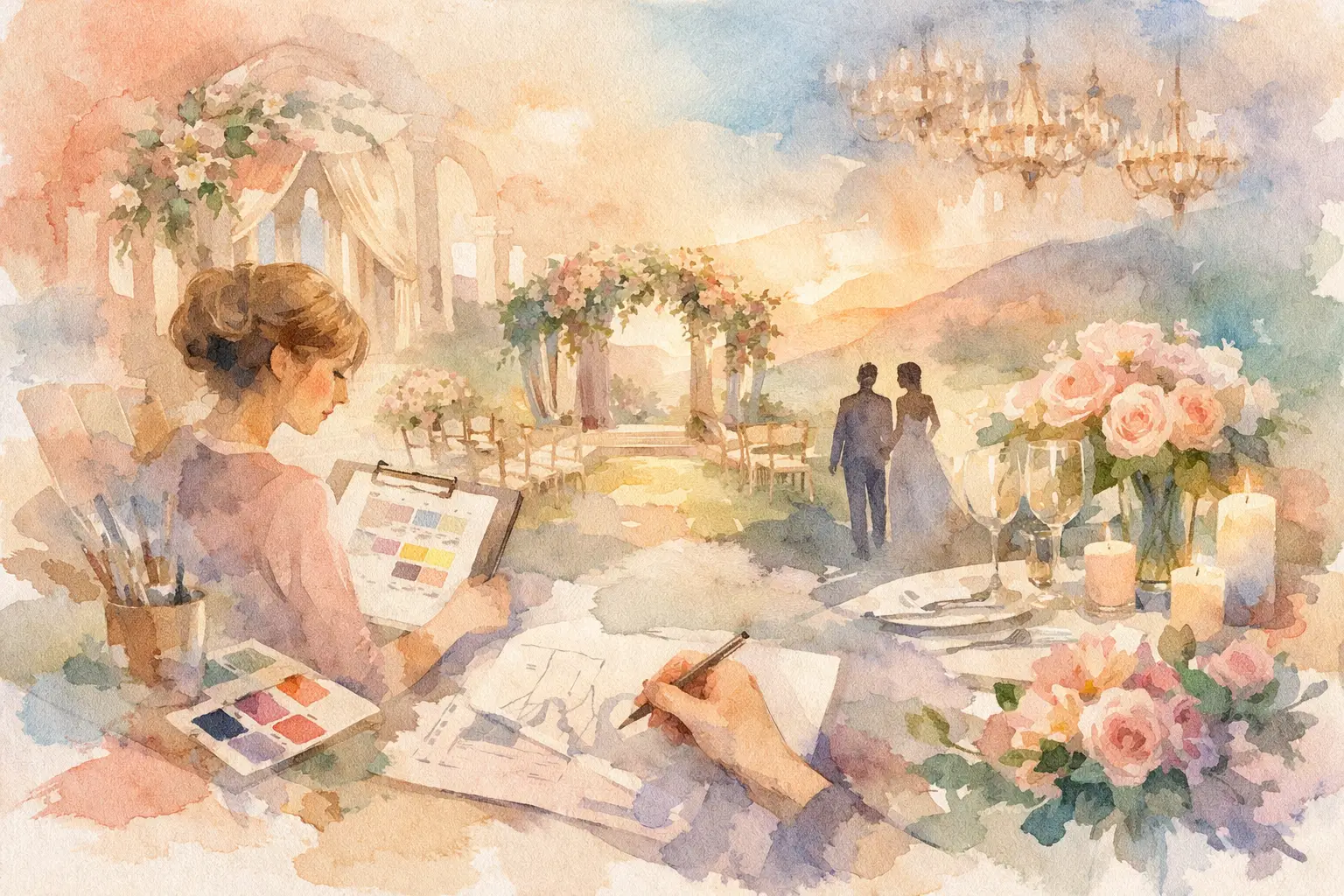
A beautiful celebration rarely comes from one decision. It comes from many details feeling connected: the way guests enter the room, the colors across the tables, the scale of the centerpiece, and the mood created by lighting, florals, fabric, and focal displays. Knowing how to choose an event planner can help protect that vision, especially when you want the logistics and the visual experience to support each other.
For weddings, henna nights, engagements, Eid gatherings, baby showers, and other meaningful celebrations, the right professional relationship should feel clear and comfortable. A planner may guide the logistical side of an event, while a décor and styling professional focuses on how the space looks and feels. Understanding that distinction will help you build a team that serves your celebration well.
Start With the Kind of Support You Actually Need
Before comparing planners, take a moment to name what feels most overwhelming. Some clients need help organizing the moving parts of a wedding or event. Others already have their venue and key decisions in place, but need thoughtful visual direction for tables, backdrops, ceremony spaces, stages, or reception details.
An event planner generally supports the operational side of an event. Their role may involve schedules, vendors, contracts, venue communication, and the flow of the day. A décor stylist or event designer concentrates on the visual transformation of the space, from custom centerpieces and table settings to floral styling, focal displays, and backdrops.
Many celebrations benefit from both. The key is not to expect one professional to take on responsibilities outside their service. When each person has a clear role, the result is usually calmer behind the scenes and more cohesive in the room.
How to Choose an Event Planner Who Understands Your Style
A planner does not need to personally create your centerpieces or install your décor to be a good fit for a design-focused celebration. They do, however, need to respect the visual priorities that matter to you and communicate clearly with the people bringing those details to life.
Begin by looking beyond a polished social media feed. Ask yourself whether the events they share feel intentional, well paced, and aligned with the type of celebration you are planning. If you are drawn to layered tablescapes, elevated receptions, romantic floral moments, or a dramatic stage design, look for signs that the planner understands why those elements need time, space, and attention.
Style compatibility is not about finding someone whose past events look identical to yours. It is about finding someone who listens carefully and can support a distinct vision without trying to make every event fit the same formula. A wedding with soft neutrals and candlelight needs a different approach from a vibrant cultural celebration with richly layered color, meaningful seating, or a statement backdrop.
Ask How They Collaborate With Décor Professionals
This conversation matters more than many clients realize. Your planner and décor team do not need to offer the same services, but they should be able to work respectfully alongside one another.
Ask how the planner handles décor installation timing, access to the venue, room changes, and final styling details. Their answers should be practical and specific. A thoughtful planner will understand that a room transformation cannot be treated as an afterthought, particularly when custom centerpieces, large focal pieces, florals, or stage décor are part of the design.
You can also ask how they prefer to communicate with a décor stylist. Some professionals like a shared planning call before the event, while others rely on clear written details and a confirmed installation schedule. There is no single right method. What matters is that the process feels organized and that everyone understands who is responsible for what.
Look for Clear Communication, Not Big Promises
The early conversations often tell you more than a proposal can. Notice whether the planner asks useful questions about your event, your priorities, and the atmosphere you want guests to experience. Do they explain their process in a way that is easy to understand? Do they respond thoughtfully when you mention a must-have visual detail?
Good communication does not mean a planner will always say yes immediately. Sometimes a professional may explain that an idea requires more setup time, a different room layout, or additional coordination. That honesty is valuable. It gives you the information needed to make design decisions with confidence instead of discovering limitations close to the event date.
Pay attention to the details in their proposal or agreement as well. You should understand the scope of their work, how communication will happen, when key decisions are due, and what is not included. Clarity prevents frustration later, especially when multiple creative partners are involved.
Make Space for Cultural Meaning
For a Sudanese or Arab wedding, henna night, Eid celebration, or another culturally meaningful gathering, décor is often more than decoration. Color, seating, presentation, gathering spaces, and focal areas can carry personal, family, or traditional significance.
Choose a planner who approaches these details with curiosity and respect. They do not need to claim expertise in every tradition, but they should be willing to listen rather than make assumptions. A good question is simple: How do you learn what is meaningful to a client and make sure those priorities are respected throughout the event process?
The answer should leave room for your voice. Your celebration does not need to be translated into a trend or reduced to a single visual reference. The most memorable spaces feel personal because they reflect the people and families being celebrated.
Review Their Work With a Practical Eye
Photographs are helpful, but they show only one part of the story. As you review a planner’s portfolio, look for evidence of thoughtful decision-making rather than only dramatic moments.
Consider whether guest tables appear well considered, whether ceremony and reception spaces have enough visual balance, and whether the room feels consistent from one area to the next. Notice scale. A centerpiece that looks lovely in a close-up may feel too small in a ballroom, while an oversized display can overwhelm a more intimate venue.
It is also worth asking to see examples of events with a similar guest count, room style, or level of décor complexity. This is not about limiting your ideas. It simply helps you understand whether the planner has experience supporting celebrations with comparable needs.
Talk Openly About Design Priorities Early
Your planner should know from the beginning if décor is a central part of your event. Share the elements that matter most, whether that is a statement sweetheart table, a richly styled entrance, custom guest table centerpieces, a ceremony backdrop, or a stage that serves as the heart of the evening.
This does not require you to have every color and flower selected. You can begin with a feeling: warm and romantic, refined and modern, soft and airy, formal and dramatic, or vibrant and celebratory. A décor professional can help shape that direction into tangible design choices, while a planner can account for the practical needs surrounding the event.
When you communicate the visual priorities early, there is more room to make thoughtful choices. You are less likely to find yourself trying to add meaningful décor elements at the last minute, when venue access, setup time, and room layout may already be set.
Trust the Working Relationship
Credentials, experience, and beautiful images all matter. Still, your comfort with the person matters too. You should feel heard when you describe your celebration, not rushed toward choices that do not feel like you.
A strong planner brings structure without taking over your voice. They can help you make decisions, raise concerns early, and keep the process moving while recognizing that some details, especially cultural or family-centered ones, deserve extra care.
If you leave an initial conversation feeling clearer about the next step, that is a good sign. If you feel confused, dismissed, or pressured, it may be worth continuing your search.
The right planner can create the structure around your celebration. Then, with a décor and styling team that understands your aesthetic, the room can become more than a venue. It can become a setting that feels warm, polished, personal, and ready to hold the moments your guests will remember.