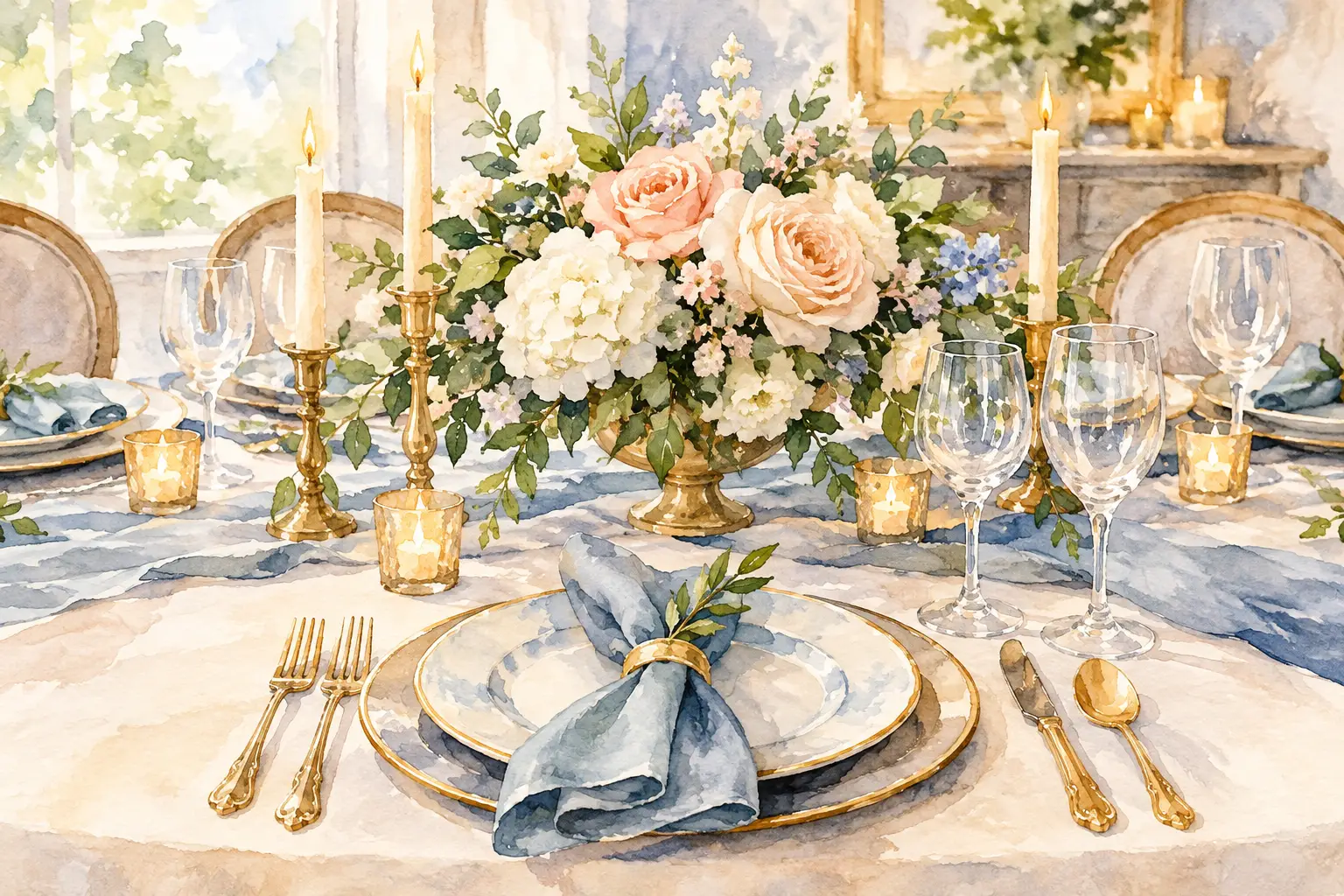
A formal table should feel inviting before anyone takes a seat. The gentle glow of candlelight, the texture of a layered linen, and a centerpiece placed at just the right height can turn a reception room into a setting guests remember. Knowing how to style formal tablescapes is less about adding more pieces and more about giving every detail a clear purpose.
For weddings, henna nights, Eid gatherings, milestone birthdays, and other meaningful celebrations, the table is where guests spend much of their time. It deserves to feel connected to the room, the occasion, and the people being honored.
Start With the Feeling You Want Guests to Have
Before choosing a charger plate or flower color, consider the atmosphere. A formal tablescape can be soft and romantic, crisp and modern, richly layered, or quietly classic. The most beautiful designs begin with a clear visual direction rather than a collection of individually pretty items.
For a classic wedding reception, ivory linens, glassware, soft florals, and warm metallic accents can create an elegant foundation. A more contemporary celebration may call for sculptural centerpieces, clean lines, monochromatic flowers, and black or champagne details. For cultural celebrations, a palette, textile, or decorative element that reflects the family’s preferences can bring a meaningful sense of identity to the room without reducing tradition to a trend.
Choose three to five words that describe the look you want: warm, refined, airy, romantic, dramatic, celebratory. These words become a useful filter. If a detail does not support the overall feeling, it may be beautiful on its own but not right for the table.
How to Style Formal Tablescapes in Layers
A polished table is usually built from the bottom up. Each layer gives the next one more presence, creating depth without making the setting feel crowded.
Begin With the Linen Foundation
Linens are often the largest field of color guests see at the table, so they have a major effect on the finished design. A floor-length tablecloth immediately brings formality, while a runner, overlay, or textured napkin adds dimension.
Color does not have to come only from flowers. A champagne, sage, dusty blue, burgundy, or deep emerald linen can shape the mood from the start. Neutral linens remain a beautiful option, especially when the room already has strong architectural features or when floral color is meant to take center stage.
Texture matters as much as color. Matte fabric feels understated and tailored. Satin catches light and creates a more luminous look. Velvet can add richness for an evening celebration, while a delicate embroidered overlay may suit a romantic or cultural gathering. The key is balance: if the linen has a strong pattern or shine, keep other layers more restrained.
Build the Place Setting With Contrast
Place settings make a formal table feel intentional. A charger plate frames the dinnerware and adds a finished edge, whether it is glass, gold-rimmed, beaded, mirrored, or matte. Napkins can be folded simply or presented through a napkin ring, menu card, or small floral touch.
The goal is not to use every possible piece. A table with a charger, dinner plate, napkin, glassware, and thoughtful flatware can feel more elegant than one overloaded with decorative items. Consider contrast as you select materials: clear glass against a dark linen, a warm gold charger against soft ivory, or crisp white dinnerware beneath a richly colored napkin.
Personalized menus, place cards, or a small favor can be lovely finishing details when they support the occasion. They should have enough room to be noticed without competing with the centerpiece or the dining experience.
Make the Centerpiece the Visual Anchor
Centerpieces set the rhythm of the room. They bring color, height, and personality to each table, but they also need to work for conversation. Guests should be able to see one another comfortably across the table.
Low floral arrangements are ideal when you want flowers to feel close and abundant without interrupting sightlines. Tall centerpieces create drama and can make a large ballroom feel more complete, especially when the design begins high enough above guests’ eye level. A mix of elevated and low arrangements can create movement throughout the room, though the floral palette and vessel style should remain consistent.
Scale is where many tablescapes lose their polish. A centerpiece that is too small can disappear in a large space, while one that is too wide can crowd place settings and serving space. Round tables often suit a centered arrangement, while long banquet tables may look best with a flowing sequence of florals, candles, and intentional open space.
Use Candlelight to Add Warmth, Not Clutter
Candlelight is one of the simplest ways to make a formal setting feel welcoming. It softens the room, reflects beautifully against glassware, and gives flowers a richer presence after daylight fades.
Votive candles, tapered candles, hurricanes, and pillar candles can all work beautifully, depending on the table design and venue requirements. Groupings of different heights create a gentle glow, while matching vessels offer a more tailored appearance. If the centerpiece is already full and dramatic, a smaller candle moment may be all the table needs.
Keep the flame level and vessel height in mind. Candles should add atmosphere without blocking guests’ view or creating a crowded path around plates and glassware. In some spaces, flameless candles are the practical choice and can still create a warm effect when styled thoughtfully.
Give Every Table a Connection to the Room
A tablescape should not feel like a separate project from the rest of the event décor. It should echo the ceremony flowers, stage design, backdrop, welcome display, or focal area so guests experience one cohesive visual story as they move through the space.
This does not mean every area needs identical flowers or colors. Repetition can be subtle. Perhaps the same gold tone appears in the centerpiece vessels and stage accents. Maybe a soft blush flower from the backdrop returns in the napkins or place cards. These small connections make the room feel considered rather than pieced together.
For larger receptions, variation can help maintain visual interest. Alternating centerpiece styles, introducing a head-table floral moment, or using a different linen for sweetheart or family tables creates hierarchy. The design still needs a common thread, especially in rooms with many guest tables.
Leave Space for Guests to Be Guests
Formal does not mean impractical. The most successful tables are beautiful and comfortable at the same time. Guests need room for glasses, plates, personal belongings, and easy conversation. Avoid placing so many decorative elements on the table that the setting becomes difficult to use.
This is especially worth considering for celebrations where shared dishes, tea service, favors, or meaningful ceremonial details may be part of the table experience. The décor should honor those moments by making space for them. A well-styled table supports the celebration rather than asking guests to work around it.
It also helps to think about the room at guest height, not only from above. What looks full in a photograph may feel obstructed when someone is seated. The best formal tablescapes are dimensional from every angle: inviting at eye level, graceful in photos, and functional throughout the event.
Let Meaning Shape the Finishing Details
The final layer is where a formal tablescape becomes personal. It may be a family color, a floral variety that carries significance, elegant Arabic calligraphy on a menu, a meaningful quote, or a carefully chosen favor. These details do not have to be large to make an impression.
For couples and families in Greater Boston, working with an experienced décor stylist can be especially helpful when the vision includes multiple tables, a large reception space, or meaningful cultural elements that deserve thoughtful presentation. At Sue’s Elegant Events, the focus is on bringing those visual pieces together so the room feels cohesive, celebratory, and true to the occasion.
A formal table does not need to be overly ornate to feel special. When the linen, centerpiece, place setting, lighting, and personal details are in conversation with one another, guests feel the care behind the celebration before the first toast is raised.