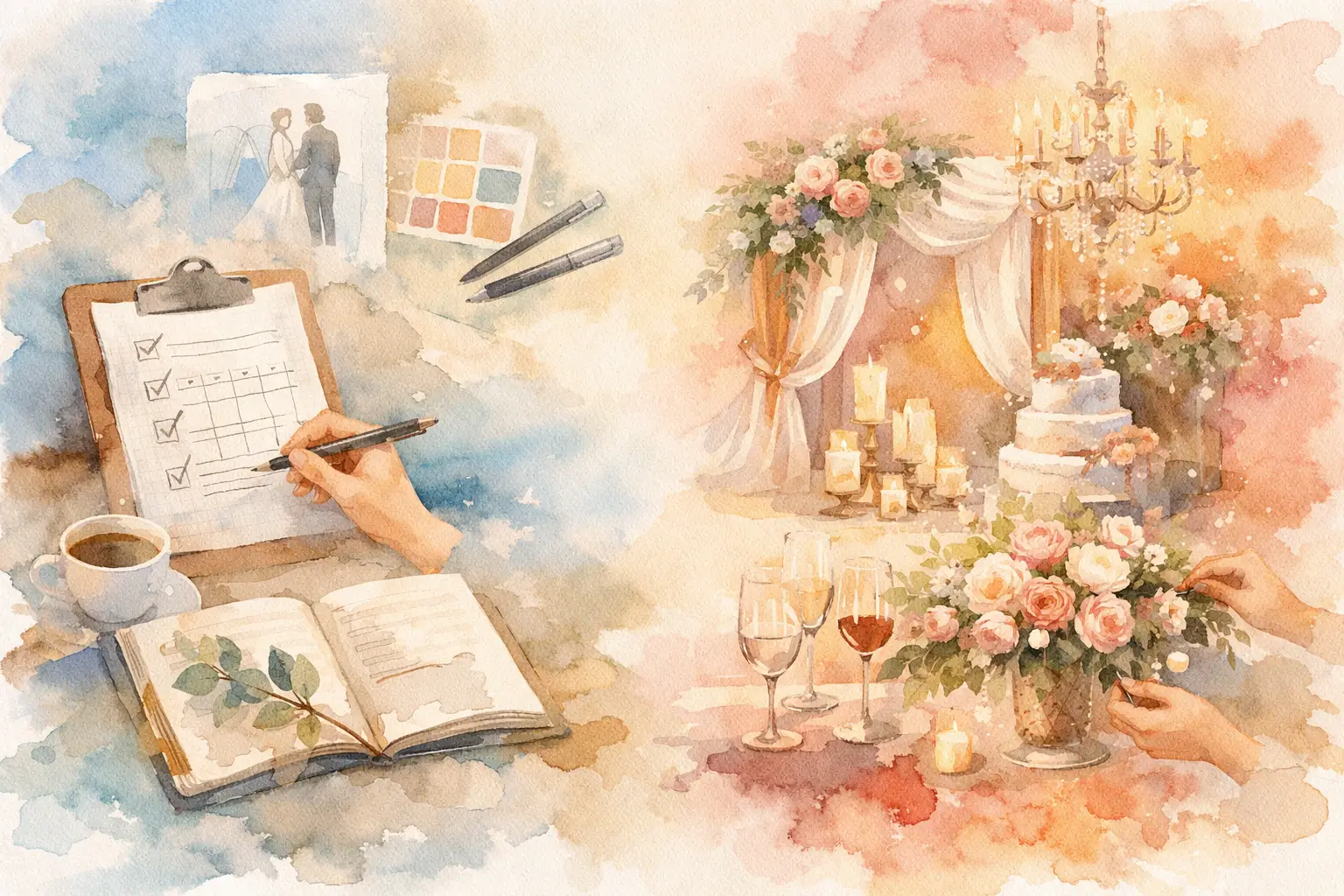
The difference between planner versus decorator services becomes especially clear when you picture the room before guests arrive. One role is centered on the many logistics behind an event. The other is centered on what guests see and feel when they enter: the tables, florals, backdrop, color palette, lighting details, and focal moments that make the celebration feel complete.
For couples and families preparing for a wedding, henna night, baby shower, Eid gathering, graduation, or engagement celebration, knowing the distinction helps you seek the right kind of support. A beautifully designed event does not happen by choosing a few attractive items separately. It comes from seeing how every visual element relates to the room, the occasion, and the people being celebrated.
Planner Versus Decorator Services: The Core Difference
An event planner typically focuses on logistics and the overall organization of an event. Their responsibilities may include schedules, vendors, venue details, guest flow, and the many decisions that keep the occasion moving forward.
An event decorator or stylist focuses on the visual environment. Their work is about transforming a space through color, texture, scale, floral styling, centerpieces, table décor, backdrops, stages, entrance displays, and other decorative details. A decorator considers how the room will photograph, where guests will gather, what the head table should communicate, and how a single design thread can carry from one area to the next.
There can be natural overlap in conversation. A planner may have thoughts about the overall look, and a decorator may need to understand practical details such as the room layout and event timing for installation. Still, the services are not interchangeable. The main question is simple: do you need someone to manage the event itself, or do you need someone to create its visual atmosphere?
What an Event Decorator Brings to the Celebration
Décor is often treated as a final layer, but it has a powerful effect on the way a celebration is experienced. The right design can make a large ballroom feel warm and intentional, give a simple venue a stronger sense of occasion, or help a family gathering feel polished without losing its personal character.
A decorator begins with the visual story. For a wedding, that may mean balancing soft florals with elegant linens, candlelight, and custom centerpieces that complement the couple’s colors. For a cultural celebration, it may mean creating a setting that honors meaningful colors, patterns, seating areas, or ceremonial focal points while still feeling personal to the hosts.
The goal is not to fill every corner. It is to make thoughtful choices about where the eye should go. A statement backdrop can frame an entrance or sweet table. A carefully styled stage can give an important moment the presence it deserves. Coordinated tables can make the full room feel considered, even before a guest notices each individual detail.
Centerpieces Are More Than Table Fillers
Centerpieces are among the most visible décor choices at a reception or celebration. They sit at guest level, appear in photographs throughout the event, and help establish whether the room feels soft and romantic, modern and clean, colorful and festive, or richly layered.
The strongest centerpiece designs account for more than flowers or vessels. Height matters because guests still need to see one another. Scale matters because a tall room and an intimate room call for different proportions. The colors should support the larger design rather than compete with the backdrop, linens, chairs, or table settings.
A decorator looks at these relationships as a whole. Instead of treating the centerpiece as an isolated item, it becomes part of the table’s complete presentation.
When Décor Services May Be the Better Fit
Decorator services are especially valuable when the visual experience is your main priority. Perhaps you already have the event logistics handled, or perhaps family members are taking care of the organizational side. What you need is a professional eye to turn your ideas, inspiration images, colors, and traditions into a setting that feels cohesive.
You may be a good fit for décor and styling support if you are focused on the appearance of your ceremony or reception space, want custom centerpieces and table styling, need a backdrop or focal display, or feel unsure how to connect several beautiful ideas into one clear look.
This is also helpful when a venue feels plain, overly large, or visually unlike your celebration. The room may be practical, but décor can give it character. Through placement, color, draping, florals, and intentional focal points, the setting can feel more aligned with the significance of the day.
When a Planner May Be Necessary Too
Some events benefit from both a planner and a decorator because the needs are different. If you need help overseeing a complex event schedule, communicating with multiple vendors, or organizing the operational details of the day, a planner may be the appropriate professional for that portion of the celebration.
Then, a decorator can concentrate on the visual work: how the space should look, which areas should receive emphasis, and how the décor will create a unified atmosphere. This division can be particularly helpful for larger weddings and events with many moving pieces.
It depends on your circumstances. A small gathering may only need refined table décor and a beautiful focal area. A larger wedding may call for logistical support as well as a dedicated décor professional. Choosing one service does not diminish the value of the other. It simply gives each role the room to do its work well.
Start With the Feeling You Want Guests to Remember
Before discussing individual décor pieces, think about the feeling you want guests to carry with them. Do you imagine an airy wedding reception with soft neutrals and candlelight? A vibrant henna night with layered color and an inviting stage area? A baby shower that feels sweet and elevated rather than overly themed? A graduation celebration with a polished family-table setting and a memorable photo moment?
Those answers give direction to the design. From there, the details can begin to take shape: the palette, floral style, tabletop textures, backdrop materials, statement areas, and the balance between understated and dramatic elements.
For cultural celebrations, the visual direction should be shaped with care. There is no single look for a Sudanese wedding, Arab wedding, Eid celebration, or henna night. Families have their own traditions, preferences, and ways of celebrating. Thoughtful décor should make room for those details rather than applying a generic theme.
Questions to Ask Before Hiring a Decorator
A productive décor conversation starts with a clear picture of your event. Share the type of celebration, venue style, approximate guest count, colors you love, and any traditions or visual details that matter to you. Inspiration images can be helpful, not because a design should be copied exactly, but because they reveal what you are drawn to: abundant florals, clean lines, warm metallics, romantic draping, bold color, or a more minimal table.
It is also useful to ask how the design will work across the room. Will the head table have its own focal treatment? How will guest tables relate to the ceremony area or backdrop? Which decorative areas will have the greatest visual impact? These questions move the conversation beyond individual items and toward a cohesive event setting.
A Beautiful Room Should Still Feel Like Yours
The most memorable event décor does more than look good in photos. It makes guests feel that they have stepped into a space created for this particular celebration. The colors reflect the hosts. The tables invite people to gather. The focal areas give meaningful moments a setting that feels worthy of them.
At Sue’s Elegant Events, the focus is on that visual transformation: bringing centerpieces, table décor, floral styling, backdrops, and statement displays together with care. When you understand the difference between planner and decorator services, you can choose support that matches what matters most – and give your celebration a setting that feels personal from the first glance.