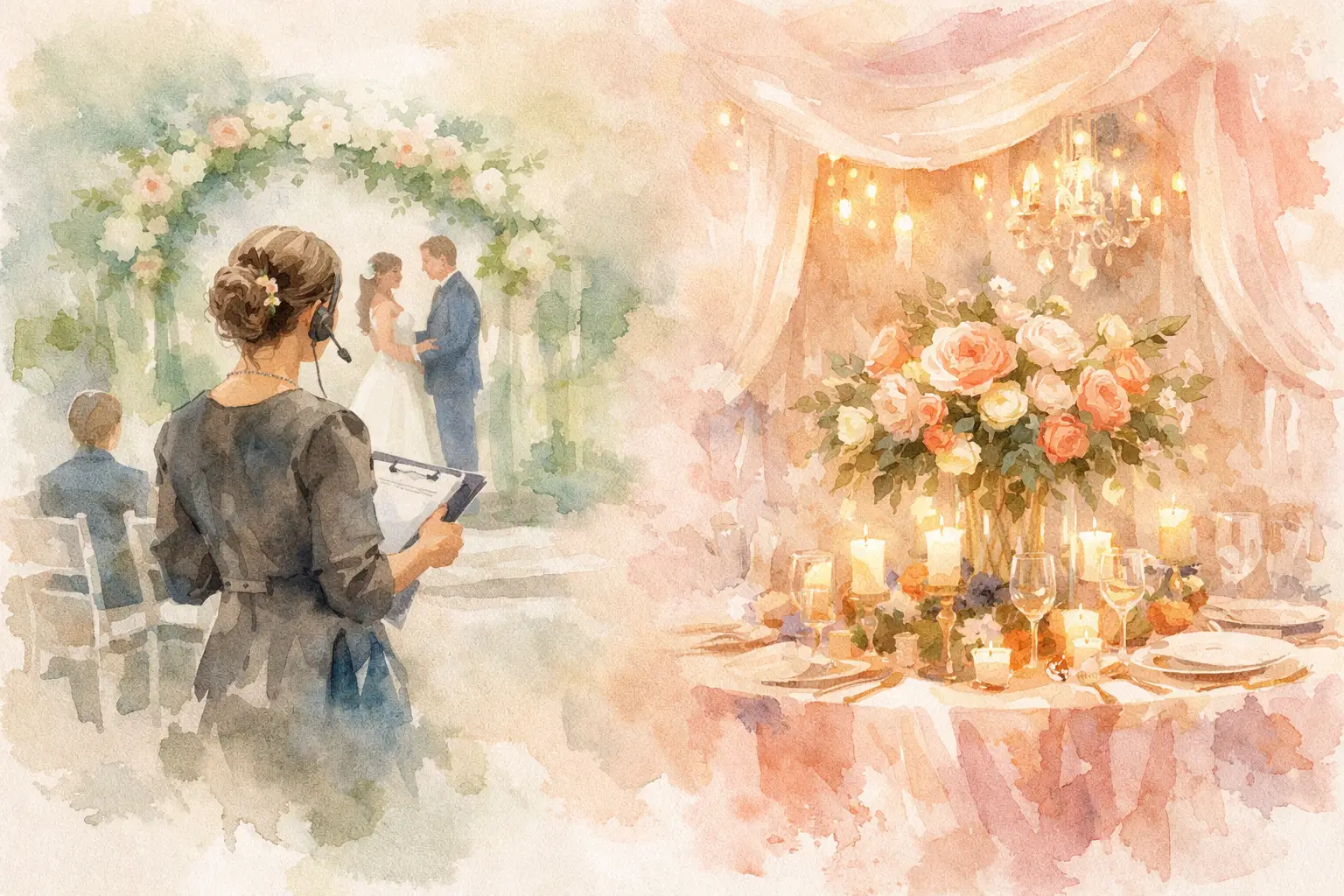
A wedding can be beautifully planned and still feel visually unfinished when the room does not tell one clear story. That is where the distinction between wedding day coordination services and wedding décor styling matters. Both can support a memorable celebration, but they solve very different needs.
A coordinator focuses on the movement of the day. A décor stylist focuses on what guests see and feel when they enter the space: the tables, flowers, color palette, focal points, and finishing details that turn a venue into a celebration that feels like yours. Knowing which role you need, or whether you need both, helps you make clearer choices from the start.
What Wedding Day Coordination Services Cover
Wedding day coordination services are centered on logistics. A couple may hire a coordinator to help keep the wedding day organized, communicate with vendors, manage the order of events, and address unexpected issues as they arise. Their work is about timing, communication, and the practical flow of the celebration.
For couples who have arranged their own ceremony and reception details, this support can bring peace of mind. It allows family members and the wedding party to be present rather than handling questions throughout the day. The exact scope varies by professional, so it is wise to ask directly what is included before booking.
Coordination, however, is not the same as designing the visual experience. A coordinator may confirm that tables are set before guests arrive, but they are not necessarily selecting centerpieces, creating a head-table focal point, or shaping how candlelight, linens, florals, and table settings work together. Those decisions belong to the décor and styling side of a wedding.
What Wedding Décor Styling Brings to the Room
Décor styling begins with the atmosphere you want to create. Perhaps you picture a soft, romantic reception with layered neutrals and floral centerpieces. Perhaps you want rich jewel tones, a statement backdrop, and tables that feel festive and expressive. Or perhaps the goal is polished simplicity, where every detail is intentional without competing for attention.
A décor professional translates that feeling into visible elements. Centerpieces give each table presence. Table décor creates rhythm across the room. Floral styling adds color, softness, or structure. Backdrops, stages, welcome displays, and focal installations guide the eye and create meaningful places for photos and gathering.
The strongest designs do not depend on one dramatic item. They depend on connection. The palette should relate to the room, the tables should complement the head table or sweetheart table, and the focal areas should feel like part of the same celebration. When those details are considered together, the result feels composed rather than collected piece by piece.
Coordination and Styling Work Best as Separate, Complementary Roles
It is easy to assume that anyone involved in a wedding handles every detail. In reality, coordination and styling are specialized services with different responsibilities. Keeping those responsibilities clear creates a better experience for everyone involved.
A wedding coordinator can oversee logistics while a décor stylist concentrates on the finished appearance of the event space. One protects the flow of the day; the other shapes the visual welcome guests receive. Neither role replaces the other, and some weddings need one more than the other.
For example, a couple hosting an intimate restaurant reception with a simple setup may mainly need thoughtful table styling and a few elevated focal details. A large wedding with several moving parts may benefit from both a logistics professional and a décor team. It depends on the scale of the celebration, the venue, the number of participating vendors, and how much visual transformation the space requires.
The key is to communicate early. Share your color direction, important cultural or family details, and the areas of the room that matter most to you. Clear conversations help the styling vision stay focused while allowing each professional to work within their own expertise.
How to Tell When Your Wedding Needs Professional Styling
If you can describe the feeling you want but are unsure how to create it in the room, professional styling can be especially valuable. Many couples know they want elegant, welcoming, romantic, modern, or culturally meaningful décor. The challenge is turning those words into a complete visual plan.
Professional décor styling is also helpful when a venue is functional but visually plain. Ballrooms, community spaces, banquet halls, and tented receptions often have good bones, yet need carefully chosen details to feel personal. Centerpieces, specialty linens, floral elements, backdrop designs, and focal displays can shift the character of the room without overwhelming it.
Consider styling support when you want to avoid a mismatched look. A beautiful centerpiece can still feel out of place beside unrelated table décor or a backdrop in a competing color. Cohesion comes from considering scale, repetition, texture, and placement across the entire space.
For weddings in Greater Boston and surrounding Massachusetts communities, there is also a practical advantage to working with a local décor professional who understands how different event spaces can photograph and feel once guests are seated. The goal is not simply to fill a room. It is to create a setting that feels warm, balanced, and ready for the people gathering there.
Design Details That Make a Reception Feel Complete
Centerpieces Set the Tone at Every Table
Guest tables occupy much of the reception room, which makes centerpieces one of the most influential décor choices. They can be light and delicate, sculptural and elevated, lush and colorful, or understated with a soft glow. The right approach depends on the room, table shape, guest count, and desired mood.
Height matters as much as color. Taller designs can add drama in a spacious ballroom, while lower arrangements often encourage easy conversation and work beautifully in more intimate settings. A balanced design may use varied heights while repeating a consistent palette and material story.
Focal Areas Give the Celebration a Visual Center
A sweetheart table, head table, stage, or backdrop gives guests a natural place to look. It also becomes part of many photographs, so it deserves more thought than a last-minute decorative addition. A focal area can be expressive without being overly elaborate when its colors and materials connect back to the tables and florals.
For cultural celebrations, focal décor can also create a meaningful setting for important moments. A henna night, wedding reception, engagement, or Eid gathering may call for colors, textiles, floral details, or display elements that feel aligned with the family’s vision. The most respectful approach is always personal: listen to what matters to the hosts instead of treating tradition as a fixed template.
Lighting and Texture Create Depth
Even a restrained palette gains richness through texture. Glass, candlelight, florals, fabric, metallic accents, and layered table details can make a room feel inviting and dimensional. These elements should support the overall design, not compete with it.
Candlelight, for instance, can soften a formal room and make evening tables feel more intimate. Florals may bring movement and freshness. A carefully placed backdrop can give a large space a stronger sense of occasion. Small details become memorable when they are repeated with purpose.
Questions to Ask Before Booking Either Service
Before hiring a coordinator or a décor stylist, start with what you actually need help with. If your concern is the timing of the ceremony, vendor arrivals, and how the day runs, speak with a coordination professional. If your concern is how the reception will look, how your colors will come together, and how to create a polished setting, speak with a décor and styling professional.
Ask each provider to describe their role in plain language. Find out which visual elements are included, what information they need from you, and how the design will reflect your venue and celebration. If you are using both services, make sure everyone understands who is responsible for logistics and who is responsible for the décor vision.
At Sue’s Elegant Events, the focus is on the visual transformation of weddings and meaningful celebrations through custom centerpieces, table décor, florals, backdrops, and thoughtfully styled focal areas. The aim is a space that feels coordinated in appearance, personal in its details, and welcoming from the first guest arrival.
When you picture your wedding, pay attention to the image that stays with you: the glow of the tables, the flowers framing a meaningful moment, or the feeling of seeing your guests enter a room that truly reflects your celebration. That image is a strong place to begin the décor conversation.