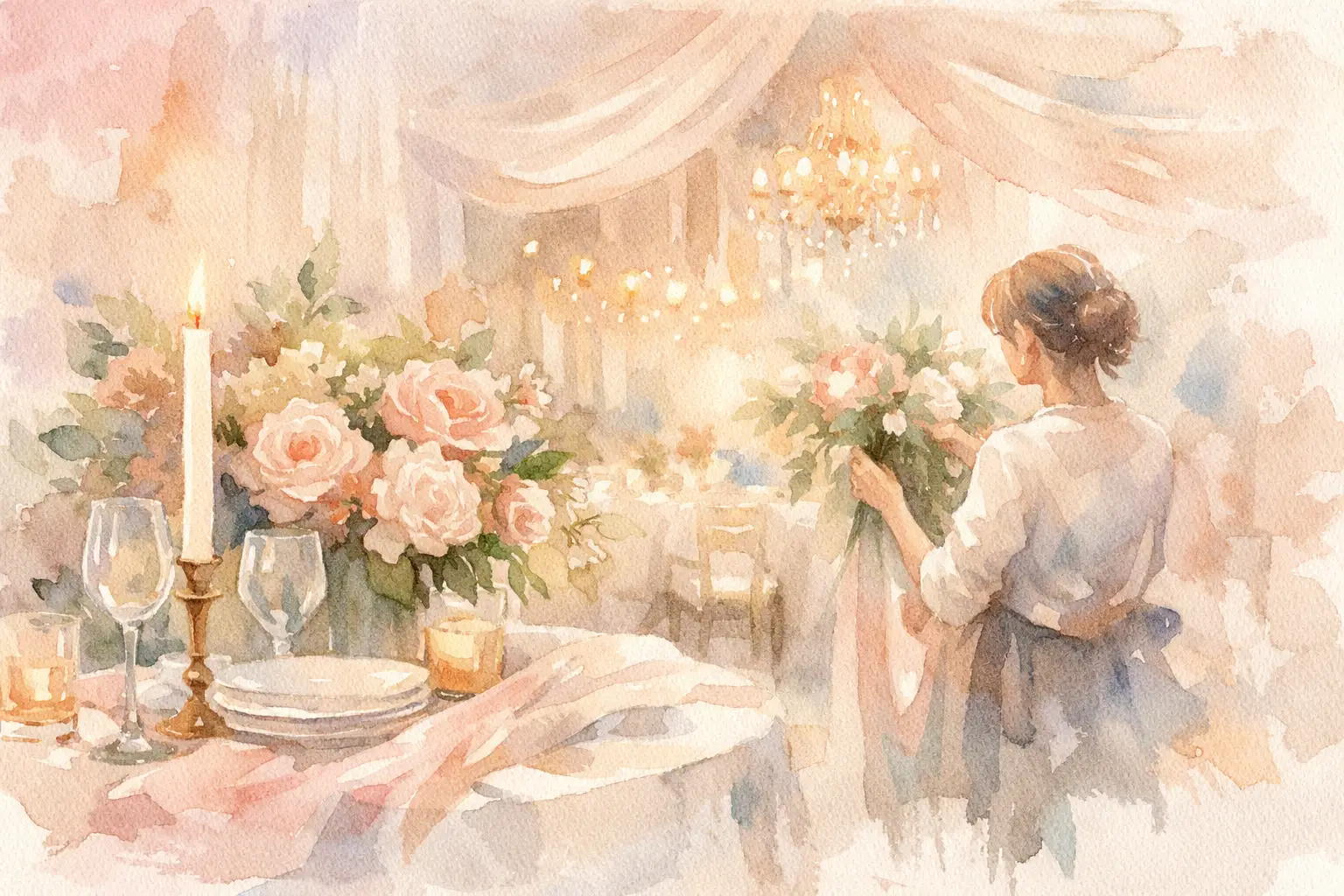
The reception room may be booked, the guest list may be growing, and suddenly the question is no longer simply what colors you like. It is how the room will feel when guests arrive. If you are wondering when to hire an event planner or seek professional décor support, begin with the kind of help you truly need. Planning support and event styling serve different purposes, and knowing the difference can make the process feel much clearer.
For many weddings and special celebrations, the visual experience needs focused attention long before the final details are in place. Centerpieces, table décor, floral styling, backdrops, stages, and focal displays work together to shape the atmosphere of the day. A décor stylist helps turn those individual elements into a cohesive setting.
When to Hire an Event Planner vs. a Décor Stylist
An event planner is generally focused on the logistics of an event, while a décor stylist is focused on its appearance. If you need help managing schedules, bookings, vendor communication, or the many moving pieces behind an event, planning support may be the right fit.
If your main concern is the visual transformation of the space, a décor stylist is often the more direct choice. Perhaps you have a venue but cannot picture how to make a ballroom feel warm and personal. Perhaps your tables feel unfinished, or you want a backdrop that gives your celebration a meaningful focal point. Those are design questions.
The distinction matters because beautiful events are not created by adding more décor at random. They come from thoughtful choices about scale, color, texture, lighting, placement, and the way guests move through a room. A design-focused partner can help your vision feel intentional rather than pieced together.
You Have a Vision, but the Room Does Not Match It
A mood board can be helpful, but it does not always reveal how a design will translate to a real venue. A soft, romantic palette may look delicate online and disappear in a large reception room. A dramatic centerpiece may be stunning in a photo but feel too tall for conversation at a round table. Metallic details can brighten one space and compete with existing finishes in another.
This is a strong time to bring in a décor professional. The earlier you can discuss the room, the better the design can respond to its proportions and character. Ceiling height, table size, wall color, entrance placement, and existing furniture all influence what will look balanced.
For a Boston or Greater Boston wedding, venues can vary widely, from formal ballrooms to modern event spaces and intimate banquet rooms. The décor should work with the setting rather than fight against it. A clear design direction gives every visual detail a purpose.
The décor feels disconnected
Many hosts begin with a few ideas they love: blush flowers, gold chargers, a statement backdrop, candles, or a particular fabric. Each element may be beautiful on its own, but the room can still feel unfinished if those choices do not relate to one another.
A stylist looks at the full picture. The ceremony area, reception tables, sweetheart table, stage, entrance, and photo moment should feel connected without looking repetitive. That sense of continuity is often what guests notice, even if they cannot name exactly why the room feels so polished.
Your Tables Need More Than a Centerpiece
Tables are where guests spend much of the celebration. They deserve more consideration than a single item placed in the middle. The right centerpiece design considers the shape of the table, the formality of the event, the room’s palette, sightlines, and how the surrounding décor will support it.
For a wedding, table décor may set the tone for the entire reception. Low floral arrangements can feel welcoming and conversational. Taller arrangements can create drama and draw the eye upward. A mix of heights can add rhythm to a large room, provided the overall palette and materials remain consistent.
The same is true for baby showers, engagement celebrations, graduations, and milestone birthdays. A well-styled table makes the gathering feel cared for before the first guest takes a seat. It also gives the room a finished appearance in photographs without making the celebration feel overly formal.
The Celebration Has Cultural Meaning
Cultural celebrations often carry visual traditions, family expectations, and meaningful details that deserve care. A henna night may call for a rich, welcoming setting that supports the beauty of the occasion. An Eid gathering may feel festive and elegant through color, layered table styling, and a thoughtful focal area. Sudanese and Arab weddings can include distinct preferences for color, presentation, and celebratory atmosphere.
There is no single formula for styling these events. Families may prefer a traditional presentation, a modern interpretation, or a design that brings several influences together. The best approach begins with listening: which colors feel meaningful, which moments need visual emphasis, and what feeling should the space hold for family and guests?
Hiring a décor stylist can be especially valuable when the event carries this kind of personal significance. The goal is not to make a celebration look generic or trend-driven. It is to create a setting that feels beautiful, respectful, and true to the people gathering in it.
You Are Working With a Large or Visually Plain Space
Large rooms can make even lovely décor feel small. A spacious ballroom may need a stronger entrance moment, elevated centerpieces, a stage treatment, or a backdrop that gives the eye somewhere to land. On the other hand, a smaller venue may need restraint, with carefully chosen details that add elegance without crowding the room.
A décor professional can help determine where the visual impact should live. Not every corner needs to be decorated. Often, a few thoughtfully styled areas create more impact than spreading too many elements across the entire venue.
Consider the places guests will naturally notice first: the entrance, head table or sweetheart table, stage, gift area, and reception tables. These areas can establish the event’s visual story while allowing the rest of the room to breathe.
You Want the Event to Feel Personal, Not Standard
There is a difference between decorating a room and styling a celebration. Personal styling considers the details that reflect the people being honored. It may be a color palette inspired by a couple’s story, a floral look that suits the season, or a backdrop designed around the importance of a graduation, engagement, or family gathering.
This does not mean every detail needs to be custom in a complicated way. It means the design should have a point of view. When the colors, floral elements, linens, centerpieces, and focal displays are selected with intention, the event feels more personal and memorable.
At Sue’s Elegant Events, the focus is on creating that visual harmony through elegant décor and styling. The conversation starts with the atmosphere you want guests to experience, then considers the design elements that can bring it to life.
Hire Décor Support Before the Design Becomes Rushed
The best time to begin discussing décor is usually once you know the event date, venue, approximate guest count, and the kind of celebration you are hosting. You do not need every detail finalized to start a design conversation. In fact, waiting until the final weeks can limit the time available to thoughtfully shape the look of the event.
Early styling decisions can guide later visual choices. Once you have established a palette and overall mood, it becomes easier to select attire details, printed pieces, cake styling, and other elements that will appear in the room. The event does not need to match perfectly, but it should feel like the pieces belong together.
That said, late decisions do not always mean beautiful décor is out of reach. A focused design can still make a meaningful difference, especially when attention is placed on the most visible areas. The trade-off is simply that there may be fewer options for custom details or a more layered installation.
A Few Questions to Ask Before You Reach Out
Before speaking with a décor stylist, think about the feeling you want the room to create. Do you picture romantic and soft, clean and modern, warm and colorful, or formal and dramatic? Consider which areas matter most to you and whether there are colors, traditions, or details you would like reflected in the design.
It also helps to share photos of the venue and any inspiration you have collected. Inspiration is useful not because it needs to be copied, but because it reveals what you are drawn to: flower shapes, table height, candlelight, fabric, color combinations, or a particular kind of backdrop.
A beautiful event begins when the space starts to feel like it belongs to the people celebrating in it. Whether you need planning support, décor styling, or both in separate roles, choose help that matches the part of the celebration you want to strengthen most.