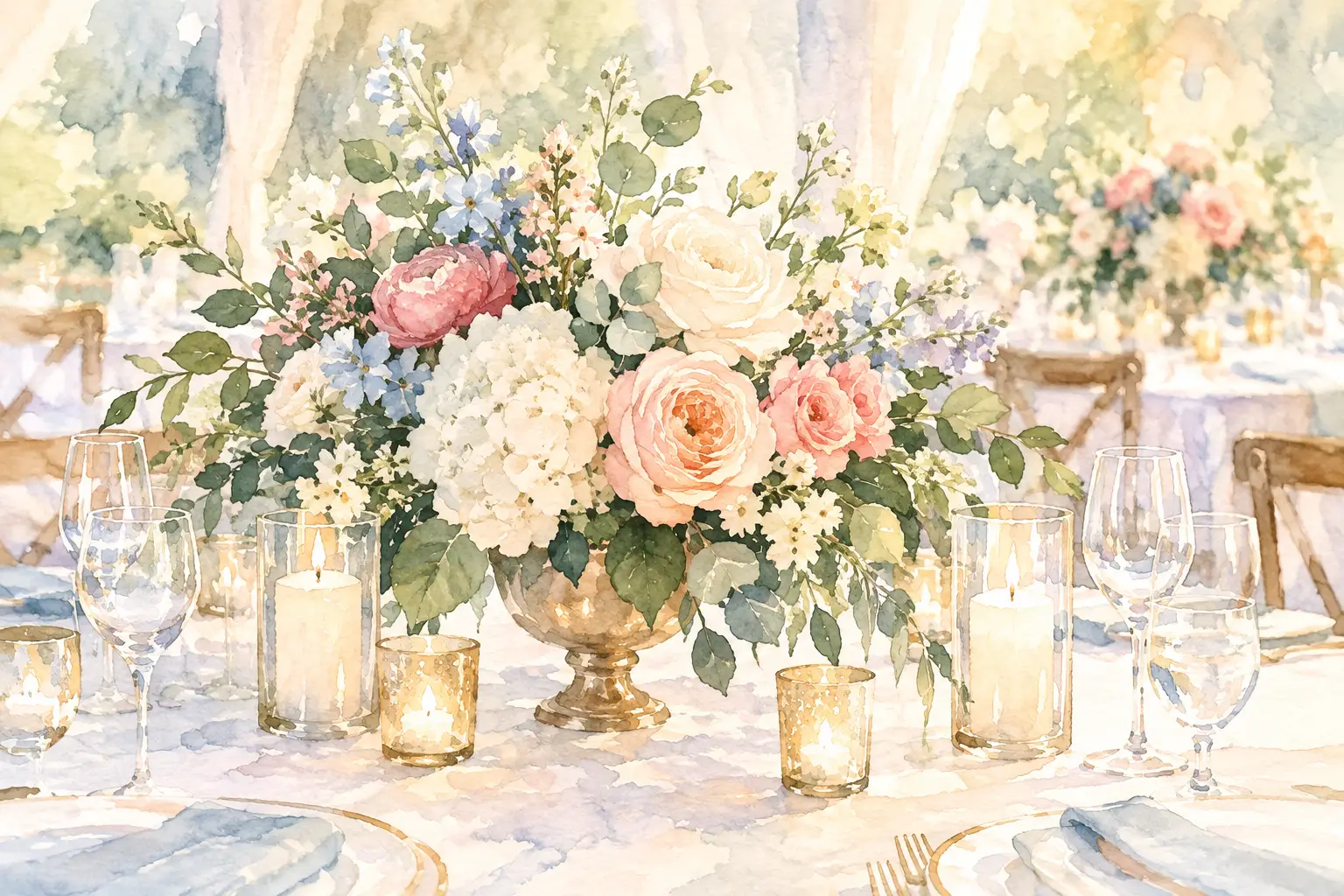
A reception can have a beautiful room, lovely linens, and carefully chosen place settings, yet still feel unfinished when the tables lack a focal point. Wedding centerpieces are often the detail that gives each table its presence, drawing the eye upward, adding softness or sparkle, and making guests feel that they have arrived somewhere thoughtfully prepared.
The strongest centerpiece designs do more than fill space in the middle of a table. They support the mood of the celebration, connect individual tables to the room as a whole, and leave room for the people gathered around them. Whether the vision is romantic and floral, modern and sculptural, richly layered for a cultural celebration, or quietly classic, the right design begins with the atmosphere you want guests to feel.
Wedding Centerpieces Start With the Room
A centerpiece should never be chosen in isolation. Its color, height, texture, and shape need to make sense alongside the ballroom, tent, banquet hall, or private venue where the reception takes place. A delicate low arrangement may disappear in a grand room with high ceilings, while a tall, elaborate display can overwhelm an intimate gathering.
Start by looking at the space as a complete picture. Consider the ceiling height, table shape, chair style, wall colors, existing lighting, and the distance between tables. In Greater Boston and throughout Massachusetts, wedding spaces can range from historic halls with architectural character to clean, contemporary venues that call for a bolder visual statement. The décor should complement what is already beautiful in the room rather than compete with it.
Table linens and place settings matter here, too. A centerpiece placed on soft ivory linen reads differently than the same arrangement on black, navy, or richly colored fabric. Gold chargers can warm up white and blush florals, while clear glass, silver accents, or mirrored details can make a cooler palette feel crisp and refined. These layers are what make a table look styled rather than simply decorated.
Choosing the Right Height for Wedding Centerpieces
Height is one of the most important decisions in centerpiece design because it affects both the room and the guest experience. Low designs create an intimate, close-to-the-table feeling. They work beautifully when the goal is soft romance, a full tablescape, or easy conversation across the table. Floral arrangements, candle groupings, and textured greenery can offer plenty of impact without blocking anyone’s view.
Tall centerpieces create drama and help carry the eye through a large reception room. Elevated florals, branches, hanging details, or arrangements on clear stands can make a room feel more expansive. The key is keeping the visual weight high enough that guests can still see one another. A centerpiece that sits directly in the line of sight is rarely comfortable, even when it is beautiful.
Many of the most memorable rooms use a mix of heights. Alternating low and tall arrangements adds rhythm from table to table and gives a reception more depth in photographs. The designs still need a common thread, such as repeated flowers, vessels, colors, or candlelight, so the room feels coordinated instead of random.
Let the Color Palette Do More Than Match
A wedding palette does not need to be limited to two exact shades repeated everywhere. In fact, centerpieces tend to look more natural and elevated when they use a range of related tones. For example, a white and gold wedding might include cream, ivory, soft champagne, pale blush, warm greenery, and touches of gold. A deep jewel-tone design can blend burgundy, plum, berry, amber, and hints of muted rose.
The season can guide color choices, but it does not have to dictate them. Spring weddings often welcome airy greens and soft petals, while fall can hold richer tones and more texture. Still, a couple who loves clean white florals in October or warm terracotta in May should not feel limited by the calendar. Personal taste and the feeling of the event should lead the design.
Color also changes under event lighting. A shade that looks subtle in daylight may become much deeper in a dim reception room, while reflective elements can catch candlelight beautifully. This is one reason a cohesive décor approach matters. Florals, linens, chargers, candles, napkins, and backdrops should be considered together, not selected as separate decisions.
Flowers, Candles, and Texture
Flowers bring movement and softness, but they are not the only way to create a striking centerpiece. Candles can add warmth and a gentle glow. Glass cylinders, votives, metallic vessels, taper holders, and mirrored or textured bases can create dimension even with a restrained floral design. The most successful tables often balance these elements rather than relying on just one.
Texture is especially valuable when working with a neutral palette. White flowers against white linen can look beautiful, but the design needs variation to avoid becoming flat. Garden-style blooms, layered greenery, ribbed glass, soft fabric napkins, and subtle metallic details give the eye something to notice at every level.
For tables where fragrance may be a concern, floral choices can be adjusted so the design remains inviting without becoming overpowering. Similarly, candle styles should suit the venue’s policies and the table layout. Beauty should always feel comfortable for guests, not fragile or difficult to navigate.
Make Room for Conversation and Celebration
Centerpieces are part of the guest experience, not just a visual for the room reveal. They should leave enough usable space for place settings, shared items, and the natural movement of a meal. On long rectangular tables, one large centerpiece may not be enough to carry the length. A repeating design of low florals, candles, and carefully spaced accents can create a more intentional look from end to end.
Round tables offer a natural center point, but scale still matters. A small arrangement on a large round table can feel lost, while an overly wide arrangement can crowd the setting. The vessel, floral spread, and surrounding candlelight should be proportioned to the table rather than selected for a standalone look.
For sweetheart tables, head tables, or family tables, the centerpiece approach can be more layered. These are often focal areas within the reception, and styling can extend beyond the center of the tabletop with lush florals, candles, draping, or coordinated backdrop details. The goal is not to make every table identical. It is to create a visual hierarchy that naturally draws attention to the most meaningful areas.
Centerpieces Can Honor Cultural Details Beautifully
For celebrations that include cultural traditions, table décor can be an especially thoughtful place to bring in meaningful color, pattern, and presentation. A Sudanese or Arab wedding, henna night, or Eid gathering may call for richer textiles, gold details, lantern-inspired accents, bold floral tones, or a more abundant table style. The exact choices should come from the family’s vision and the traditions they want reflected, rather than a one-size-fits-all interpretation.
A cohesive design can carry those details through centerpieces, focal displays, stage décor, and tablescape accents. When these elements speak to one another, the room feels personal and celebratory without losing refinement. Respectful styling begins with listening closely to what matters to the people hosting the event.
Why Professional Styling Changes the Result
A beautiful centerpiece is not simply an arrangement placed on a table. It is part of a larger visual composition. Its height needs to work with the room, its vessel needs to suit the table, and its colors need to connect with every surrounding layer. When those details are handled with a clear design eye, guests may not be able to name every choice, but they feel the difference.
At Sue’s Elegant Events, centerpiece styling is approached as part of the full visual story of the celebration. The focus is on creating tables that feel polished, welcoming, and aligned with the couple’s style, from the first table guests see to the final candlelit details across the room.
The best centerpiece is not always the tallest, fullest, or most elaborate one. It is the one that makes the table feel complete, supports the atmosphere you imagined, and gives every guest a beautiful place to celebrate.