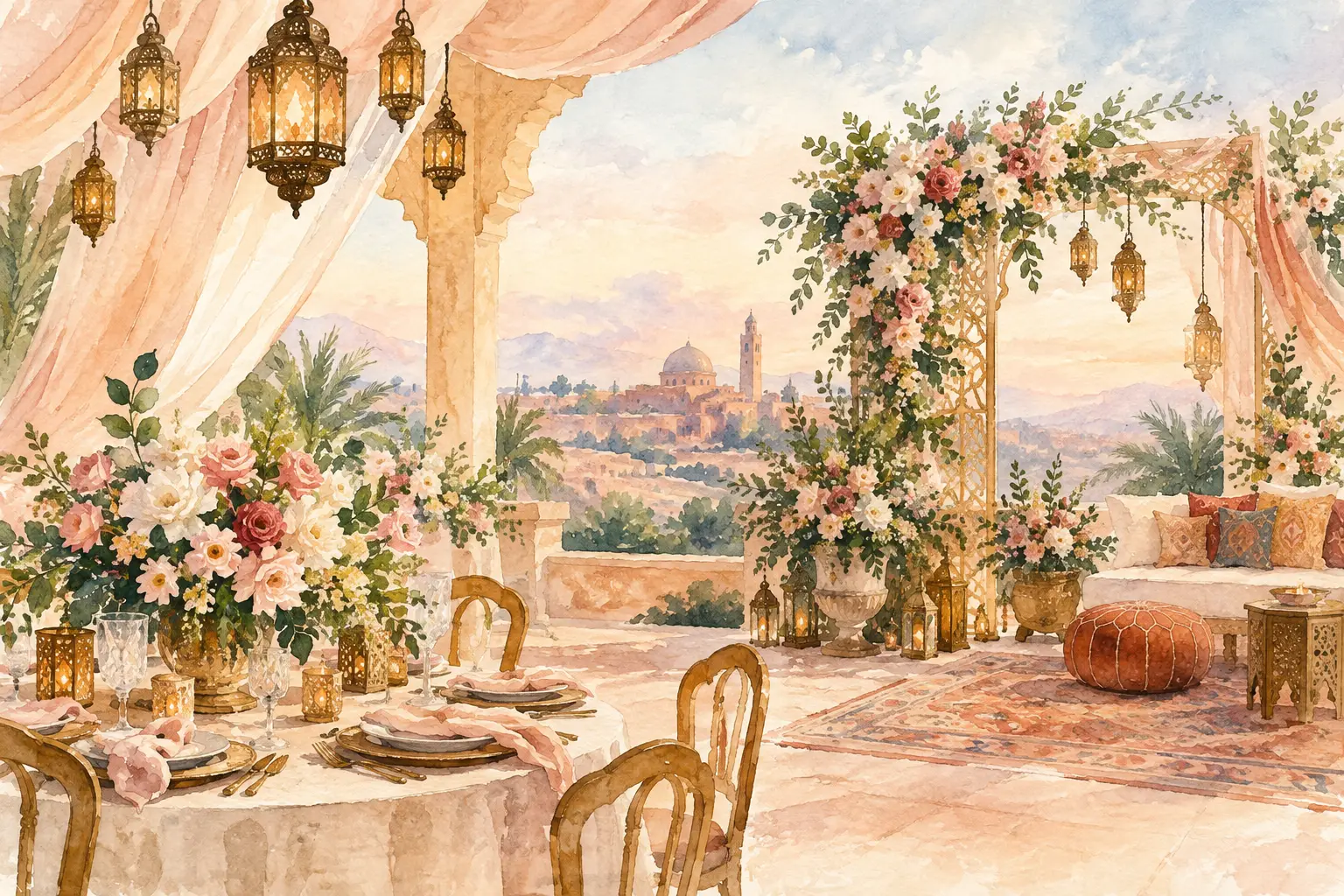
A beautifully styled Arab wedding is often remembered through the feeling of the room: the glow around the tables, the depth of the florals, the backdrop that frames a meaningful entrance, and the sense that every detail belongs together. Arab wedding decor can be richly expressive, but it does not need to follow one fixed look. The strongest designs begin with the couple’s taste, the family’s traditions, and the atmosphere they want guests to experience.
For some celebrations, that means a grand reception with ornate gold details, abundant flowers, and a dramatic stage. For others, it means a softer palette, layered candlelight, and elegant tables that let the gathering itself take center stage. The goal is not to add every possible decorative element. It is to create a visual setting that feels intentional from the first welcome moment to the final photograph.
Start With the Feeling, Not Just the Color Palette
Color matters, but it is only one part of a complete wedding design. Before selecting centerpieces or backdrop details, consider the mood the room should hold. A formal evening reception may call for ivory florals, gold accents, crystal, and warm lighting. A modern celebration may feel more fitting with clean white structures, soft draping, sculptural arrangements, and a focused palette of one or two colors.
Many couples are drawn to jewel tones such as emerald, sapphire, burgundy, plum, or deep red. These colors can bring wonderful richness to a ballroom or reception space, especially when balanced with neutral linens, gold, or clear glass. Soft blush, champagne, dusty blue, and cream can create a lighter expression while still feeling elegant and celebratory.
The best choice depends on the venue, the season, the couple’s attire, and the scale of the room. A deep palette can feel striking in a large space but may need more candlelight or lighter floral tones to avoid looking heavy. A neutral palette can feel timeless, though it benefits from varied textures so the room does not appear flat.
The Details That Shape Arab Wedding Decor
A cohesive room is built through layers. Guests may first notice the stage or focal display, but the smaller details are what make the design feel considered at every table.
Centerpieces Create the Reception Rhythm
Centerpieces are one of the most visible parts of wedding décor because they repeat throughout the room. They should connect to the overall design while allowing guests to comfortably see and speak with one another. Tall arrangements can add drama and draw the eye upward in a ballroom with high ceilings. Low, full arrangements create intimacy and allow floral color and texture to sit closer to the table.
A mix of heights often gives a reception more dimension. For example, elevated floral centerpieces can alternate with lower arrangements, candles, and refined table accents. The room feels full without every table looking identical. This approach also gives the eye moments of softness between more dramatic pieces.
Flowers do not have to carry the entire centerpiece alone. Gold vessels, glass candleholders, mirrored details, delicate greenery, and carefully chosen linens can contribute to a polished result. What matters is proportion. A centerpiece should feel generous enough for the size of the table and room, yet never crowd the place settings or make the table feel overfilled.
Tables Need Texture and Light
Table décor is where a wedding palette becomes tangible. Linens, chargers, napkins, glassware, florals, and candles work together to create depth. Even a classic white table can feel distinctly styled when layered with a textured linen, a warm metallic charger, graceful candleholders, and flowers in complementary tones.
Candlelight is especially valuable for evening receptions. It softens formal spaces, gives glass and metallic accents a gentle glow, and makes floral arrangements feel more dimensional. In rooms with strong overhead lighting, candles can help bring warmth back to the tablescape.
There is a practical side to beautiful tables as well. Guests need room to dine, converse, and enjoy the celebration. Thoughtful styling considers the visual impact of each element without treating the table as a display that cannot be used. That balance is often what separates an elegant reception from one that simply feels busy.
A Focal Display Gives the Room a Center
A stage, sweetheart-table backdrop, floral wall, or draped focal area can give the reception an immediate sense of occasion. It also creates a strong visual anchor for key moments and photographs. The design may be grand and floral-forward, or it may be restrained with soft draping, a tailored structure, and selected blooms.
Rather than choosing a backdrop as a separate feature, let it echo the reception tables. Repeating a floral variety, finish, color, or shape makes the entire room feel connected. If the tables include gold candleholders and cream roses, for instance, the focal display can carry those notes on a larger scale without becoming a copy of the centerpiece.
For cultural celebrations, focal décor can be a meaningful place to incorporate family preferences, heirloom-inspired details, favorite colors, or visual references that feel personal to the couple. There is no need to assume that every Arab wedding follows the same customs or design language. A respectful approach begins with listening and creating space for details that matter to the people being celebrated.
Blend Tradition and Personal Style Thoughtfully
Arab weddings are beautifully diverse, shaped by different countries, families, faiths, and individual preferences. Some couples want décor that feels connected to a traditional aesthetic through gold, ornate patterns, lush florals, or rich color. Others prefer contemporary styling with simple lines and a quieter palette. Both can feel authentic when the design reflects the couple rather than a generic idea of what an Arab wedding should look like.
A henna night may invite a different visual mood from the wedding reception. It can be vibrant, intimate, colorful, or layered with patterned textiles and decorative seating. A reception may feel more formal and refined. The two events can share subtle visual threads, such as a recurring color or floral note, while still allowing each celebration to have its own character.
Personal details are often more memorable than literal themes. A favorite flower, a fabric texture that recalls family style, a color chosen for its significance, or an elevated display that honors a special tradition can say more than trying to fill the room with cultural symbols. Design is strongest when it feels lived-in and specific, not borrowed for appearance alone.
Consider the Venue Before Choosing Statement Décor
The same décor can look entirely different from one venue to another. A ballroom may have high ceilings that welcome tall centerpieces, suspended elements, and a substantial stage display. A smaller banquet space may feel more beautiful with lower florals, warm candlelight, and a focused backdrop that adds depth without overwhelming the room.
Existing features matter too. Wall color, carpet, ceiling height, window placement, and room lighting all affect how décor photographs and feels in person. A design with strong contrast can refresh a traditional space, while a softer, tonal approach can complement a venue with elegant architectural details.
For weddings throughout Greater Boston and the South Shore, seasonal conditions can also shape the atmosphere. A winter reception may welcome deeper tones, velvet-like textures, and candlelit warmth. Spring and summer can support lighter florals and fresh color, although seasonal styling does not have to be predictable. The couple’s vision should lead, with the setting providing useful direction.
Let the Room Feel Connected From Every Angle
Guests experience wedding décor in motion. They enter through one view, find their tables from another, gather near the focal area, and notice small details as the evening unfolds. This is why visual continuity matters. The entrance arrangement, table styling, stage décor, and floral accents should feel like parts of the same story.
That does not mean every area must match exactly. Repetition can become flat. Instead, carry a few design elements through the room: perhaps a signature flower, a gold finish, an arch shape, or a particular mix of colors. These familiar touches create harmony while allowing each space to have its own purpose.
At Sue’s Elegant Events, the focus is on helping couples and families create décor that feels polished, welcoming, and true to the celebration. The most memorable Arab wedding décor is not simply elaborate. It is thoughtful enough that guests can feel the care in the room before a single word is spoken.