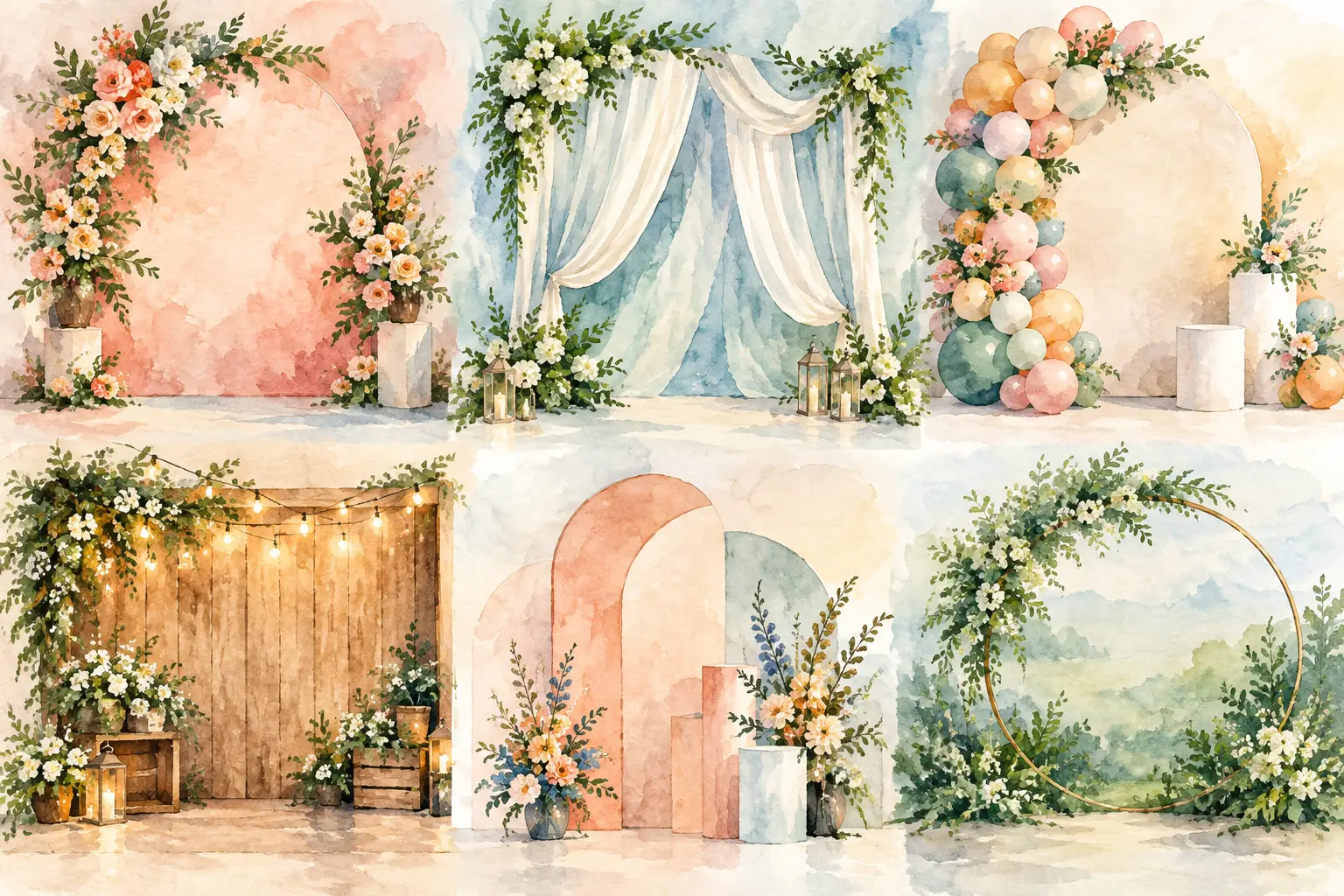
A backdrop is often the first detail guests notice when they enter a celebration space – and the detail that stays in the background of the photos people keep. The right backdrop options do more than fill an empty wall. They frame meaningful moments: a couple’s entrance, a cake cutting, a henna-night seat, a family portrait, or the joyful opening of gifts at a baby shower.
Because a backdrop carries so much visual attention, it should feel connected to the rest of the décor. Its colors, texture, scale, and placement all influence whether the room feels thoughtfully styled or simply decorated. A beautiful design is not always the largest one. It is the one that gives the celebration a clear focal point while supporting the tables, florals, linens, and surrounding space.
Start With the Moment the Backdrop Will Frame
Before choosing materials or colors, consider what will happen in front of the backdrop. A wedding sweetheart table needs a different treatment than a photo area, stage, dessert display, or cultural celebration seating area. The purpose affects the ideal height, width, shape, and amount of detail.
For a sweetheart table, a backdrop can create intimacy in a large ballroom or add softness to a room with plain walls. It should frame the couple without visually competing with them. For a ceremony, the backdrop needs to feel intentional from a distance while remaining open enough to keep the couple and their setting in focus.
Photo backdrops often allow for more texture, color, and personality. They can be designed to welcome guests into the visual story of the event, whether that means romantic florals, a clean modern panel design, or layered draping with warm lighting. At celebrations where portraits are a major part of the experience, this area deserves the same attention as the tablescape.
Backdrop Options for Different Event Styles
There is no single backdrop style that works for every event. The most fitting design depends on the room, the event’s color palette, the formality of the celebration, and the atmosphere you want guests to feel.
Draped fabric for softness and movement
Fabric draping is one of the most versatile choices for weddings and special events. Sheer white or ivory draping feels light and romantic, while champagne, blush, dusty blue, deep emerald, or black can create a more distinctive mood. Layered fabric adds depth to a large wall and can help soften a venue with hard architectural lines.
Draping works especially well when the rest of the design includes flowing linens, candlelight, and floral centerpieces. It can look understated or dramatic depending on the height of the installation and the way light is placed behind or around it. The trade-off is that fabric alone may feel too quiet in a very large room, where added florals, panels, or lighting may be needed for stronger visual presence.
Floral walls and floral focal designs
A floral backdrop brings texture, color, and a sense of celebration to a focal area. It can be full and abundant, or more selective, with floral clusters placed along an arch, frame, or panel arrangement. The latter approach can feel especially elegant when the event already features custom centerpieces or floral table décor in the same palette.
A full floral wall makes a statement, but it is not always necessary. In some spaces, a sculptural floral arrangement against draping or panels creates more dimension and lets the design breathe. The key is repetition: if the backdrop includes delicate white blooms and greenery, those same notes should appear at the tables or in nearby focal displays.
Panel backdrops for a clean, modern look
Panel backdrops are a strong choice for clients who prefer structure over softness. Curved panels, arches, layered shapes, and clean color blocking can bring a contemporary feel to weddings, birthdays, graduations, baby showers, and engagement celebrations. They also work beautifully with signage, balloon accents, florals, or a carefully styled cake display.
The appeal of panels is their flexibility. Neutral panels can support almost any color palette, while a custom-colored arrangement can become the design’s central statement. For a refined look, it helps to avoid adding every possible accent at once. A panel backdrop with one floral moment and thoughtful lighting often feels more polished than one crowded with competing details.
Arches, frames, and open designs
An open-frame backdrop can offer shape without closing off the room. Arches, metal frames, wooden structures, and curved installations can be dressed with florals, greenery, fabric, or hanging details. This style is especially useful when a venue has a beautiful wall, window, or view worth keeping visible.
Open designs are also a thoughtful choice for cultural celebrations with a rich color story. Jewel tones, metallic accents, patterned textiles, or floral layers can be incorporated in a way that feels festive without making assumptions about any family’s traditions. The most meaningful approach is to listen to the client’s vision and use décor to honor the colors, textures, and atmosphere they want to create.
Greenery and natural texture
Greenery walls, garden-inspired installations, and organic floral accents offer a fresh alternative to a fully traditional backdrop. These designs can feel romantic, relaxed, or formal depending on the flowers, lighting, and surrounding décor. They pair naturally with wood tones, gold accents, clear candle holders, and seasonal flowers.
Natural texture is particularly effective for spring and summer events, but it is not limited to those seasons. Deep greenery with ivory flowers and warm candlelight can look equally beautiful at an evening wedding or winter celebration. The important question is whether the backdrop complements the event’s overall level of formality.
Make the Backdrop Part of the Whole Room
A backdrop should not feel like a separate photo prop placed in the corner. The strongest designs carry visual details across the room. A floral color from the backdrop might appear in the centerpieces. A curved arch shape may be echoed in menu cards, table numbers, or the sweetheart table arrangement. Gold framework can connect to charger plates or candle holders.
This does not mean every surface needs to match exactly. In fact, too much repetition can make a room feel flat. Think of the backdrop as the focal point and the tables as supporting layers. They should speak the same design language, even if each area has its own role.
Scale matters here as well. A small backdrop behind a large sweetheart table can disappear, while an oversized installation in a smaller venue can make the room feel crowded. Ceiling height, wall space, guest sightlines, and the furniture placed in front of the display all affect what will look balanced.
Consider Lighting Before Finalizing the Design
Lighting changes every backdrop option. Soft uplighting can bring dimension to draping. Warm pin lights can make florals feel more layered. A reflective or metallic element may look beautiful in person but produce glare in photographs if lighting is not considered.
For daytime events with strong natural light, color and texture do much of the visual work. For evening receptions, a backdrop often needs light to retain its presence after the sun goes down. Candles near a focal display can add warmth, but they should complement rather than replace the lighting needed to define the full installation.
It is also helpful to consider photography angles. Guests will see the backdrop from across the room, but photos may capture it much closer. Fine details that look subtle from a distance can become important in portraits, while overly busy patterns can distract from faces and attire.
Choosing a Backdrop That Feels Like You
The best choice is not necessarily the trendiest one. A couple who loves quiet romance may feel most at home with layered ivory draping and soft florals. A family hosting an Eid gathering may prefer a welcoming focal display with rich color, warm light, and details that feel personal to their celebration. A graduation or birthday might call for a bolder statement that feels joyful and expressive.
Start with the feeling you want to create, then let the setting guide the scale and materials. At Sue’s Elegant Events, thoughtful backdrop styling is approached as part of the complete visual picture, so the focal area feels connected to the tables, florals, and meaningful details around it.
When the backdrop reflects the people being celebrated rather than simply following a trend, it becomes more than décor. It becomes the setting for the moments everyone came together to remember.