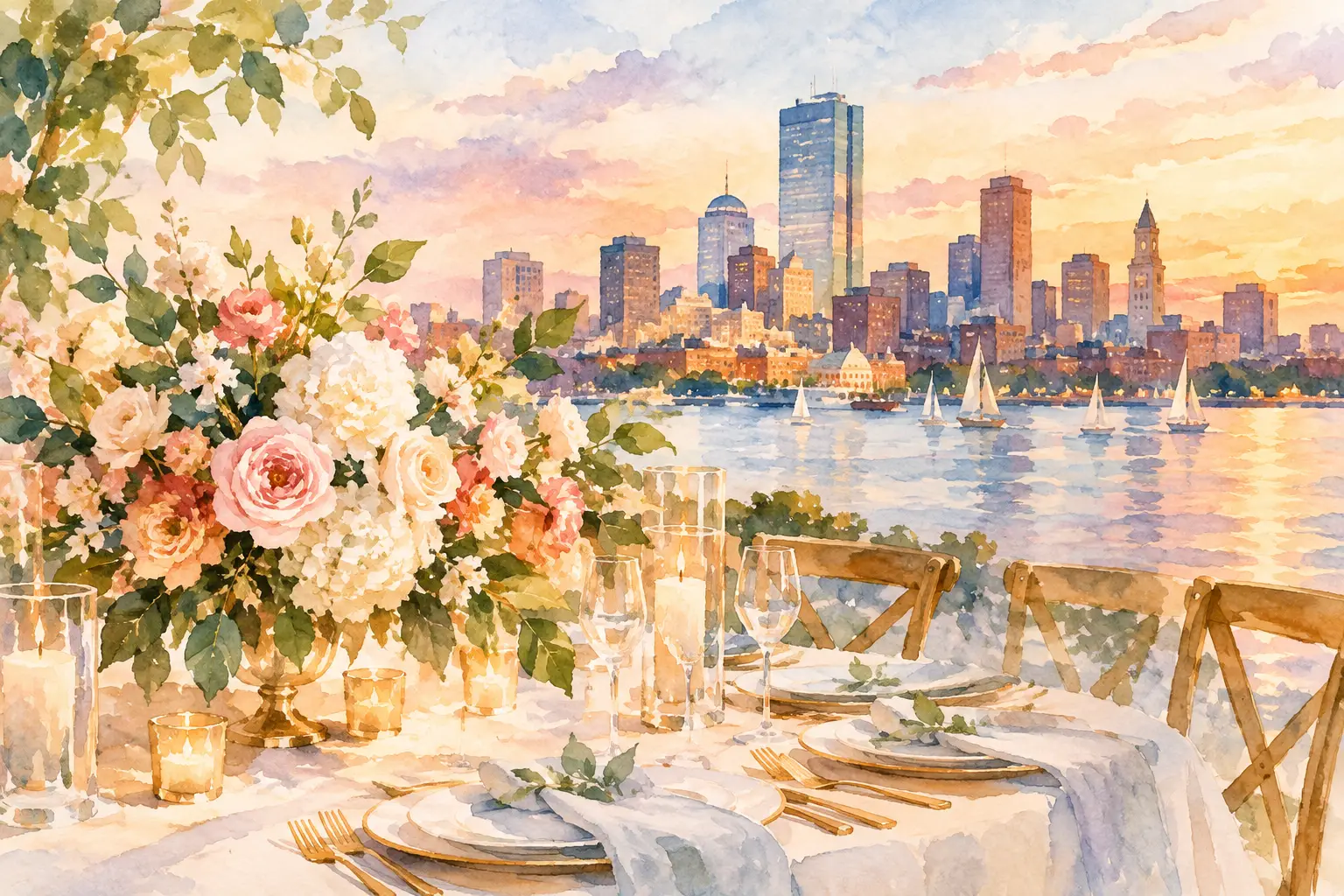
A reception can have a beautiful venue, a meaningful guest list, and a lovely meal, yet still feel unfinished when the visual details do not speak to one another. Thoughtful Boston reception styling gives the room a point of view. It connects the tables, florals, linens, backdrop, lighting, and focal areas so guests feel the atmosphere the moment they walk in.
For a wedding reception, décor is not simply an addition to the room. It helps shape how the celebration is experienced. A candlelit ballroom feels intimate and romantic. Crisp white florals with glass details feel fresh and polished. Rich jewel tones, layered textiles, and gold accents can create a warm setting for a celebration that honors cultural traditions while feeling personal to the couple.
Boston Reception Styling Begins With the Room
Every reception space has its own character. Some Boston-area venues have tall ceilings, architectural details, and formal ballrooms that call for statement centerpieces and a strong focal display. Others have a softer, more intimate scale, where carefully styled tables and candlelight make the greatest impact. The goal is not to cover every surface. It is to choose décor that works with the room rather than competing with it.
Before selecting individual pieces, look closely at what guests will see first. The entrance, head table, dance floor area, and guest tables often carry the visual story of the reception. A room may not need large installations in every corner, but it does need visual balance. If the head table is beautifully styled while guest tables feel bare, the room can appear uneven in photographs and in person.
Venue colors matter, too. Deep carpet, patterned wallpaper, dark wood, exposed brick, or dramatic chandeliers can all influence the palette and materials that will feel most at home. A design that looks beautiful in a bright, neutral space may need more depth or contrast in a darker ballroom. This is where professional styling is especially valuable: the design is considered in the actual setting, not just imagined from an inspiration photo.
Build the Design Around a Clear Feeling
The most memorable receptions usually begin with a feeling rather than a long list of décor items. You may want the room to feel modern and clean, garden-inspired and romantic, warm and celebratory, or elegant with traditional touches. That feeling becomes the filter for every choice that follows.
A couple drawn to a refined, timeless reception might choose white and cream florals, glass candleholders, soft draping, and restrained gold accents. Someone planning a bolder celebration may prefer deep burgundy, emerald, royal blue, plum, or black paired with metallic details. Neither approach is more beautiful than the other. What matters is consistency.
Let Color Create Connection
A focused color palette gives the reception a calm, intentional look. This does not mean every detail must match exactly. In fact, a room often feels more layered when it uses shades and textures within the same family. Ivory, champagne, and soft gold can create warmth without looking overly formal. Blush, mauve, and muted rose can feel romantic without becoming too sweet.
For cultural celebrations, color can carry special meaning or reflect the family’s personal style. A henna night may call for vibrant textiles, richly colored florals, patterned details, or a statement backdrop. An Eid gathering may feel beautiful with luminous gold, green, cream, or jewel tones. The right design should respect the significance of the occasion while leaving room for each client’s preferences and traditions.
Choose One or Two Statement Moments
Not every part of a reception needs to be dramatic. Often, a few well-styled focal points make a stronger impression than many competing details. A head table installation, a floral backdrop, a styled sweetheart table, or an elevated stage can give guests an immediate visual anchor.
The best focal displays also serve the experience of the room. They frame meaningful moments, including toasts, family photos, first dances, or the couple’s entrance. They should photograph beautifully, but their purpose is larger than the photograph. They help the space feel celebratory from every angle.
Centerpieces Set the Tone at the Table
Guest tables are where people spend much of the reception. Centerpieces deserve attention because they influence both the atmosphere and the comfort of the people sitting around them. The right arrangement adds beauty without interrupting conversation, crowding place settings, or making the table feel overly busy.
Low floral centerpieces can feel lush, welcoming, and easy to talk across. They work especially well when paired with candles, textured runners, chargers, and coordinated napkins. Tall centerpieces bring height and formality to a large room, drawing the eye upward and helping fill spaces with high ceilings. A mix of high and low designs can create rhythm across the room, though it should be handled carefully so the tables still feel part of one collection.
Table styling is about more than flowers. Glassware, candlelight, linens, napkin treatments, chargers, and small accent pieces all contribute to the finished look. A simple centerpiece can feel elevated when the surrounding details support it. On the other hand, an elaborate floral arrangement can lose its impact if the rest of the table feels disconnected.
There is also a practical trade-off. Tall designs create drama, but clear stands or thoughtfully open arrangements may be needed to preserve sight lines. Heavy color and texture can make a large room feel inviting, while a smaller reception may benefit from more breathing room. Good styling considers both the visual impact and how guests will use the space.
Create Layers, Not Clutter
Elegant reception décor has dimension. It may include flowers, candles, fabric, metallic accents, and decorative vessels, but each layer should have a purpose. When too many colors, finishes, and shapes compete, the room can feel crowded instead of polished.
A helpful way to think about styling is to repeat a few design elements across the room. If the head table features gold candleholders and soft ivory florals, those details might appear in a lighter form on guest tables. If the backdrop has a curved silhouette, perhaps that shape is echoed in signage or table arrangements. Repetition creates connection without making the room look identical from one end to the other.
Texture is often what gives a neutral palette its richness. Soft draping, layered linens, glass, ceramic, metallic finishes, and varied floral forms can make cream, white, or beige feel intentional rather than plain. Similarly, a colorful palette needs moments of calm. Clear glass, warm candlelight, or neutral linens can keep strong tones from overwhelming the room.
Consider the Reception From a Guest’s View
Reception styling should look beautiful in wide room photos, but guests experience it up close. They notice whether the table feels comfortable, whether the candles create warmth, and whether the focal areas make the celebration feel special. They remember the feeling of walking into a transformed space.
Think about the view from a chair at a guest table, the path into the room, and the areas where family and friends will naturally gather. A beautifully styled welcome area or backdrop can set the tone early. A coordinated head table can make the center of the room feel complete. Candlelight across guest tables can make a large ballroom feel more personal as the evening goes on.
This perspective is especially meaningful for weddings and family celebrations where guests may be traveling, reconnecting, or sharing an important tradition. Décor cannot replace those moments, but it can give them a setting that feels worthy of them.
Work With a Stylist Who Sees the Whole Picture
Reception décor is strongest when each element is considered as part of the larger visual composition. Selecting centerpieces alone is rarely enough. The scale of the tables, the room’s architecture, the colors in the linens, the backdrop, and the visual weight of the head table all affect one another.
Sue’s Elegant Events brings this design-minded approach to weddings and meaningful celebrations throughout Greater Boston. From custom centerpieces and table décor to floral styling, backdrops, and focal displays, the purpose is to create a room that feels cohesive, warm, and true to the people being celebrated.
The most beautiful reception does not need to follow every trend or fill every corner. It needs a clear point of view, thoughtful details, and enough warmth for guests to feel that they have stepped into something made with care.