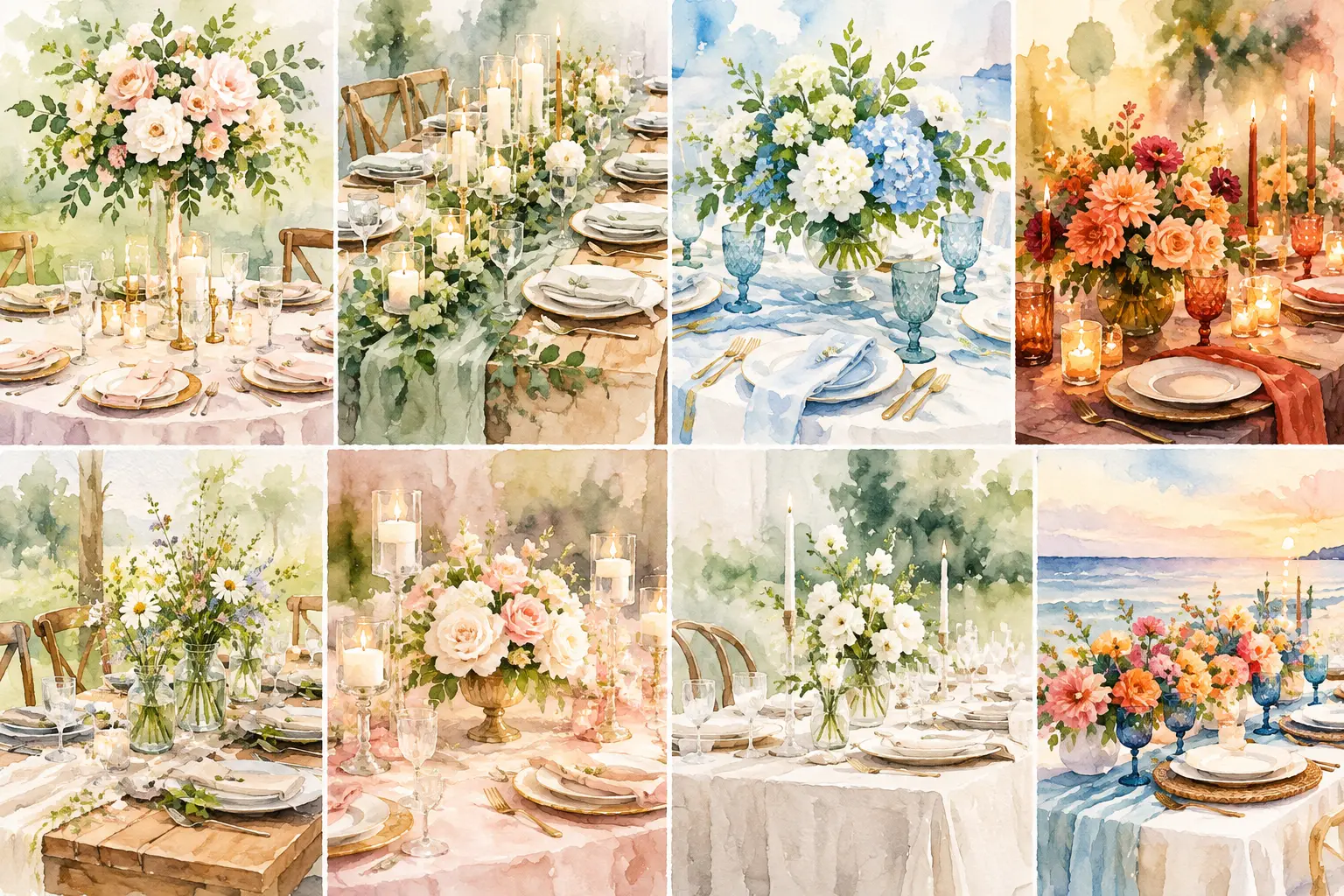
The best reception tablescape examples do more than fill a table. They shape the feeling guests carry into the room: warm and romantic, crisp and modern, celebratory and colorful, or layered with details that reflect family, culture, and personal style. A beautifully styled table makes a reception feel considered from the first glance to the final toast.
For weddings and meaningful celebrations throughout Greater Boston, the most memorable tablescapes usually begin with one clear visual direction. That does not mean every table must look identical. It means the linens, florals, candles, place settings, and finishing details belong in the same story.
What Makes a Reception Tablescape Feel Complete
A tablescape is the full visual composition of a guest table, not simply the centerpiece in its middle. The tablecloth establishes a base. Florals create shape and color. Chargers, napkins, glassware, and menus add texture and rhythm. Candlelight brings softness, especially as daylight fades.
The strongest designs balance beauty with comfort. A lush arrangement may be striking, but it should not block conversation across the table. Tall centerpieces create wonderful dimension in a ballroom, while low floral designs can feel intimate and welcoming in a smaller reception room. The right direction depends on the room, the table shape, the color palette, and the atmosphere you want guests to experience.
10 Reception Tablescape Examples for a Beautiful Celebration
1. Classic White Florals With Gold Details
For a timeless wedding reception, white roses, hydrangea, orchids, or mixed seasonal blooms paired with gold chargers create an elegant foundation. A soft ivory linen and neatly folded napkin keep the look polished without becoming overly formal.
This style works especially well when the reception space already has architectural details, chandeliers, or warm lighting. Add clear glass votives at varying heights so the table catches the light without feeling crowded. The key is restraint: white and gold feel refined because every element has room to be seen.
2. Blush, Champagne, and Soft Candlelight
Blush florals, champagne linens, and warm candlelight offer a romantic look that feels gentle rather than overly sweet. A low, full centerpiece can include roses, ranunculus, lisianthus, and delicate greenery, with taper candles bringing height around the arrangement.
This is a lovely choice for spring weddings, evening receptions, and celebrations with a soft neutral palette. To keep blush from blending into the room, introduce contrast through gold flatware, textured napkins, or deeper mauve accents in the flowers.
3. Modern Black and White With Clean Lines
A black-and-white tablescape can feel dramatic, tailored, and very current. Picture crisp white linens, black chargers or napkins, clear glassware, and white florals arranged in structured vessels. A small amount of metallic detail, whether gold, silver, or black candlesticks, gives the design a finished edge.
This approach is especially effective for contemporary venues and couples who prefer a clean visual statement. Because the palette is limited, texture matters. Matte black, glossy glass, sculptural floral shapes, and layered paper goods keep the table from looking flat.
4. Garden-Inspired Tables With Loose Florals
A garden-inspired table feels fresh, inviting, and naturally abundant. Low floral arrangements with movement, bud vases, soft greenery, and fruit accents can create the feeling of a table gathered from a beautiful garden, while still looking carefully designed.
This style is ideal for a tented celebration, estate setting, or daytime reception. It benefits from variety, but it still needs a controlled palette. Choose two or three main floral tones, then let the shapes and textures provide the interest. Too many colors can shift a graceful garden look into visual clutter.
5. Long Family-Style Tables With Floral Runners
For long rectangular tables, a floral runner creates a generous, connected effect. It can be made with low arrangements, greenery, candles, and floral moments placed in intervals along the center. The result encourages guests to see the full table as part of the celebration, rather than a series of separate centerpieces.
A runner works beautifully when you want warmth and scale, but it requires careful spacing. Guests still need room for shared dishes, place settings, and conversation. Low floral groupings and taper candles are often more practical than one dense, uninterrupted arrangement.
6. Tall Centerpieces for a Grand Reception Room
A tall centerpiece can transform a ballroom or reception space with high ceilings. Elevated florals draw the eye upward and make the room feel more layered, particularly when paired with low candlelight at the base of each arrangement.
The best elevated designs feel airy underneath. Guests should be able to see one another without navigating a wall of flowers. This is also an opportunity to alternate tall and low centerpieces across the room, creating movement while keeping the overall design cohesive.
7. Blue and White With Delicate Texture
Blue and white is a versatile combination that can feel classic, coastal, fresh, or formal depending on the materials. Dusty blue napkins with white flowers offer a soft romantic look, while navy linens and white blooms feel richer and more dramatic.
Consider bringing in texture through patterned glassware, blue taper candles, or a subtly detailed linen. Blue works particularly well with silver, clear acrylic, or gold details, so the metal choice can shift the mood of the entire table.
8. Rich Jewel Tones for an Evening Celebration
Deep emerald, burgundy, plum, sapphire, and berry can create a reception table full of warmth and presence. These shades are especially beautiful in fall and winter, though they can work year-round when balanced with lighter linens or reflective glassware.
A jewel-toned palette benefits from layering. Dark flowers, colored candles, velvet napkins, and gold details can all work together, but one element should provide relief. White or ivory flowers, clear votives, or a lighter tablecloth prevent the table from feeling too heavy.
9. Cultural Celebration Tables With Meaningful Color
For a henna night, Eid gathering, Sudanese or Arab wedding celebration, or another culturally meaningful event, the tablescape can honor the occasion through color, pattern, florals, and focal details. Rich fabrics, gold accents, jewel tones, lantern-inspired lighting, or vibrant floral arrangements may all have a place when they reflect the family’s vision.
There is no single formula for cultural event décor. Traditions, family preferences, and the meaning of color vary. The most successful design begins with conversation and builds around the details that matter to the hosts, rather than relying on a generic interpretation of a celebration.
10. Neutral Layers With Organic Details
Cream, sand, taupe, soft gray, and muted green create a calm, sophisticated table that feels especially at home in venues with natural wood, stone, or light-filled windows. Textured linens, ceramic vessels, soft greenery, and restrained floral accents make the palette feel warm rather than plain.
This style is a strong choice for clients who want their reception to look elegant in photographs without relying on a bold color story. The detail comes from materials: linen napkins, ribbed glassware, natural floral shapes, and candlelight in mixed vessels.
How to Choose the Right Tablescape Direction
Start with the atmosphere you want before selecting individual décor pieces. If you want guests to feel surrounded by romance, prioritize flowers and candlelight. If you want a formal, elevated room, consider symmetry, taller designs, and a more limited palette. If the celebration is centered on color and cultural expression, let meaningful tones and details guide the design.
The reception room also matters. A grand ballroom may need height and shine to feel fully dressed, while a smaller space may look best with low centerpieces and thoughtful layers at each place setting. Round tables often suit a single focal centerpiece, while long tables invite runners, grouped arrangements, and more visual movement.
At Sue’s Elegant Events, the goal is not to place beautiful items on a table one by one. It is to create a coordinated visual experience that feels right for the people gathering there. When the florals, linens, candlelight, and tabletop details speak to one another, guests notice the difference before they ever take their seats.
Choose the tablescape that feels most like your celebration, then allow the details to support that feeling with intention. A reception table should give guests something lovely to look at, but it should also make them feel welcomed into the moment.