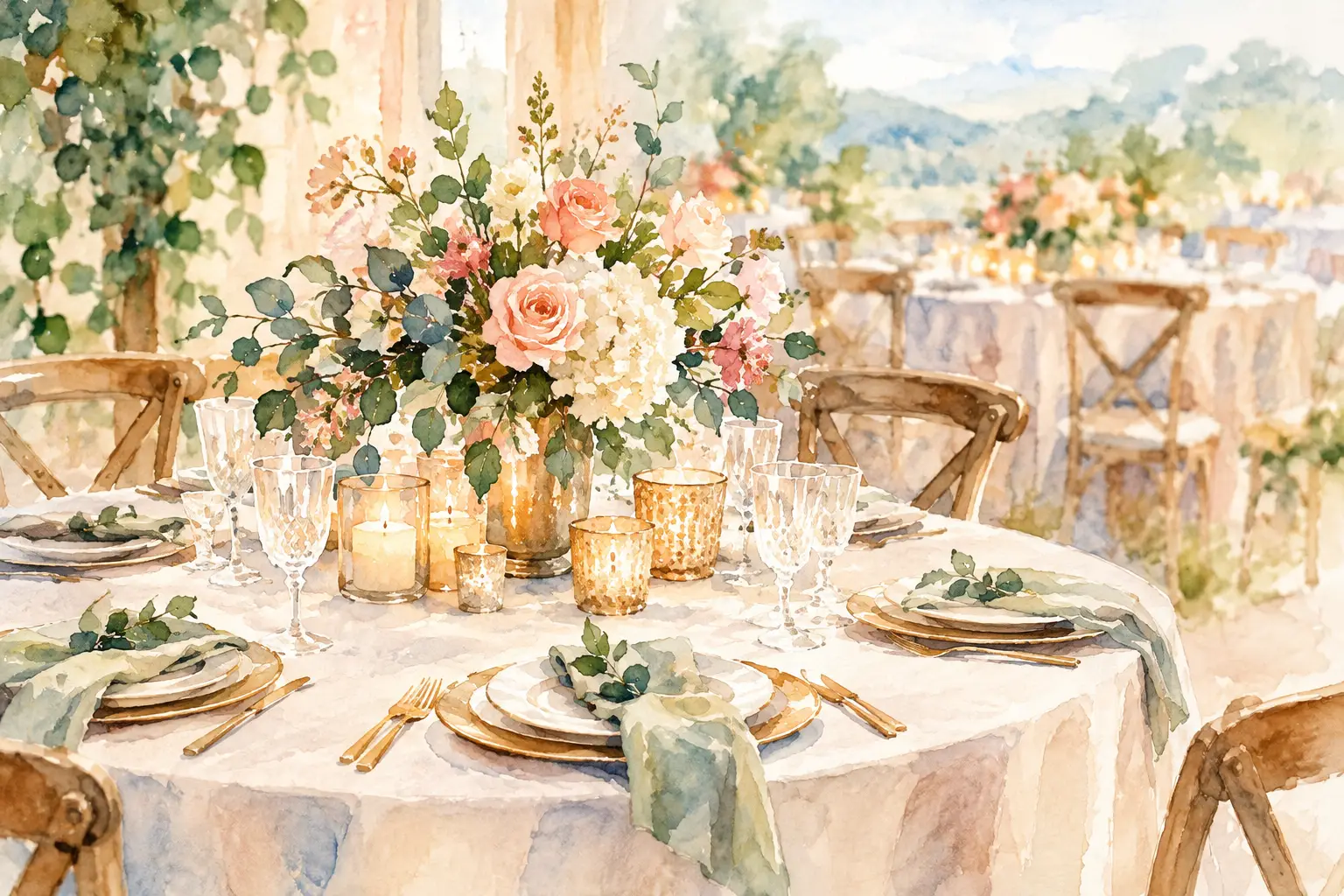
A reception room can have beautiful architecture, a lovely meal, and a full dance floor, yet still feel unfinished when the tables lack a clear visual point of view. Guests spend much of the celebration gathered around them, which is why learning how to style reception tables is less about adding more décor and more about creating a setting that feels considered from every seat.
For weddings and meaningful family celebrations, the best table designs carry the atmosphere of the entire room. They repeat the right colors, textures, and finishes while leaving enough space for conversation, food service, and the small moments guests will remember. A polished reception table should look beautiful in photographs, but it should also feel welcoming when someone sits down.
Begin With the Feeling of the Room
Before selecting centerpieces or linens, identify the feeling you want guests to experience. A soft, romantic wedding may call for gathered fabrics, layered candlelight, delicate florals, and warm metallic accents. A modern ballroom reception may feel strongest with clean lines, sculptural arrangements, and a more edited palette. For a henna night, Eid gathering, or cultural wedding celebration, color, pattern, and meaningful decorative details can play a more visible role in the design.
The goal is not to follow a single trend. It is to make each choice feel connected. A blush floral arrangement, for example, may feel very different when paired with ivory linens and clear glassware than it does with black linens, gold-rimmed chargers, and deep plum accents.
Start with two or three design words that guide the look: refined and airy, warm and celebratory, modern and dramatic, or traditional with a fresh interpretation. Those words make it easier to decide what belongs on the table and what may compete with the overall setting.
Build the Table in Layers
Well-styled reception tables usually have several layers, but each layer has a purpose. The linen establishes the foundation. The place setting brings structure. The centerpiece creates the focal point. Candlelight, menus, table numbers, and smaller details give the table its finished character.
Let linens set the foundation
A tablecloth does more than cover the table. It affects how every other decorative choice reads. Crisp white or ivory linen creates a clean base for almost any wedding palette. Soft champagne, taupe, or muted sage can add warmth without overpowering floral designs. Velvet, satin, sequined overlays, and textured runners bring dimension, though they work best when the rest of the tabletop remains thoughtfully edited.
There is a balance to consider. A richly textured linen can make a simple centerpiece look elevated, while an elaborate floral arrangement may need a quieter foundation to remain the focus. If the room already has patterned carpet, dramatic chairs, or bold wall colors, a restrained linen choice often gives the eye a place to rest.
Create a place setting with presence
Place settings are one of the most effective ways to make a reception feel finished. Chargers, dinnerware, napkins, flatware, and glassware can echo the event palette without relying on more flowers. A folded napkin may bring softness to a formal place setting, while a menu card or a small custom detail can add personality.
Avoid treating every element as a separate color statement. If gold flatware, gold chargers, gold candle holders, and glittering linens all appear at once, the effect can become heavier than intended. Repeating one finish across a few details usually feels more elegant than using it everywhere.
Choose Centerpieces for Beauty and Conversation
Centerpieces are often the first detail guests notice when they enter a reception. They should bring height, color, and movement to the table, but they should not interrupt the experience of sitting there.
Low arrangements work beautifully when you want guests to see one another easily across the table. They can feel lush and intimate, especially when paired with clustered votives or small bud vases. Tall centerpieces create drama and can help fill a large ballroom or tented space, particularly when the arrangements are lifted above eye level on clear or metallic stands.
The middle ground is where challenges often arise. Centerpieces that sit directly in a guest’s line of sight can make conversation awkward, even when the flowers themselves are beautiful. When selecting arrangement heights, think not only about the entrance view but also about the view from a chair.
A mixed centerpiece design can give a room more depth. Alternating taller arrangements with lower floral and candle groupings creates visual rhythm, especially across a large reception. The designs should still share common elements, such as floral varieties, vessel finishes, or a repeated accent color, so the room feels coordinated rather than random.
Use Color With Restraint and Confidence
A reception palette does not need to appear in every detail. In fact, the most polished tables usually allow one or two colors to lead while neutrals and metallics support them. This gives florals, linens, and personal details space to stand out.
For a timeless wedding look, consider a neutral base with color concentrated in the flowers and napkins. For a more expressive celebration, a colored linen or patterned runner can become part of the design story, balanced by simpler plates and candles. Deep jewel tones, warm gold, emerald, burgundy, and rich blue can feel especially striking for evening celebrations when softened with candlelight.
Season matters, but it does not have to dictate the palette. Spring can welcome pale greens and garden-inspired florals, while winter can carry creamy whites, black accents, and warm metallics. What matters most is that the colors suit the couple, family, or occasion rather than feeling chosen only because they are currently popular.
Style Reception Tables for the Whole Room
A reception table should never be designed in isolation. Look outward from the tabletop to the chairs, dance floor, head table, sweetheart table, backdrop, stage, and surrounding lighting. The strongest rooms repeat design cues across these areas without making every surface identical.
For example, a soft gold detail on guest tables might reappear in the head table’s candle holders or backdrop accents. A particular floral color may be used more generously at a focal display, then carried through the reception in smaller touches. This repetition creates a sense of movement through the room and helps the space feel intentionally transformed.
The head table or sweetheart table deserves its own moment, but it should still belong to the same visual story. A fuller floral treatment, additional candles, or a distinctive linen can set it apart. The difference should feel like emphasis, not a completely separate design.
Remember What Guests Need at the Table
Beautiful styling works best when it respects the practical needs of a seated meal. Leave room for plates, glassware, menus, and shared service pieces. Keep open flames, delicate arrangements, and tall vessels placed securely. Make sure table numbers are easy to locate, particularly in a larger reception room.
Fragrance also deserves consideration. Strongly scented flowers or candles may be lovely up close, but they can compete with a meal or bother sensitive guests. A visual design can be generous without overwhelming the senses.
This is where professional décor styling adds real value. It is not only about selecting pretty pieces. It is about understanding proportion, sightlines, lighting, and the way all of those details come together once the room is filled with guests.
Make Space for Meaningful Details
The most memorable reception tables often include a detail that feels personal rather than decorative for decoration’s sake. It may be a family-inspired color, a meaningful fabric, a menu presentation that complements the celebration, or an elegant nod to cultural traditions. For Sudanese and Arab weddings, henna nights, Eid celebrations, and other gatherings with rich visual customs, décor can honor the importance of the occasion while still reflecting the hosts’ individual style.
These details do not need to be explained to every guest to be felt. When they are incorporated with care, they give the room warmth and a sense of identity.
For couples and families in Greater Boston and surrounding Massachusetts communities, Sue’s Elegant Events approaches table styling as part of the full visual experience: the room guests enter, the photographs they keep, and the gathering they share. The right reception table does not simply hold a meal. It helps set the tone for every conversation around it.
When making final décor decisions, choose the elements that support the feeling you want people to carry with them after the celebration. A thoughtful table design can be quiet or dramatic, traditional or contemporary, but it should always feel like it belongs to the people being celebrated.