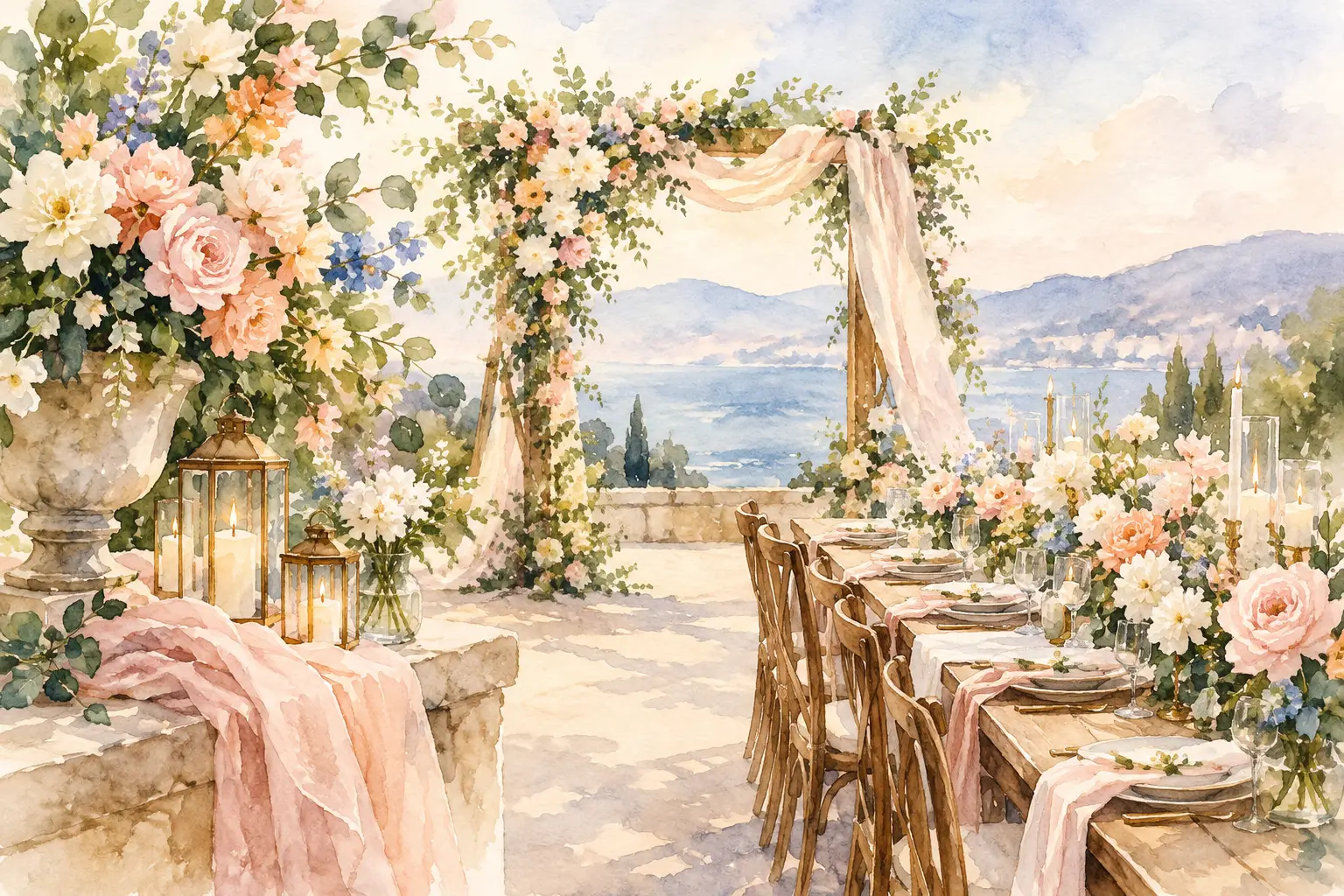
A reception room can have beautiful flowers, lovely linens, and a striking cake, yet still feel unfinished if the pieces do not relate to one another. That is where wedding styling makes its difference. It is the thoughtful visual connection between the table settings, centerpieces, ceremony details, backdrop, color palette, and focal moments that guests notice the instant they enter the room.
The goal is not to fill every surface or follow every trend. A well-styled wedding feels intentional. It reflects the couple, complements the setting, and gives the celebration a sense of atmosphere from the first welcome table to the last candlelit dinner.
Wedding Styling Begins With the Feeling
Before choosing vases, blooms, or signage, it helps to name the feeling you want guests to experience. Perhaps that feeling is soft and romantic, formal and classic, modern and sculptural, warm and welcoming, or richly celebratory. This direction becomes the filter for every decorative decision.
A classic ballroom may call for elevated floral centerpieces, soft candlelight, and a balanced neutral palette. A contemporary venue can carry cleaner lines, a selective use of color, and statement arrangements with more negative space. Neither approach is better. The right choice depends on the room, the event’s cultural meaning, and the visual personality the couple wants to bring forward.
Color is often the clearest starting point, but it should do more than appear in the flowers. Repeating key tones across linens, napkins, table décor, candles, backdrop details, and floral accents creates a composed look. Repetition does not mean every item must match exactly. A layered palette of ivory, champagne, muted blush, and soft green can feel more natural than using one shade everywhere.
The Reception Table Is Where the Design Lives
Guests spend much of the celebration at their tables, making table styling one of the most meaningful parts of the overall décor. A centerpiece is not simply something placed in the middle. Its height, shape, texture, color, and surrounding details affect the way the entire room photographs and feels.
Tall centerpieces can give a ballroom drama and draw the eye upward, particularly when ceilings are high or the room needs more visual presence. Low floral designs create an intimate, conversational setting and keep sightlines clear across the table. Mixing heights can add depth, but it needs restraint. When every table competes for attention, the room can feel busy rather than elegant.
The tabletop itself deserves the same care as the centerpiece. Chargers, napkins, candleholders, table numbers, and floral touches should feel like part of one composition. A gold-rimmed charger may look beautiful with warm candlelight and creamy blooms, while clear glass details may better support a softer, airier design. These small choices matter because they are repeated across the room.
Texture is equally powerful. Satin linens bring a gentle sheen. Glassware reflects candlelight. Floral varieties add softness, structure, or movement. Metallic accents can create polish, but too many competing finishes can make a table feel disconnected. Often, selecting one principal metal and allowing it to appear in a few purposeful places is enough.
Designing for Conversation and Comfort
Beautiful tables should still feel comfortable for guests. Centerpieces must allow room for place settings, shared dishes where applicable, and easy conversation. Strong fragrance can be lovely in moderation, but arrangements placed close to diners should not overwhelm the meal or the people seated nearby.
This is one reason professional styling is more than selecting pretty objects. Scale and placement have practical consequences. A design can be full and memorable without asking guests to look around it, reach over it, or move it aside.
Create Focal Moments With Purpose
Not every corner needs a decorative installation. The most successful spaces usually have a few clear focal moments that guide the eye: the ceremony backdrop, sweetheart table, head table, entrance, cake display, or a designated photo area. These areas can carry more visual impact because the remaining décor supports them instead of competing with them.
The sweetheart table, for example, is often photographed throughout the evening. A tailored floral arrangement, candles, draping, or a thoughtfully designed backdrop can make it feel special while remaining connected to the guest tables. The key is continuity. If the tables feature soft garden-inspired florals, a stark geometric backdrop in unrelated colors may interrupt the story of the room.
Backdrops work best when they frame a moment rather than become decoration for decoration’s sake. They can add softness to a plain wall, define a ceremony space, or create a polished setting for portraits. Their materials, scale, and florals should relate to the rest of the wedding design. A backdrop that is too small can disappear in a large room, while one that is oversized for the setting may feel heavy.
Lighting also changes how focal décor is experienced. Candlelight brings warmth and depth to evening receptions. Reflective vessels, glass details, and metallic accents can amplify that glow. In daylight spaces, flowers and linens may carry more of the visual weight. The same color palette can look entirely different under bright natural light than it does in a dim ballroom, so the setting should always inform the choices.
Honor Cultural Details Through Thoughtful Design
For Sudanese and Arab weddings, henna nights, Eid celebrations, and other meaningful gatherings, décor can hold a deeper role. Color, seating arrangements, patterns, florals, and display areas may be connected to family traditions, personal memories, or the significance of the occasion. The most thoughtful styling begins with listening rather than assuming.
A client may want a henna setting that feels vibrant, layered, and welcoming, with rich textiles, meaningful color, and an inviting focal display. Another may prefer a more restrained interpretation with refined metallic details and a softer palette. Both can be beautiful when the décor reflects what matters to the hosts.
Cultural styling does not need to fit a single visual formula. It can be traditional, contemporary, understated, bold, or a blend of influences. What matters is that the design feels respectful, personal, and appropriate to the celebration.
Choose Details That Work Together, Not Harder
Wedding inspiration is everywhere, which can make it tempting to combine several different looks in one space. A dramatic floral arch, mirrored tables, rustic wood accents, colorful linens, and modern acrylic details may each be appealing on their own. Together, they can dilute the visual impact unless there is a clear unifying idea.
Instead, decide which element should lead. It may be the florals, the color story, the venue architecture, or a meaningful cultural detail. Then let the other choices support that lead. If lush florals are the main statement, tabletop details can be more refined and quiet. If a richly patterned linen is central to the look, centerpieces may need a simpler silhouette.
This does not mean a wedding should feel minimal. It means abundance should have direction. Full tables can still feel calm when they repeat a consistent palette, use a limited number of materials, and leave enough open space for the eye to rest.
Consider the Room Before the Pinterest Board
Inspiration images are useful, but they are not a substitute for looking closely at the actual event space. Ceiling height, wall color, table shape, room size, existing fixtures, and natural light all affect what will work. A low centerpiece that looks delicate in a small private room may feel lost in a grand reception hall. A bold palette may come alive against neutral walls but clash with a venue’s fixed carpet or drapery.
Round tables, long banquet tables, and mixed layouts each create a different rhythm. Long tables often invite garlands, clusters of candles, and repeating floral moments. Round tables offer a central composition that can be built vertically or kept low and layered. The design should work with the room’s layout rather than fight against it.
For Greater Boston and Massachusetts weddings, seasons can also influence the atmosphere of a space. A summer celebration may welcome airy florals and lighter tones, while a fall or winter reception can feel especially inviting with deeper color, warm candlelight, and textured materials. The season should inspire the design, not limit it.
Let the Décor Tell One Clear Story
The most memorable wedding spaces are rarely memorable because of one expensive item. They are memorable because every visual choice feels connected. Guests may not identify why the room feels so polished, but they feel the harmony between the florals, tables, backdrop, and finishing details.
At Sue’s Elegant Events, that sense of connection is at the heart of thoughtful décor. When styling is approached as a complete visual story rather than a collection of individual pieces, the room becomes more than a venue. It becomes part of the celebration guests will remember long after the last candle is extinguished.