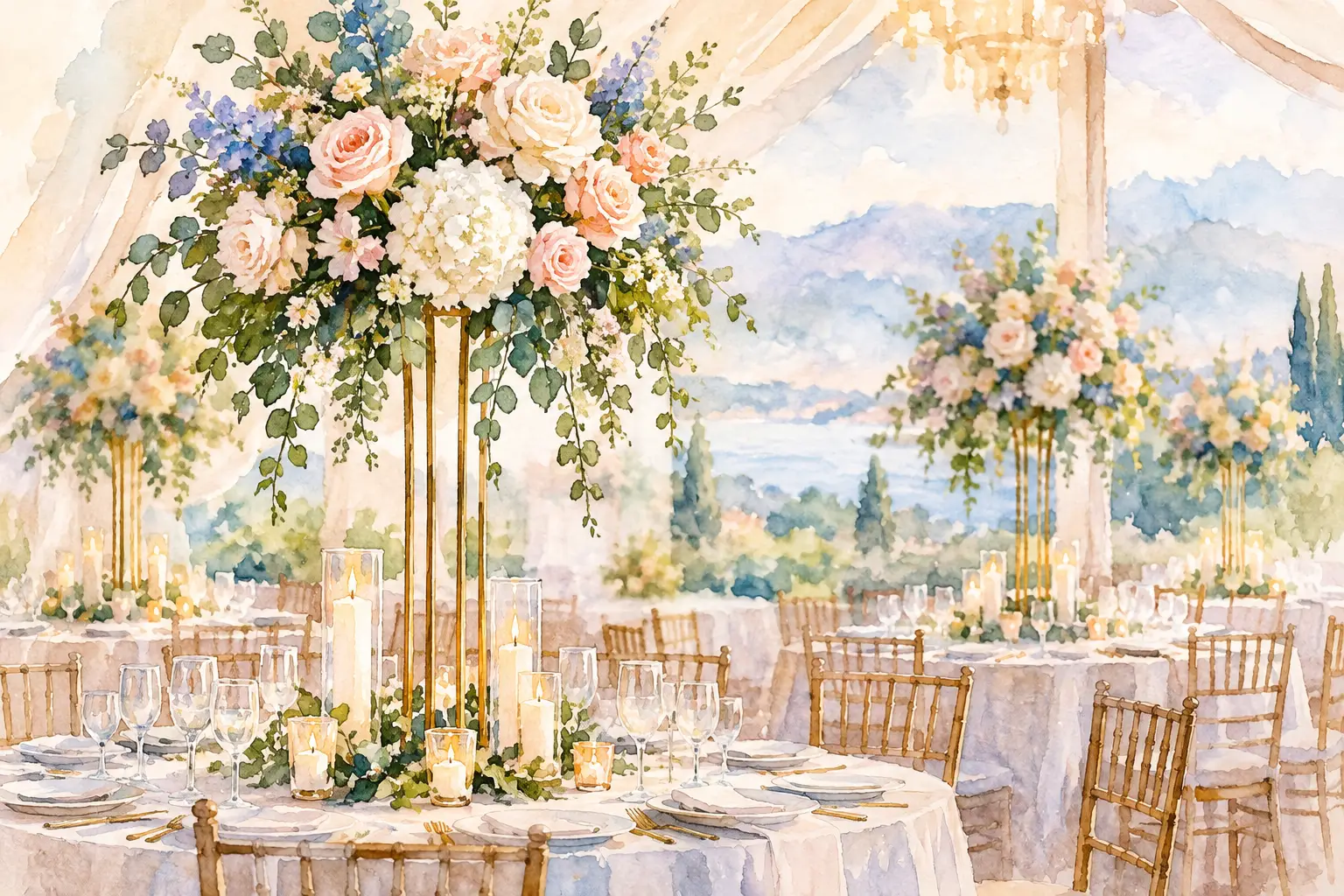
A tall centerpiece can change the feeling of a reception room before guests even take their seats. It draws the eye upward, gives the tables presence, and can make a large ballroom feel more intentional. But when are tall centerpieces appropriate? The answer depends less on whether they look dramatic in a photo and more on how they relate to the room, the guest tables, and the overall celebration.
For weddings and special events, height should always have a purpose. The right tall arrangement creates movement and scale without making a table feel crowded or separating guests from one another. When it is chosen thoughtfully, it becomes part of the atmosphere rather than simply an object placed at the center of the table.
When Are Tall Centerpieces Appropriate?
Tall centerpieces are especially appropriate when the event space has generous vertical room to fill. A ballroom with high ceilings, chandeliers, exposed beams, tall windows, or an open reception layout can sometimes feel visually empty at table level. Elevated florals, branches, candles, or statement arrangements help connect the tables to the architecture above them.
They also work beautifully when a wedding design calls for formality, romance, or a strong sense of arrival. Think of a classic black-tie reception with crisp linens and soft candlelight, a garden-inspired celebration with airy blooms reaching above the tables, or a cultural wedding where layered décor, rich color, and a full visual setting are part of the experience. Height can bring the whole room together, particularly when it echoes a stage design, backdrop, floral focal point, or entry display.
That said, a tall centerpiece does not need to be large or heavy to make an impact. A slim clear stand with a light floral arrangement can feel refined and open. A fuller elevated design can feel more abundant and expressive. The best direction depends on the room and the mood you want guests to feel as they enter.
Start With the Room, Not the Arrangement
The room is the first clue. In a grand venue, low centerpieces alone may disappear once guests are seated and the room fills with chairs, place settings, and people. Taller elements give the eye a place to travel and help repeated tables read as one cohesive design.
In a more intimate space, however, very tall centerpieces can feel out of proportion. A low ceiling, compact dining room, tent with limited clearance, or smaller family celebration may benefit more from low arrangements, candles, and carefully layered table décor. The goal is not to use the tallest piece possible. It is to create balance.
Look closely at the existing details. If the room already has beautiful chandeliers, architectural columns, draping, or a detailed ceiling, elevated centerpieces can support those features without competing with them. If there is little overhead detail, tall centerpieces may become an important part of giving the space dimension.
For celebrations in Greater Boston and throughout Massachusetts, venue styles can vary widely, from historic halls and hotel ballrooms to contemporary spaces and private event rooms. This is why a centerpiece that feels perfect in one setting may not have the same effect in another. The proportions of the room matter as much as the flowers themselves.
Keep Guest Conversation in View
The most common concern with tall centerpieces is a fair one: Will guests be able to see each other? A beautiful table should still feel welcoming and comfortable for conversation.
The answer is usually found in the placement of the arrangement, not simply its overall height. A centerpiece works well when it is either low enough to sit below guests’ sightlines or elevated high enough that the floral portion begins above them. The difficult middle zone is an arrangement that sits directly at face level, where it can block views across the table and make guests lean around it.
Open stands and clear vessels can be especially helpful because they preserve visual space near the table. Designs with a narrow base and an airy upper arrangement often feel lighter than dense, wide centerpieces, even when they are visually dramatic. The same is true of carefully placed hanging elements, provided they suit the space and do not overwhelm the table setting below.
Consider the full tablescape as well. Chargers, napkins, menus, votives, glassware, and favors all add visual weight. A tall centerpiece can create welcome breathing room on the tabletop when the base is clean and uncluttered. On the other hand, an elevated arrangement with an oversized base, multiple large candles, and too many accessories can make the table feel busy.
Match the Height to the Event Style
Centerpiece height should support the personality of the celebration. For a wedding with a soft, classic palette, tall white or blush florals can add graceful structure while keeping the room light. For a modern reception, sculptural branches, minimal blooms, or a sleek elevated design may suit the setting better than a traditional full floral piece.
For henna nights, Eid gatherings, and other meaningful cultural celebrations, tall centerpieces can create a beautiful sense of occasion when they reflect the event’s selected colors, textiles, candlelight, and decorative focal points. The best choices come from the hosts’ vision and the details that matter to their family, rather than assumptions about what the celebration should look like.
Color changes the effect of height, too. Pale blooms and clear stands tend to feel airy. Deep jewel tones, metallic details, and dense greenery can make tall arrangements feel richer and more dramatic. Neither approach is better. The question is whether the centerpiece supports the room’s overall visual rhythm.
Mix Tall and Low Centerpieces for More Dimension
A reception does not have to choose one height for every table. In fact, alternating tall and low centerpieces is often one of the most polished ways to style a larger room. The variation gives guests a changing view as they move through the space, while shared flowers, vessels, candles, or color keep the design connected.
This approach is particularly effective for weddings with many guest tables. Tall arrangements can anchor key areas or selected table groupings, while lower centerpieces add intimacy and candlelight nearby. The result feels layered rather than repetitive.
Consistency still matters. If tall arrangements feel formal and abundant while the low tables are sparse or unrelated, the room can appear disconnected. Repeating a few design details, such as the same floral palette, gold accents, glassware style, or candle color, helps each table feel like part of one complete setting.
Consider What Guests Will See From Every Angle
A centerpiece is not only viewed from the entrance. Guests see it while sitting, walking to their table, taking photos, and looking across the reception room. A strong design has presence from more than one angle.
This is one reason tall centerpieces are often most successful on round tables. The elevated form can be appreciated from around the room, and the open space beneath it helps preserve sightlines. Long rectangular tables can also carry height beautifully, but the arrangement may need to be more carefully spaced so it does not interrupt the length and flow of the table.
Lighting deserves attention as well. Candlelight can soften a tall arrangement and make the table feel warm after sunset. In a bright daytime room, greenery, floral texture, and the silhouette of the stand may do more of the visual work. The centerpiece should feel considered in both daylight and evening light.
A Beautiful Choice Is a Balanced Choice
Tall centerpieces are appropriate when they add scale, complement the venue, and leave guests comfortable at the table. They are not automatically the right answer for every wedding or celebration, and that is part of what makes good décor feel personal rather than copied.
At Sue’s Elegant Events, centerpiece styling begins with the feeling you want the room to hold: welcoming, romantic, vibrant, formal, or softly understated. From there, the height, flowers, candles, and table details can work together to create a setting guests will remember long after the celebration ends.