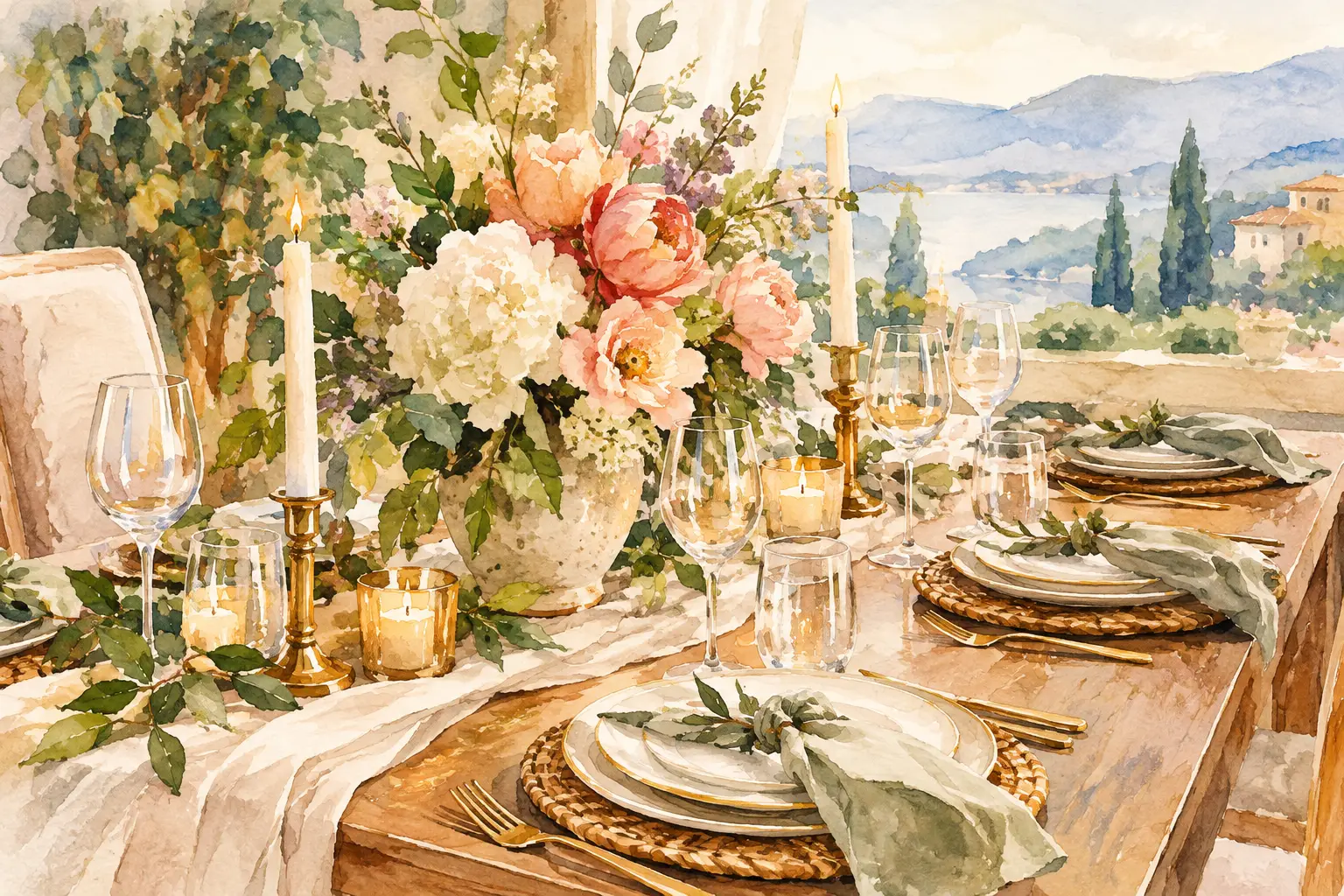
A beautifully styled table changes the feeling of a room before the first toast is made. Guests notice the glow of candlelight, the texture of the linen, and the way every place setting feels considered. This guide to luxe tablescapes is about creating that polished first impression without making the table feel overly formal, crowded, or disconnected from the celebration.
For a wedding reception, henna night, Eid gathering, engagement party, or family milestone, the table is where guests spend much of their time. It should feel welcoming from every seat while reflecting the colors, traditions, and personality that make the occasion meaningful.
What Makes a Tablescape Feel Luxe?
A luxe tablescape is not simply a table with more items on it. It is a table where the details feel intentional and visually connected. The linens, florals, vessels, candles, menus, and place settings should appear to belong in the same story.
The most successful designs usually rely on three things: layered texture, a clear focal point, and thoughtful restraint. Layering gives the table dimension. A crisp napkin against a soft linen, reflective glassware beside matte ceramic, or delicate flowers paired with sculptural candleholders can make a design feel rich without feeling busy.
A clear focal point gives the eye somewhere to rest. This may be a floral centerpiece, a row of taper candles, an elegant compote arrangement, or a collection of low blooms running along the table. Restraint keeps those elements from competing. When every piece is asking for attention, the overall effect becomes less refined.
Start With the Feeling You Want to Create
Before selecting centerpieces or tableware, consider how you want guests to feel when they enter the space. Romantic and candlelit? Fresh and garden-inspired? Formal with a modern edge? Warm, celebratory, and rooted in family tradition?
This choice is more useful than choosing a color alone. A palette of ivory and gold can feel classic, contemporary, soft, or dramatic depending on the materials and proportions around it. Ivory linen with clear glass, light florals, and fine taper candles feels airy. The same palette with black accents, rich velvet, and darker foliage feels more editorial and intimate.
For cultural celebrations, the visual direction can also draw from meaningful colors, textiles, patterns, or ceremonial details. The goal is not to treat tradition as a theme. It is to make room for the details that matter to the family and style them with care. A henna night may call for color, pattern, and layered warmth, while an Eid gathering may feel elegant through soft candlelight, florals, and a beautifully dressed dining table. Each celebration has its own visual language.
Choose a Palette With Depth
A polished palette often includes a dominant color, a supporting color, and a few quieter neutral tones. This creates depth while keeping the room cohesive. For example, soft champagne, cream, and warm gold can be grounded with a touch of muted green. A deeper palette of burgundy and plum may feel lighter with blush florals and clear glass.
It is also helpful to think beyond color. Consider finish and texture: silk or satin ribbon, ribbed glass, brushed metal, stoneware, velvet, mirrored surfaces, and natural floral movement all contribute to the final look. Mixing finishes gives the table character, but too many can make it feel scattered. Repeating one or two finishes throughout the room creates a more composed presentation.
Build the Table in Intentional Layers
The foundation begins with the table itself. Linens have a major effect on how the rest of the décor reads. A floor-length linen can immediately make a reception feel more dressed, while a soft runner may be the right choice when the table itself is beautiful and worth showing. The fabric should support the atmosphere, not disappear beneath the décor.
From there, the place setting adds structure. Chargers, dinner plates, napkins, flatware, and glassware do not all need to make a bold statement. Often, one special element is enough. A gold-rimmed charger, a folded napkin with a refined accent, or colored glassware can bring personality to the setting while leaving room for the centerpiece to shine.
Scale matters here. A very detailed charger, patterned plate, textured napkin, and elaborate menu card may all be lovely individually, but together they can overwhelm the table. If the floral design is lush and expressive, simpler tableware may create the better balance. If the floral design is minimal, a more distinctive place setting can carry additional visual interest.
Let the Centerpiece Set the Rhythm
Centerpieces are often the heart of a luxe tablescape because they create rhythm across the room. Repeating floral colors or vessel styles from table to table makes a large reception feel connected, even when the arrangements vary in height or shape.
Tall centerpieces can add drama and help fill a room with high ceilings. They work best when their stems are clean and elevated enough for guests to see one another across the table. Low arrangements create a more intimate experience and allow conversation to move naturally. For many celebrations, a mix of tall and low centerpieces gives the room the most visual movement.
Long rectangular tables offer another opportunity: a design that travels along the table rather than sitting in one central spot. A floral runner, clusters of bud vases, or candles placed at varied heights can feel abundant while still leaving space for shared dishes, personal items, or cultural table elements. The right approach depends on how the table will be used and how much room is available.
Use Candlelight to Soften the Room
Candlelight is one of the simplest ways to make a tablescape feel warm and elevated. It softens metallic finishes, brings out the texture of florals and linens, and gives evening celebrations a gentle glow that photographs beautifully.
The key is placement. A few isolated candles can look accidental, while grouped candleholders or a repeated line of votives create intention. Varying heights adds dimension, but the arrangement should still feel stable and uncluttered. If the venue has restrictions around open flame, LED candles can provide a similar atmosphere when chosen in warm tones and styled thoughtfully.
Lighting should work with the room rather than against it. Bright overhead lighting can flatten even the most beautiful centerpiece design. Where possible, consider how the table décor will look once the room transitions from daylight to dinner and dancing. Florals, glassware, and metallic accents often take on a new life after sunset.
Keep Guest Comfort in the Design
A table can look beautiful in a photograph and still be difficult for guests to enjoy. This is where thoughtful styling makes the difference. Centerpieces should not block conversation. Fragrance should not be overpowering. Candles and vessels should leave enough space for place settings, menus, and anything else guests need at the table.
For a wedding, guest tables should complement the sweetheart table, head table, cake display, or other focal décor without copying every detail exactly. Repetition creates cohesion, but variation creates interest. The room feels more polished when the design moves naturally from one area to the next.
This same principle applies to intimate celebrations at home or in a smaller venue. A smaller guest count does not require less care. In fact, intimate tables often allow for more detailed layering, personalized touches, and floral designs that feel especially close and inviting.
Avoid the Details That Make a Table Feel Overdone
The most common tablescape mistake is trying to include every beautiful idea at once. Too many colors, vessel styles, floral varieties, or decorative accents can make a table feel confused instead of luxurious. Choose a few elements to emphasize, then let the rest support them.
Another issue is ignoring the room. A centerpiece that looks perfect in a bright studio may not have the same effect in a ballroom with tall ceilings, a tented celebration, or a restaurant private room. The table design needs to relate to the size, lighting, and existing features of the space.
Finally, do not overlook the importance of consistency. A coordinated room does not mean every table is identical. It means the colors, materials, floral direction, and overall mood feel connected from the entrance to the final guest table.
Bringing the Vision Together
A luxe tablescape feels effortless because the decisions behind it are carefully considered. It balances beauty with comfort, honors the character of the celebration, and gives guests a setting that feels special without feeling staged.
For couples and families in Greater Boston planning a meaningful event, working with a décor specialist can make it easier to see how centerpieces, linens, candles, backdrops, and focal details will speak to one another in the room. Sue’s Elegant Events approaches table styling as part of the larger visual experience, with designs shaped around the celebration and the people gathering for it.
The best place to begin is with one clear feeling you want guests to carry with them: warmth, romance, joy, elegance, or connection. From there, every thoughtful layer on the table has a purpose.