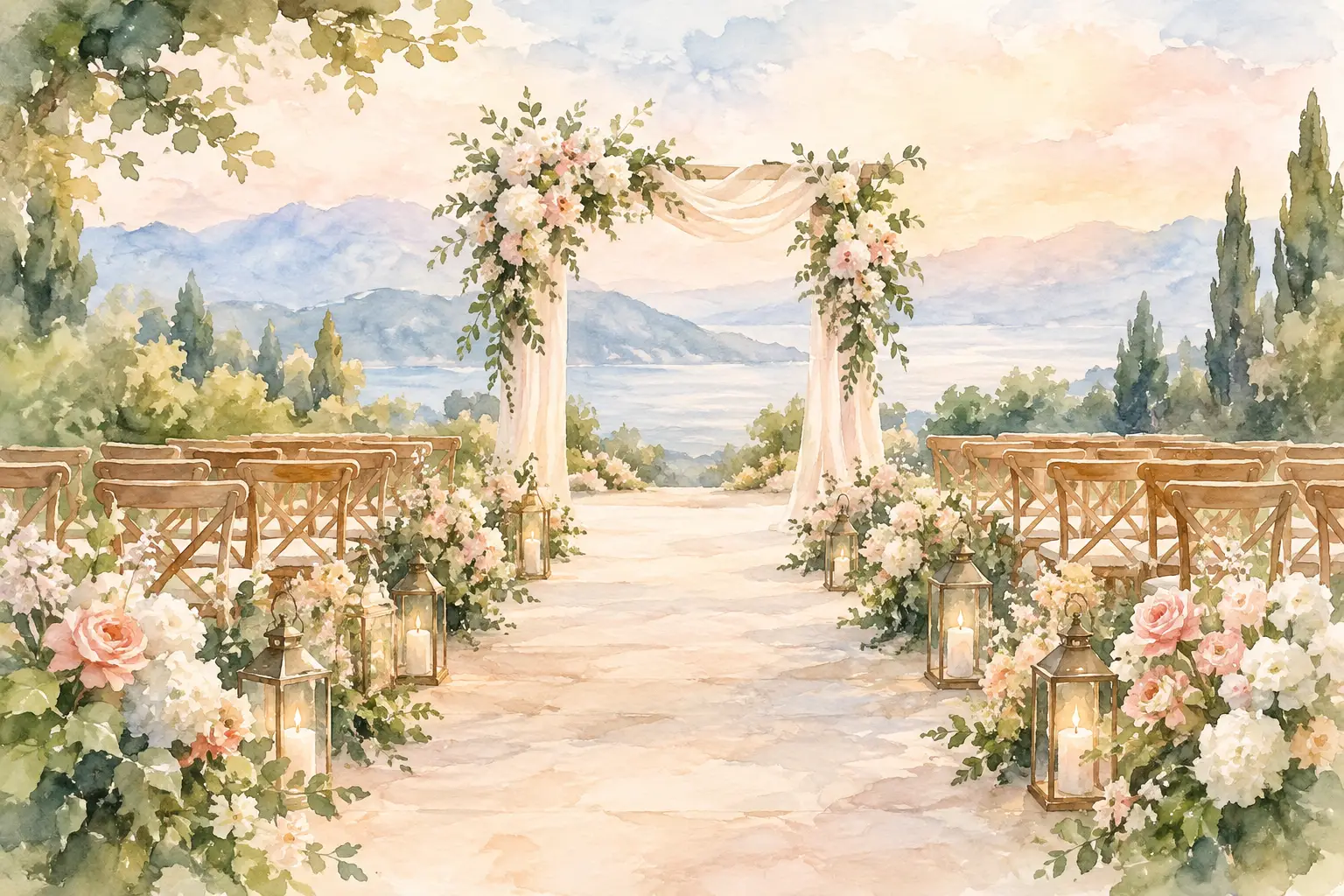
The aisle is more than the path to the ceremony. It is the first visual moment guests experience as they take their seats, the setting behind many of your wedding photographs, and the space that frames the walk toward your next chapter. When considering how to style wedding aisle décor, the goal is not to fill every inch. It is to create a beautiful, cohesive setting that feels meaningful from the first step to the final embrace.
A thoughtfully styled aisle should feel connected to the rest of the celebration. Its colors, floral details, textures, and scale can introduce the look that continues through the reception tables, sweetheart table, backdrop, or stage. The most memorable designs feel intentional, never crowded.
Begin With the Ceremony Space
Before choosing flowers, candles, or fabric, look closely at the ceremony setting. A ballroom with patterned carpet and high ceilings calls for a different approach than a garden, waterfront venue, church, or modern industrial space. Existing architecture matters: window placement, aisle width, chair style, flooring, ceiling height, and the ceremony backdrop all influence what will look balanced.
For a naturally beautiful outdoor setting, lighter aisle accents may be all that is needed. Floral meadows near the ceremony entrance, a grounded arrangement at the front, or a few carefully placed clusters can complement the landscape without competing with it. In a more neutral indoor space, the aisle can do more visual work by bringing in softness, color, and dimension.
A narrow aisle benefits from lower, more streamlined styling. Large arrangements can make the path feel tight and block guests’ view. A wide aisle gives more room for a dramatic runner, grouped floral arrangements, or design moments that build as they lead toward the ceremony focal point.
Choose One Clear Design Direction
The strongest wedding aisle designs begin with a clear visual point of view. That does not mean every detail needs to match perfectly, but the elements should speak the same design language.
A romantic, garden-inspired ceremony might feature soft floral groupings, delicate greenery, glowing candles, and a palette of ivory, blush, peach, or pale blue. A modern look may rely on sculptural floral shapes, crisp white draping, clear vessels, and restrained color. For a glamorous celebration, reflective finishes, fuller blooms, and warm candlelight can create an elevated setting without overwhelming the ceremony.
Cultural details can also shape the aisle in personal and beautiful ways. For Sudanese, Arab, and other culturally meaningful celebrations, colors, textiles, floral choices, and focal displays may carry family significance or complement the event’s larger aesthetic. The key is to design with respect and intention, allowing those details to feel integrated rather than added as an afterthought.
Try to limit the aisle to a focused palette of colors and materials. If the reception will feature gold, ivory, and soft green, introducing bright silver, bold purple, and several unrelated flower varieties at the ceremony can make the overall event feel pieced together. Repeating a few key elements creates the polished visual connection guests notice, even if they cannot immediately explain why it works.
How to Style a Wedding Aisle in Layers
An aisle feels most complete when it has visual layers: the floor or runner, the side details, and the ceremony focal point. Not every wedding needs all three, but thinking in layers makes it easier to decide where décor will have the greatest impact.
Define the path underfoot
A runner can instantly define the walk down the aisle. White, ivory, or neutral fabric feels timeless and works especially well when the floor is busy or dark. A runner can also be chosen to complement an event palette, although highly saturated colors require care. The aisle should lead the eye forward, not become the strongest visual element in the room.
For some spaces, skipping a runner is the better choice. Beautiful wood floors, stone, or a lush outdoor lawn may need only subtle floral accents to feel special. In that case, the floor becomes part of the design rather than something to cover.
Frame the aisle with florals and candlelight
Floral arrangements placed along the aisle can be symmetrical and classic, or more organic in shape and placement. Matching arrangements on every chair end create a formal, refined look. Asymmetrical groupings and meadow-style florals feel softer and more natural, especially when they increase in fullness near the front.
Candlelight brings warmth and dimension, particularly for late-afternoon or evening ceremonies. Hurricane vases and enclosed candleholders can create a gentle glow while keeping the presentation polished. The practical choice depends on the venue’s rules and the event environment. When open flames are not permitted, high-quality flameless candles can still bring depth and romance.
Avoid making every aisle marker identical in size and density if the ceremony backdrop is already elaborate. Sometimes smaller accents near the guest seating, paired with fuller arrangements at the altar, create more movement and preserve the sense of arrival at the front.
Give the front of the aisle a purpose
The ceremony focal point should feel connected to the aisle, not separate from it. Floral ground arrangements can appear to grow outward from an arch, backdrop, chuppah, or stage. Matching blooms can travel from the aisle into the front design, while candles or draping repeat the textures used along the path.
This connection matters in photographs. A photographer’s view from the ceremony entrance often captures the aisle, couple, and backdrop together. When those elements share a palette and visual weight, the full scene feels composed from every angle.
Keep Guest Sightlines in Mind
Beautiful décor should support the ceremony experience, not interrupt it. Low floral pieces are usually best near the first rows, where tall designs can block guests from seeing the couple. Tall arrangements can work farther back or near the ceremony focal point, provided they are stable and proportionate to the room.
Chair décor deserves the same restraint. A small floral accent, ribbon, or fabric treatment can be lovely, but heavily decorated chairs on every row may compete with the aisle itself. Often, styling the aisle-side chairs at the front or using a few intentional moments is enough.
Consider the view from multiple places: the ceremony entrance, the first row, the back row, and the couple’s position at the front. A design can look beautiful in one photograph yet feel unbalanced in person if it has not been considered from each perspective.
Let the Aisle Lead Into the Reception Look
The ceremony and reception do not need to be identical, but they should feel like chapters of the same celebration. Reusing a color story, floral varieties, vessels, or candlelight creates continuity. For example, aisle florals in white and soft green can be echoed in reception centerpieces, while the same warm gold accents appear in table décor and a focal backdrop.
This is also where scale matters. A minimal ceremony aisle paired with lush reception tables can be striking because the reception feels like a reveal. On the other hand, a highly styled ceremony may call for reception décor that continues the same level of visual fullness. Neither approach is automatically better. It depends on the space, the desired atmosphere, and which moments you want to emphasize.
At Sue’s Elegant Events, aisle styling is approached as part of the larger visual story, from the ceremony focal point to the tables where guests gather afterward. That perspective helps each decorative element feel considered instead of separate.
Focus Your Décor Where It Will Be Felt Most
Not every wedding aisle needs flowers from end to end. A few well-placed design moments can have more impact than repeating the same detail along every chair. Consider creating a welcoming entrance arrangement, adding light and texture through the middle of the aisle, then building toward a fuller floral moment at the front.
This approach gives the ceremony a sense of movement. Guests see a beautiful beginning, then their eyes are naturally guided toward the couple and the setting where vows will be exchanged. It also leaves room for the people and emotions at the center of the ceremony.
The best aisle décor does not ask to be the main character. It creates the atmosphere that makes the moment feel even more beautiful: a soft glow, a thoughtful palette, and a clear path leading exactly where it should.