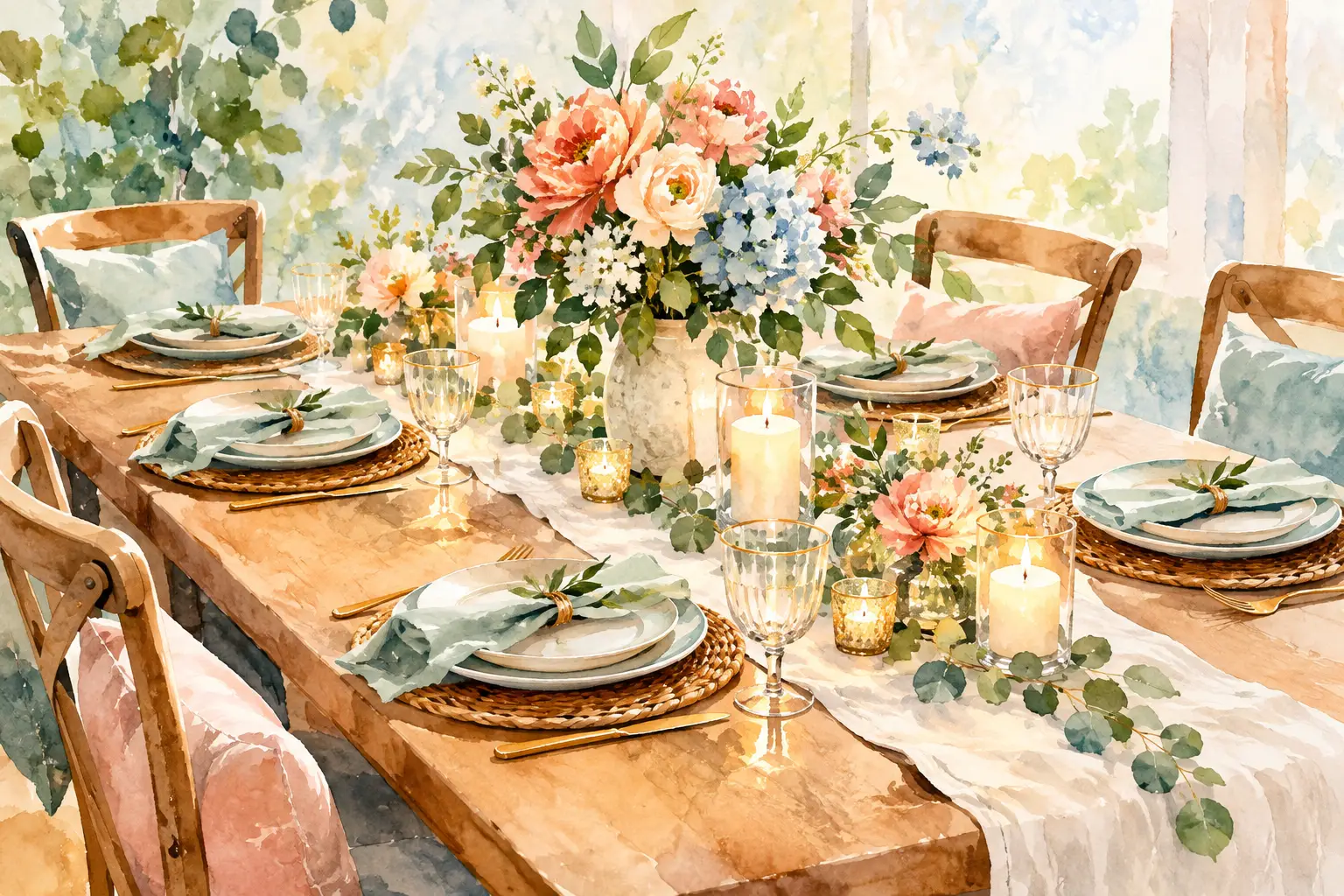
The reception table is where guests settle in, share a meal, admire the room, and spend much of the celebration. That is why table decor is more than a centerpiece placed in the middle of a linen. It is a collection of details that gives each seat a sense of occasion while connecting the entire room to one clear visual story.
For a wedding, henna night, Eid gathering, baby shower, graduation, or milestone birthday, a thoughtfully styled table can make even a large event feel personal. The goal is not to fill every open space. It is to create a balanced, welcoming setting that looks beautiful from the moment guests enter and feels comfortable once they are seated.
Start With the Feeling You Want the Room to Hold
Before selecting flowers, candles, chargers, or linens, begin with atmosphere. A soft romantic wedding may call for layered ivory linens, low candlelight, delicate blooms, and warm metallic accents. A vibrant cultural celebration may be shaped by rich color, polished gold details, lush florals, or statement pieces that honor the energy and significance of the occasion.
The strongest table designs have a point of view. Rather than choosing every element separately, consider how color, texture, height, and material will work together. A clear direction makes the room feel coordinated, even when tables include different centerpiece styles or when the event space has several distinct areas.
This is especially helpful in ballrooms and larger reception spaces throughout Greater Boston, where the tables need enough visual presence to feel connected to the scale of the room. In a smaller setting, the same amount of decor might feel crowded. The room itself should guide the design.
Choose a Color Story, Not Just a Color
A color palette does not need to be limited to two shades. In fact, the most dimensional table settings often rely on a family of related tones. Think champagne, ivory, and soft blush with a touch of gold, or emerald, sage, and deep olive paired with warm brass. For a more dramatic look, black, clear glass, white florals, and candlelight can create contrast without feeling harsh.
What matters is repetition. When the floral tones echo a napkin, the charger complements the vase, and a backdrop carries a related accent color, the room feels intentional. This does not mean every item must match exactly. A little variation keeps the design from looking flat or overly formal.
For cultural celebrations, color may hold personal, family, or traditional meaning. The most thoughtful approach is to listen first and build a design that respects the hosts’ vision rather than treating cultural details as a trend. A meaningful palette can be expressed through florals, linens, table runners, candle vessels, and focal displays without overwhelming the table.
Centerpieces Set the Rhythm of Table Decor
Centerpieces naturally draw attention, but their job is broader than looking pretty in photographs. They establish the rhythm of the room. As guests look across the tables, repeated shapes, colors, and heights help the space feel composed and complete.
There is no single centerpiece style that works for every event. Tall arrangements can add elegance and drama, particularly in rooms with high ceilings or spacious floor plans. Low arrangements can feel intimate and allow guests to see one another easily. A mix of tall and low designs often creates the most visual movement, provided the materials and color story keep them connected.
Height Should Serve Guests as Well as the Design
Scale is one of the details that separates a polished room from one that feels accidental. A centerpiece should feel substantial enough for the table and venue, but it should not interrupt conversation or dominate place settings.
For seated events, designs generally work best when they are clearly below eye level or elevated well above it. The middle zone can become distracting because guests must look around the arrangement to speak across the table. Clear vessels, slim stands, and open floral structures can help preserve sightlines when height is part of the look.
Tall centerpieces are not automatically more elegant, and low designs are not automatically simpler. Each can feel refined when the proportions are right. The choice depends on the room, the table size, the mood of the event, and how much other decor will share the table.
Build Layers Without Creating Clutter
A beautiful table has depth. Linens create the foundation, place settings add structure, centerpieces bring life, and smaller accents give the setting warmth. The art is knowing when to stop.
A floor-length linen may create a soft, formal base for a wedding reception. A runner can introduce color or texture, particularly when paired with round tables or long family-style tables. Chargers frame each place setting and can add a metallic, glass, or textured element that supports the overall design. Candles bring glow and help the table feel finished once daylight fades.
These elements should not compete for attention. If the centerpiece is full and floral, the remaining details may be more restrained. If the table design is centered on modern glassware, sculptural vessels, or an elaborate runner, the floral arrangement may need a lighter touch. Elegance often comes from giving each element room to be seen.
Long tables deserve particular consideration because they are viewed from more angles. Instead of placing one arrangement at the center and leaving the rest empty, the design can move along the table through a floral runner, grouped arrangements, candle clusters, or repeated vessels. This creates a continuous visual line while allowing room for place settings and shared conversation.
Candlelight Changes the Entire Table
Few decorative elements shift the mood of a room as quickly as candlelight. During an evening reception, candles soften the table, reflect beautifully in glassware, and make metallic details feel warmer. They can also help connect tables that use a mix of high and low centerpiece designs.
The right candle treatment depends on the style of the event. Taper candles offer height and a classic silhouette. Votives create a quiet, gathered glow. Hurricane candles can add presence and help protect a flame in spaces where air movement is a concern. The key is not simply adding more candles. It is arranging them with intention so the table feels luminous rather than crowded.
Venue guidelines and practical safety considerations should always shape candle selections. When open flame is not appropriate, high-quality flameless options can still provide a warm, layered effect.
Make Each Place Setting Feel Considered
The guest’s closest experience of the decor happens at the place setting. Even when the centerpiece is the visual focus, the details at each seat influence how the table feels.
Napkins, chargers, menus, and small floral accents can add personality without needing to be overly elaborate. A folded napkin in a complementary color, a simple ribbon detail, or a carefully selected menu card can make the setting feel complete. For celebrations with meaningful cultural elements, place settings can also be an opportunity to incorporate colors, motifs, or details chosen by the hosts in a respectful, understated way.
This is a place where restraint matters. If every seat includes multiple decorative items, guests may have little room to relax, dine, and enjoy the event. A polished table is designed for people, not only for photos.
Let the Tables Belong to the Whole Room
Table styling should never feel separate from the rest of the event space. The centerpieces may be the most repeated decor element in the room, so they should echo larger visual moments such as the sweetheart table, head table, stage, backdrop, welcome display, or cake area.
That connection can be subtle. The same floral varieties might appear in a focal display and in the centerpieces. The gold finish used in candleholders may reappear in a backdrop detail. A linen color can be repeated in draping or lounge accents. These familiar touches allow guests to experience the room as one thoughtful design rather than a collection of unrelated decor pieces.
At Sue’s Elegant Events, table styling is approached as part of that larger visual picture. The most memorable results come from considering what guests will see when they first enter, what they will notice from their seats, and how the room will feel as the celebration moves from daylight into evening.
Beautiful Table Decor Should Still Feel Comfortable
The best designs balance impact with ease. Guests need space for dinnerware, drinks, conversation, and the small moments that happen around a table. A centerpiece can be impressive without being too wide. Candles can be abundant without taking over. Layers can feel rich without making the setting difficult to use.
When choosing table decor, focus less on adding every trend and more on creating a setting that reflects the celebration. A room filled with thoughtful color, flattering candlelight, balanced centerpieces, and personal details does not need to work hard to feel special. It simply gives guests a beautiful place to gather and a lasting feeling that every detail was chosen with care.