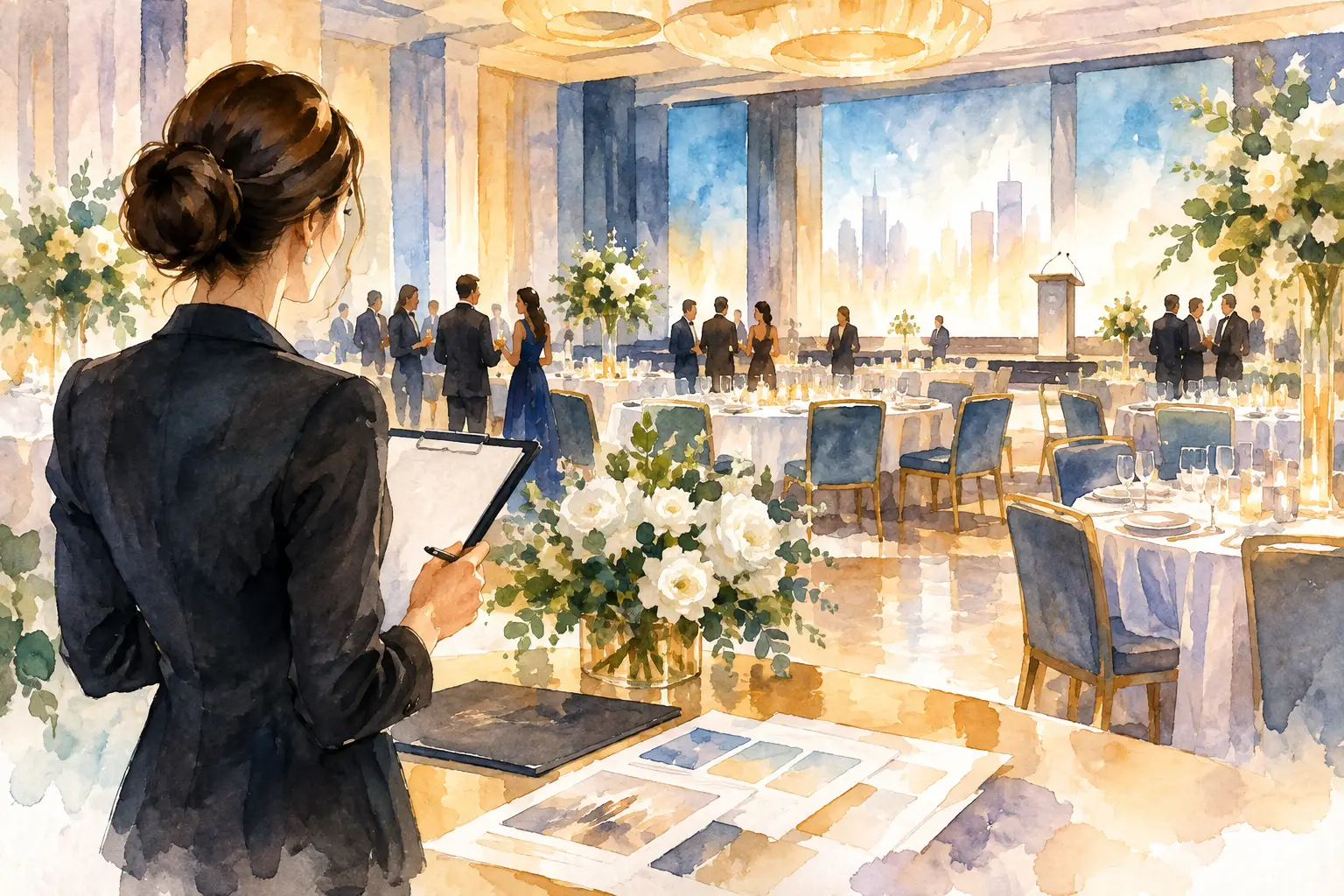
A corporate gala can have an impressive guest list, a meaningful cause, and a beautiful venue, yet still feel unfinished when the visual details are treated as an afterthought. Many people begin their search with the phrase corporate gala planner, but what they often need most is a clear design direction: one that makes the room feel intentional from the first welcome table to the final toast.
A gala is not simply a dinner with formal attire. It is a gathering designed to honor people, celebrate a milestone, support an organization, or bring a professional community together. The décor should reflect that purpose without making the space feel overly branded, crowded, or impersonal. Thoughtful styling gives guests a feeling of occasion before the program even begins.
What a Corporate Gala Planner Should Consider Visually
A full-service gala planner may oversee logistics such as schedules, guest communications, and vendors. Décor and styling have a different, equally visible role: shaping the atmosphere guests see, photograph, and remember. Keeping those responsibilities clear helps everyone work well together.
The strongest gala designs begin with a simple question: What should guests feel when they enter the room? A fundraising gala may call for warmth, elegance, and a sense of generosity. An awards dinner may need a more polished, celebratory look. A company anniversary can make room for heritage, color, and a refined nod to the organization’s story.
That feeling becomes the guide for the visual choices. Rather than selecting centerpieces, linens, florals, and a backdrop one at a time, it helps to see them as one composition. The room should have a consistent point of view, whether that means soft ivory and gold, modern black and white, rich jewel tones, or a palette drawn from the season.
Begin With the Room, Not the Pinterest Board
A ballroom, hotel function room, museum space, or banquet hall brings its own architecture, lighting, ceiling height, and color palette. Those details should influence the design. Tall floral arrangements can add presence in a room with high ceilings, while lower centerpieces may create a more inviting result in a space where guests need easy conversation across the table.
Existing carpet, wall color, and chairs do not need to dictate every choice, but ignoring them can create visual tension. A well-styled gala works with the room and then gives it a fresh identity. Often, a focused combination of table décor, a focal backdrop, and carefully placed statement pieces can transform a familiar venue more effectively than adding décor everywhere.
Centerpieces Set the Tone at Every Table
For a seated gala, guests spend much of the evening at their tables. That makes centerpieces more than a decorative extra. They are the repeated design element that carries the event’s visual identity across the room.
The right centerpiece depends on the table shape, the number of guests, the program format, and the desired mood. Low floral arrangements paired with candlelight can feel intimate and polished. Elevated designs can create drama and leave the tabletop open. A mix of heights can bring dimension to a large room, though it needs to be balanced carefully so the space still feels cohesive rather than busy.
Color deserves the same level of thought. A gala does not need to use every brand color literally. In fact, a subtle interpretation often feels more sophisticated. A deep blue might appear in napkins or floral accents, while gold, cream, greenery, or clear glass softens the overall setting. If a logo or step-and-repeat is part of the event, it can carry the stronger branded element while the dining tables remain elegant and welcoming.
Practical details matter, too. Centerpieces should support conversation instead of blocking it. They should look considered from every seat, not only in a close-up photograph. And they should coordinate with the plates, glassware, candles, menus, and linens already planned for the table.
Create One or Two Meaningful Focal Areas
A gala room does not need a decorative installation in every corner. Guests respond more strongly to a few well-designed focal areas than to many competing details.
The entrance is one of the most valuable places to create impact. It introduces the evening’s color palette and gives guests an immediate sense that they have arrived somewhere special. Depending on the event, this may be a floral moment, a styled welcome display, a backdrop, or a combination of soft draping and decorative accents.
The stage or presentation area is another important visual zone. Even when décor is minimal, the backdrop behind speakers and honorees will appear in photographs throughout the night. A thoughtful stage treatment can help the program feel connected to the rest of the room instead of looking like a separate setup. The design should frame the moment without distracting from the people being recognized.
For a fundraiser, awards event, or anniversary celebration, a photo backdrop can also create a natural gathering point. The best designs feel aligned with the event rather than generic. They may incorporate florals, layered textures, a color-forward display, or a clean branded sign. It depends on the organization’s personality and how formal the evening is meant to feel.
Choose Décor That Supports the Purpose of the Evening
Corporate gatherings can be formal without feeling cold. The difference often comes down to texture, lighting, and restraint. Candlelight, glass, layered table settings, floral styling, and balanced color can bring warmth to a professional occasion.
At the same time, not every gala needs tall florals and a dramatic backdrop. A nonprofit dinner centered on intimate conversation may benefit from low arrangements, soft lighting, and polished tables that let the mission remain front and center. A large awards gala may call for more scale, with statement centerpieces and a visually defined stage. The design should match the room, the audience, and the purpose of the evening.
For organizations hosting celebrations that reflect cultural traditions or a diverse community, décor can be especially meaningful. Color, pattern, florals, textiles, and statement displays may offer a respectful way to create a setting that feels familiar and celebratory. The most thoughtful approach is always collaborative: listen to what matters to the hosts and avoid treating cultural details as decoration without context.
How to Work With a Gala Décor and Styling Partner
A productive design conversation starts with a few useful details. Share the venue photos, event date, estimated table count, room layout if available, program setting, and any colors or visual elements the organization would like considered. Reference images are helpful when they show a mood or direction, rather than a demand to copy an exact look in a different space.
It is also helpful to identify priorities early. Some events need the dining room to carry the strongest visual impact. Others are centered around a stage, sponsor photo area, or entrance experience. Knowing where décor will make the greatest difference helps direct the design toward the moments guests will actually notice.
For Greater Boston organizations and businesses, working with a local décor specialist can make the design process feel more personal. At Sue’s Elegant Events, the focus is on creating coordinated centerpieces, tablescapes, backdrops, floral styling, and focal displays that give a celebration a finished, elevated look.
A Beautiful Gala Should Feel Intentional
The most memorable gala décor does not compete with the speeches, honorees, or mission of the evening. It creates the setting that lets those moments shine. When every table, focal area, and color choice belongs to the same visual story, guests feel the care behind the event long before they find their seats.
Start with the atmosphere you want to create, then let the décor carry that feeling throughout the room. A well-styled space gives people a reason to pause, take it in, and feel that this gathering matters.