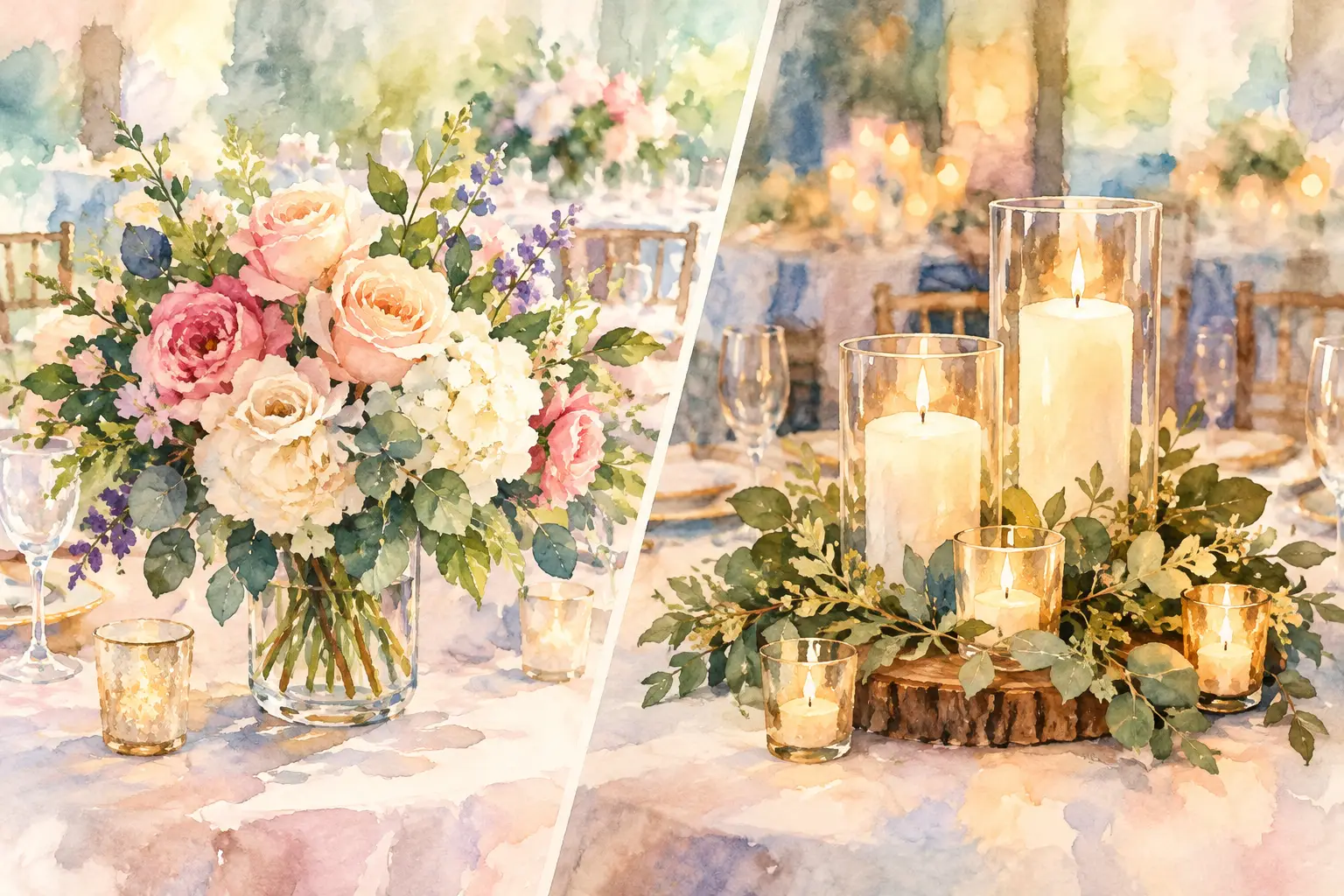
A reception table can feel completely different with one design decision: what sits at its center. When considering floral versus candle centerpieces, the question is not simply which option looks prettier. It is about the feeling you want guests to have as they enter the room, take their seats, and share the celebration around the table.
Flowers bring color, softness, and natural movement. Candles create warmth, reflection, and a beautiful evening glow. Both can be elegant, and both can be styled in ways that feel modern, romantic, traditional, minimal, or richly layered. The right choice depends on your event’s visual direction, the room itself, and how you want the tables to photograph and feel from day into night.
Floral Versus Candle Centerpieces: Start With the Atmosphere
Fresh floral centerpieces often become a visible part of the event’s color story. They can repeat shades from the ceremony décor, wedding party attire, stationery, or backdrop, helping the room feel thoughtfully connected. A lush arrangement in white, blush, and greenery creates a different mood from a compact design in jewel tones, orchids, or sculptural tropical leaves.
Flowers are especially effective when you want guests to notice the tables as part of the overall design. They add texture in daylight, give the room dimension in photographs, and can make a large ballroom or reception space feel softer and more welcoming. For spring weddings, garden-inspired celebrations, baby showers, and romantic engagement parties, floral styling can bring a sense of freshness that is hard to replicate with another element.
Candle centerpieces, by contrast, are often about ambiance first. Taper candles, pillar candles, votives, and hurricanes create points of light across the room. As daylight fades, candlelight changes the entire table setting. Glassware catches the glow, metallic details feel warmer, and the room takes on a more intimate character.
Candle-focused tables work beautifully for evening receptions, formal dinners, henna nights, Eid gatherings, and celebrations where gold, glass, richly colored linens, or layered place settings are part of the aesthetic. They can feel refined without looking overly busy. A candle design can also support a dramatic focal display elsewhere in the room, allowing the guest tables to remain polished and serene.
When Floral Centerpieces Make the Stronger Statement
Choose flowers when color and texture are central to the vision. If your décor includes a floral ceremony backdrop, a head-table installation, or a statement entrance display, floral centerpieces can carry that visual language throughout the space. The result is a room that feels complete rather than divided into separate decorative moments.
Florals are also a strong choice for daytime events. Natural light reveals petal shape, foliage, and subtle color variation. Low arrangements can add beauty without interrupting conversation, while elevated designs can bring scale to rooms with high ceilings or generous table spacing. The key is matching the height and fullness of the arrangement to the room, not simply choosing a large centerpiece because the celebration is formal.
For cultural celebrations, floral styling can be tailored to the colors and visual traditions meaningful to the family, without making assumptions about what the occasion should look like. Deep reds, soft pastels, white and gold, vivid jewel tones, or a more neutral palette can each be expressed through flowers in a way that feels personal to the celebration.
Fresh flowers do require thoughtful design consideration. Strongly scented blooms may not be ideal for dining tables, especially in a close seating arrangement. Very wide arrangements can make tables feel crowded, and tall designs should preserve sightlines so guests can comfortably see one another. A skilled centerpiece design considers these details from the beginning, rather than treating the flowers as an afterthought.
When Candles Create the Better Mood
Candles are at their best when the goal is warmth, glow, and a sense of occasion. A room with dimmable lighting or an evening start time can be transformed by layered candlelight. Even a simple table becomes more inviting when clear votives, textured glass, or elegant taper holders reflect light across the linen.
Candle centerpieces can also feel more architectural than floral arrangements. Grouped hurricanes in varying heights create rhythm down a long table. Slim tapers can add verticality without blocking a guest’s view. Pillar candles inside glass cylinders offer a clean, classic look that works well with both traditional and contemporary décor.
For couples or families who prefer a restrained palette, candles can create impact without introducing more color. They pair naturally with ivory linens, gold flatware, black accents, clear acrylic details, and soft greenery. They are also a lovely way to bring visual continuity to tables when the main floral moment is placed at a stage, sweetheart table, head table, or backdrop.
The practical consideration is venue policy and safety. Some spaces allow open flame only when it is enclosed in glass, while others may require flameless candles. This does not mean the design has to lose its warmth. High-quality flameless candles can still provide a gentle glow, particularly when they are layered with reflective vessels and intentional lighting throughout the tablescape.
The Best Choice May Be Both
The most memorable tables often do not treat flowers and candles as opposing ideas. A low floral arrangement surrounded by votives can feel romantic and abundant without overwhelming the table. A few sculptural blooms paired with taper candles can feel modern, airy, and intentional. Greenery with clusters of glass hurricanes creates a softer version of candle-forward styling.
This combination is especially useful when the room needs both color and light. Flowers give guests something beautiful to notice when they first enter, while candles become more prominent as the celebration moves into the evening. The table changes gently with the light, rather than looking exactly the same all night.
A mixed design also allows for variation across the room. Guest tables may feature candles and low floral accents, while the head table receives fuller flowers and more layered details. Long family-style tables can use a continuous runner of greenery, blooms, and candlelight instead of repeating one large arrangement at every place setting. The design remains cohesive while avoiding a copied-and-pasted look.
Consider Table Shape, Room Scale, and Guest Experience
Round tables often suit a single centered arrangement or a balanced cluster of candles and vessels. Long rectangular tables invite a more linear design, with pieces spaced along the center rather than concentrated in one spot. A centerpiece should complement the shape of the table, leaving enough breathing room for place settings, menus, and the meal.
Height matters just as much as width. Low centerpieces should sit below eye level, while elevated pieces should begin high enough that guests can see beneath them. The in-between height can be difficult because it may sit directly in a guest’s line of sight. Candles are useful here because they add vertical interest without creating a heavy visual barrier.
Think about the room from a distance as well. In a spacious ballroom, small centerpieces can disappear unless they are supported by linen, chargers, candlelight, or larger focal décor. In a more intimate venue, oversized arrangements may make the room feel crowded. The strongest table designs respond to the scale of the space and the visual weight of everything surrounding them.
Let the Season Guide, Not Limit, the Design
Season can influence the direction without dictating it. Spring and summer celebrations often welcome airy flowers, soft color, and garden-inspired details. Fall can support deeper floral tones, warm glass, and candlelight that feels especially inviting. Winter events may lean into crisp whites, evergreen texture, metallic accents, or a candle-forward look that brings softness to the room.
Still, there is no rule that says a winter wedding cannot be floral-rich or that a summer celebration must use bright flowers. The better question is whether the centerpiece belongs with the rest of the décor. A clean white floral design may be perfect for any month. A warm collection of candles can feel right in every season when it reflects the event’s color palette and setting.
At Sue’s Elegant Events, centerpiece styling is approached as part of the whole visual picture: the tables, linens, backdrop, focal areas, and the feeling guests carry with them after the celebration. Whether flowers take the lead, candles set the mood, or both share the table, the most beautiful choice is the one that makes the room feel unmistakably yours.