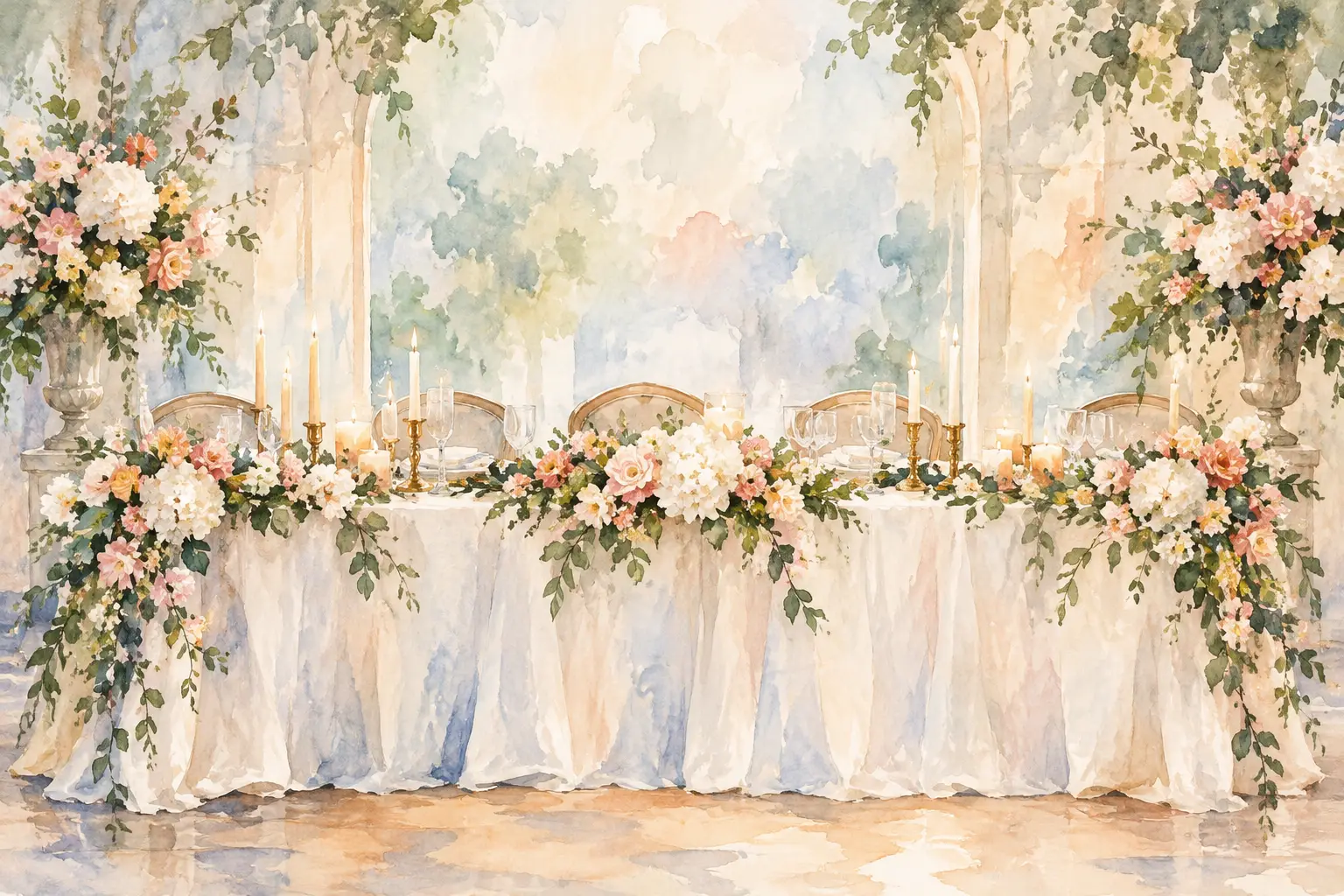
The head table is where the room naturally looks first. It frames the couple, wedding party, or family members during dinner, speeches, and many of the reception’s most photographed moments. Knowing how to dress head tables begins with treating this area as a focal point, not simply another banquet table with extra flowers.
A beautiful head table should feel connected to the guest tables while carrying a little more presence. The right mix of linens, florals, candlelight, chairs, and backdrop details can make it feel intentional from every angle without blocking conversation or hiding the people seated there.
Begin With the Shape and View of the Table
Before choosing florals or décor, look at the table itself. A long rectangular head table creates a formal, grounded focal point and works especially well beneath a backdrop or on a stage. A sweetheart table is smaller and more intimate, allowing the couple to create a distinct visual moment. A curved or serpentine table can soften a large ballroom and bring movement to the room.
The best design also depends on what guests and cameras will see. Consider the front of the table, the space behind it, and the sightlines from the room’s entrance. A lush arrangement that looks lovely from above may disappear from view if the front of the table is left plain. Conversely, a heavily draped front can compete with the backdrop if both use strong texture or color.
For cultural celebrations, the head table or stage may carry special significance and deserve a more elevated presentation. The décor can honor the event’s color story and traditions while still leaving enough visual space for the people, attire, and meaningful moments at the center.
How to Dress Head Tables in Layers
The most polished head tables are layered rather than crowded. Each layer has a purpose: the linen establishes the foundation, the flowers add softness and dimension, candlelight brings warmth, and personal details make the setting feel like it belongs to the celebration.
Start with a refined linen foundation
A floor-length linen instantly gives the table a finished appearance. Crisp white, soft ivory, champagne, black, or a color drawn from the wedding palette can all work beautifully. The choice is less about following a rule and more about contrast. If the room has pale walls and neutral chairs, a subtle textured linen may be enough. If the backdrop is simple, a richer linen or a tailored table front can add depth.
Texture often makes a greater impact than adding another color. Satin catches light beautifully, while matte fabric feels understated and modern. Pleated or gathered draping can create a more romantic look, but it should suit the overall style of the reception. A clean, contemporary room may call for smooth lines instead.
Add florals at the right height
Floral styling is often the heart of a head table design, but scale matters. Low, elongated arrangements across the tabletop keep faces visible and allow guests to enjoy the flowers without creating a barrier. This approach is especially effective for a sweetheart table, where a garden-like floral runner can frame the couple without overwhelming them.
A fuller floral treatment along the front edge of a long head table can create a striking ceremony-to-reception focal point. It works best when the surrounding décor is edited thoughtfully. If there is already a dramatic floral backdrop, a lighter tabletop design may provide better balance.
Choose flowers and greenery that echo the centerpieces, but do not feel obligated to repeat them exactly. The head table should look related to the room, not copied and pasted from it. A few additional blooms, a softer trailing element, or a richer concentration of the wedding colors can make it feel special.
Use candlelight to create warmth
Candlelight gives head tables a welcoming glow, particularly for evening receptions. Votives, hurricanes, and taper candles can be arranged at varying heights to add rhythm around floral pieces. Clear glass is versatile and timeless, while gold, black, or colored holders can reinforce a more defined style.
Keep the placement practical. Candles should not crowd place settings, touch florals, or create visual clutter around the couple or wedding party. In some venues, open flames may be restricted, so flameless candles can still provide the soft, layered look without losing the atmosphere.
Make the Front of the Table Count
The front edge of the head table is often the most visible surface in the room. It is also easy to overlook when attention goes to tabletop centerpieces. A plain linen can be elegant, but when the head table sits on a stage or faces a large guest count, the front may benefit from additional styling.
A floral garland, a gathered fabric treatment, or a focused arrangement at the center can define the table without covering it completely. For a sweetheart table, an asymmetrical floral accent can feel romantic and current. For a long family or wedding-party table, a repeated but low-profile design often reads better across the full length.
Avoid adding every possible detail at once. Heavy draping, dense florals, signage, candles, and a bold backdrop can compete for attention. Choose the element that should lead the design, then allow the others to support it. Often, a table with fewer pieces and thoughtful spacing feels more elegant than one filled edge to edge.
Coordinate the Chairs and Backdrop
The chairs around the head table are part of the composition. They may seem secondary, but their color, height, and material can change the entire effect. Clear chairs can keep a floral-forward design airy. Gold or wood-toned chairs bring warmth. Upholstered chairs can give a sweetheart table a more distinguished presence when used with restraint.
The backdrop should frame the table rather than compete with it. A soft drape backdrop, floral installation, statement wall, or clean architectural setting can all work. What matters is proportion. A petite sweetheart table can get lost against a very large backdrop unless the table has enough floral or lighting detail to hold its own. Similarly, a full head table may need a backdrop that extends wide enough to feel balanced.
For an event with a strong color palette, repeat a small amount of that color in the backdrop, linens, and florals. Repetition is what makes a room feel coordinated. It does not require every element to match exactly.
Keep Comfort and Conversation in the Design
A head table is still a place where people sit, eat, speak, and celebrate. Décor should enhance that experience, not make it difficult. Low florals are usually more comfortable for a wedding party, while large arrangements are better placed behind, in front of, or beside the table.
Leave clear space for place settings, water glasses, and any items the couple may want nearby. If speeches or toasts will happen from the head table, avoid designs that create a dense visual wall in front of faces. This is particularly helpful for photography, as expressions and attire remain visible.
The number of people seated at the table also changes the design. A sweetheart table allows for more decorative freedom because there are fewer place settings. A table seating a large wedding party needs a cleaner rhythm and more usable space. Neither approach is better. They simply call for different proportions.
Let the Head Table Reflect the Celebration
The most memorable head tables do more than look beautiful. They carry the feeling of the event. A romantic reception might use soft ivory blooms, candlelight, and layered fabric. A modern celebration may pair sculptural florals with clean linens and intentional negative space. A henna night, Eid gathering, or wedding honoring cultural traditions may feature meaningful colors, textiles, patterns, or stage details chosen with care.
Personal details do not need to be literal to feel meaningful. A favorite flower, a family color, a patterned textile, or a graceful mix of metallic finishes can bring personality into the design. The key is to make those choices feel integrated with the rest of the room.
At Sue’s Elegant Events, head table styling is approached as part of the larger visual story – from centerpieces and linens to the backdrop and focal displays around it. When these elements speak to one another, the result feels polished in photographs and even more beautiful in person.
A well-dressed head table does not need to be the loudest part of the room. It simply needs to give the people seated there a setting that feels warm, considered, and worthy of the celebration unfolding around them.