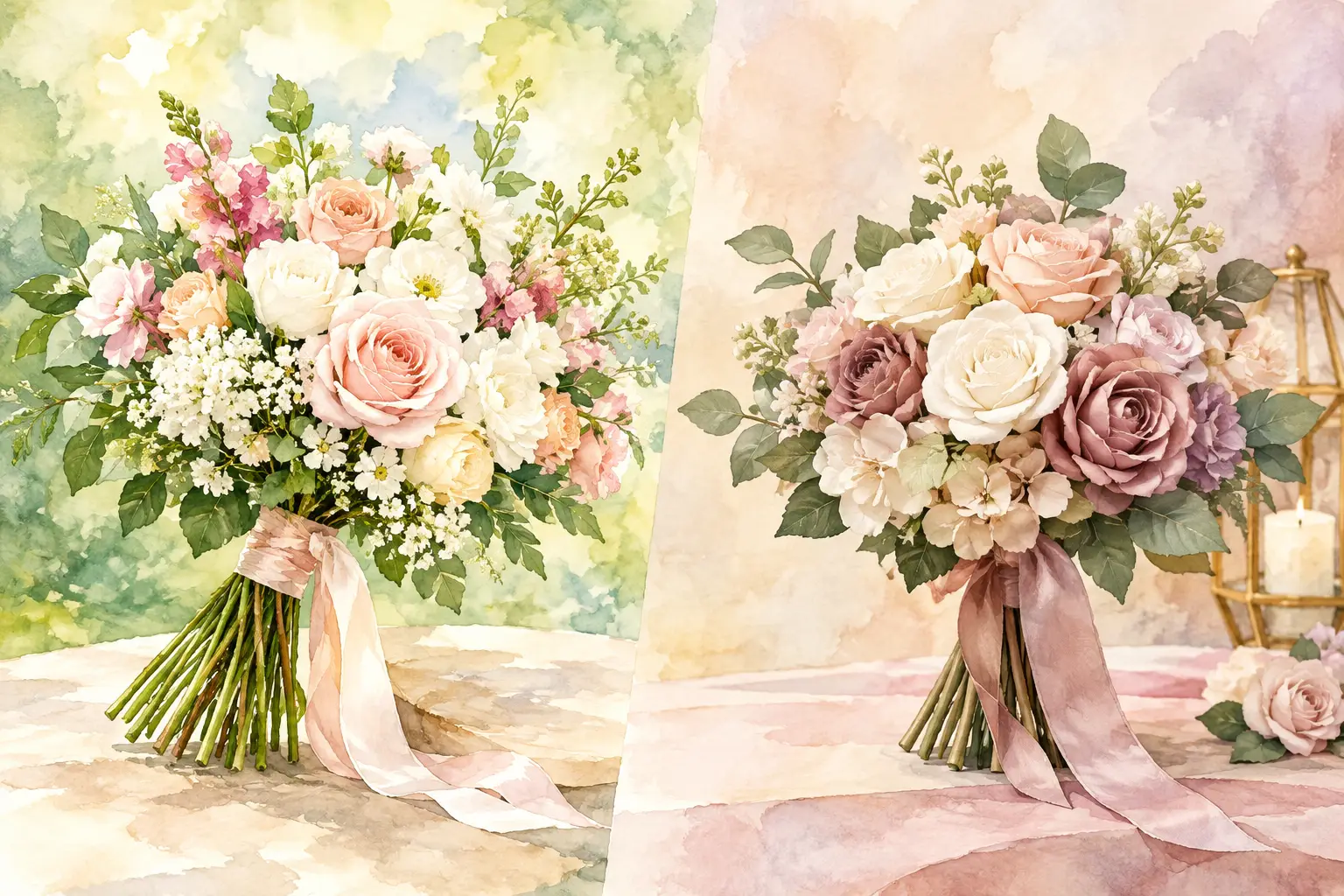
A reception room can change completely with flowers. Soft garden roses bring romance to a head table, while a tall floral arrangement can give a ballroom the presence it needs. When couples compare fresh versus artificial wedding florals, the best answer is rarely as simple as choosing what looks prettier. Both can create a beautiful setting, but they behave differently in photographs, under venue lighting, across a long celebration, and within the overall visual design.
For wedding décor, the right floral choice should support the atmosphere you want guests to feel when they enter the room. It should also work with your tables, linens, candlelight, backdrop, color palette, and the scale of the space.
Fresh Versus Artificial Wedding Florals: The Visual Difference
Fresh flowers have movement, natural variation, and a softness that is difficult to copy exactly. Their petals, stems, and subtle shifts in color give centerpieces an organic quality. For couples drawn to a romantic, seasonal, garden-inspired look, fresh florals can make the room feel especially alive.
Artificial florals have come a long way, particularly high-quality real-touch varieties. The strongest designs do not try to imitate every detail of a fresh arrangement from inches away. Instead, they use realistic blooms, thoughtful layering, and balanced color to create a polished overall impression. From guest-table distance, well-designed artificial arrangements can look refined, full, and beautifully coordinated.
The difference becomes most noticeable in close-up moments. Fresh flowers often have a delicate, imperfect beauty, while artificial florals can hold a more consistent shape and color from the first photograph to the last dance. Neither quality is automatically better. It depends on whether you prefer natural softness or controlled visual consistency.
When Fresh Flowers Are the Right Fit
Fresh florals are often a lovely choice when the flowers themselves are central to the wedding aesthetic. A small number of statement arrangements featuring seasonal blooms can feel personal and expressive without overwhelming the room. They are especially effective for intimate tablescapes, ceremony arrangements viewed up close, and designs where fragrance is part of the experience.
Seasonal color and natural texture
Fresh flowers offer a wide range of tones and textures, from airy spring blossoms to rich autumn dahlias. Using blooms that are naturally in season can help a palette feel connected to the time of year. A June wedding may call for lighter, softer movement, while a fall reception can carry deeper color and fuller texture.
Still, seasonality is not only about color. Some flowers are more delicate than others, and availability can shift. A design should be built around the overall look rather than depending on one exact bloom to carry the entire room.
Scent and atmosphere
The gentle fragrance of fresh flowers can add another layer to a reception or ceremony space. This can be meaningful for a couple who loves the scent of roses, peonies, or eucalyptus. But fragrance requires restraint. Strongly scented blooms may compete with dinner service or bother guests with sensitivities, so floral scent should feel like a quiet detail rather than the main feature.
A note on heat and timing
Fresh flowers are living materials. In warm rooms, outdoor summer ceremonies, or spaces with direct sun, certain blooms can become more fragile. They also need to look their best during a specific window of time. A floral design professional considers placement, water source, room temperature, and the event schedule when selecting fresh stems for centerpieces and displays.
Why Artificial Florals Can Be a Beautiful Choice
Artificial florals are not a compromise when they are selected and styled with care. They can be an intentional design choice for couples who want lasting arrangements, a specific color story, or fuller floral moments that remain picture-ready throughout the celebration.
Their greatest advantage is control. Artificial blooms can be arranged in advance and keep their form through long events, changing temperatures, and repeated movement. This makes them particularly useful for elevated centerpieces, large backdrops, stage displays, and installations where shape and fullness matter.
Consistent color from table to table
If your palette includes a very specific shade of dusty blue, mauve, terracotta, burgundy, or blush, artificial florals can make it easier to repeat that tone across the room. Fresh flowers naturally vary by season and shipment, which is part of their beauty, but artificial stems allow for more precise color continuity.
This is valuable when the wedding design includes coordinated linens, chargers, candles, signage, or a statement backdrop. Repeating floral color in several décor elements can make the space feel intentional rather than assembled piece by piece.
More freedom with scale
Large-scale floral décor can be visually demanding. Tall arrangements need to stay balanced, while a floral wall or focal display needs even coverage from every angle. Artificial florals can make it possible to build fullness and height without relying entirely on delicate live stems.
They also allow a design to include flowers that might otherwise be difficult to source in the desired shade or season. The key is selecting materials that suit the setting. A grand ballroom, an elegant tented reception, and a cultural celebration with a dramatic stage each call for a different floral style.
Consider the Entire Décor, Not Just the Centerpiece
A floral decision should not be made in isolation. The same centerpiece can look understated on a large round table with a neutral linen and dramatic when paired with taper candles, textured runners, and coordinated place settings. Floral design is strongest when it works as part of a complete visual story.
For a reception with low ceilings, compact fresh arrangements or low artificial floral runners may create more impact than very tall centerpieces. In a room with high ceilings or a spacious dance floor, height can help the décor feel present rather than lost. Clear vessels, gold stands, matte ceramics, and candlelight all influence how fresh and artificial florals are perceived.
There is also the guest experience to consider. Centerpieces should allow conversation across the table, and their fragrance, height, and width should feel comfortable. A beautiful arrangement is not only one that photographs well. It should make the table feel welcoming throughout the meal and celebration.
A Blended Floral Approach Often Gives the Best of Both
Many wedding designs benefit from a thoughtful mix of fresh and artificial florals. This approach can bring natural texture into key close-up areas while using artificial blooms for volume, repetition, or long-lasting structural elements.
For example, fresh florals may be used in a head table arrangement or a small number of focal centerpieces, while high-quality artificial flowers create fullness in a backdrop, stage display, or elevated guest-table designs. The result can feel layered and natural without asking one material to do every job.
A blended approach is also well suited to celebrations with multiple visual moments. At a henna night, wedding reception, or family celebration where the stage and tables each need a distinct presence, florals can be tailored to the role of each space. The choice should honor the event’s colors, traditions, and desired atmosphere without treating every celebration as though it follows the same design formula.
Questions That Help Clarify Your Choice
Before selecting fresh or artificial florals, focus on the feeling you want the room to have. Do you picture airy and natural, sculptural and dramatic, soft and romantic, or richly layered? Consider where guests will see florals up close, where photographs will be taken, and which areas need the most visual impact.
It also helps to think about the venue itself. Is there abundant natural light? Will the décor be viewed mostly after sunset under warm lighting? Does the room need taller arrangements to fill its height, or does it need lower, more intimate table styling? These details guide the floral material as much as the color palette does.
At Sue’s Elegant Events, floral styling is approached as part of the full décor picture: the table, the candles, the backdrop, the focal points, and the feeling of the room once it is complete. Fresh flowers, artificial florals, or a combination of both can be beautiful when the design has a clear purpose.
The most memorable choice is the one that makes your space feel like it belongs to your celebration. Start with the atmosphere you want to create, then let the flowers support it with color, shape, and thoughtful detail.