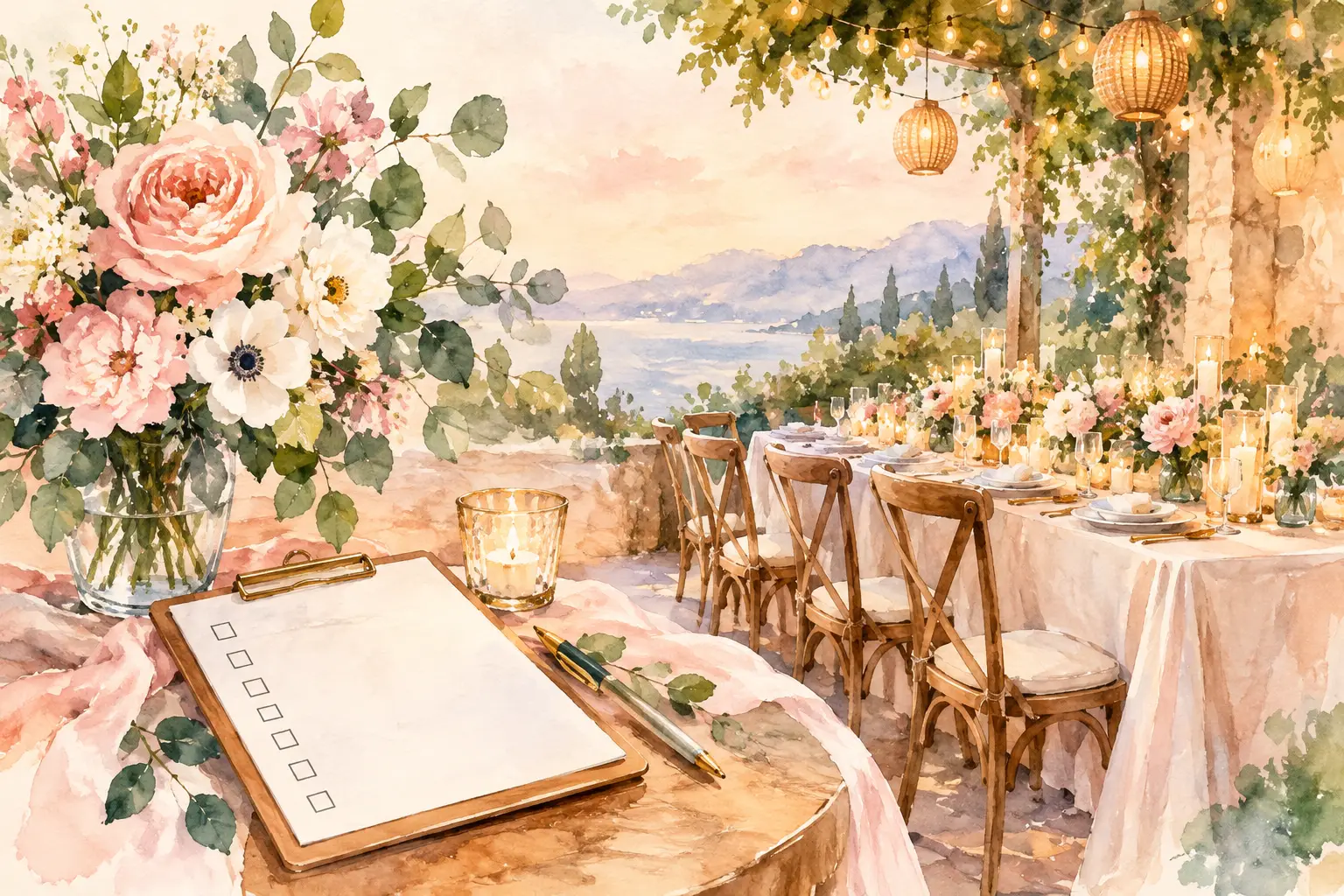
A smaller reception gives every visual detail more presence. When guests are close enough to notice the texture of a linen napkin, the glow of a candle, or the flowers on the table, décor does more than fill a room. It creates the feeling of the celebration. This intimate reception planning checklist focuses on the design choices that help a wedding reception feel warm, personal, and beautifully connected.
An intimate reception does not have to mean minimal décor. It means choosing elements with intention, so the room feels considered rather than crowded. Whether you are hosting a dinner for close family in Greater Boston or gathering loved ones after a larger ceremony, begin with the atmosphere you want people to remember.
Begin With the Feeling, Not Individual Pieces
Before selecting centerpieces, chair treatments, or a backdrop, name the mood you want to create. A candlelit evening reception might call for soft ivory florals, layered glass, and warm metallic accents. A garden-inspired celebration may feel best with organic greenery, airy blooms, and light linens. A modern reception can be striking with sculptural centerpieces, clean color blocking, and a focused focal display.
This early decision keeps the design cohesive. Without it, it is easy to collect beautiful items that do not quite belong together. Your palette, floral direction, table styling, and statement pieces should all feel as if they are speaking the same visual language.
For cultural weddings and celebrations, the mood may also be shaped by meaningful colors, family traditions, or ceremonial details. There is no single formula. A respectful design starts with listening to what matters to the couple and family, then creating a setting that feels fitting for the occasion.
Intimate Reception Planning Checklist: Start With the Room
A guest count may be smaller, but the room still needs to feel full of life. The goal is not to make a large space look smaller by adding décor everywhere. Instead, use thoughtful placement to draw guests into the areas that matter most.
Consider the room from a guest’s point of view. What is the first thing they see when they enter? Where will they naturally gather? Which wall, stage, sweetheart table, or head table will appear in the most photos? These are the places where intentional styling has the greatest effect.
Use this visual checklist as you assess the reception space:
- Identify the main focal point, such as a sweetheart table, head table, backdrop, or floral installation.
- Consider the scale of the ceiling, walls, windows, and existing architecture before choosing tall or low centerpieces.
- Notice the room’s built-in colors, carpeting, lighting fixtures, and furniture, since they will become part of the overall palette.
- Plan a welcoming entry moment with a styled sign, floral detail, or other décor that introduces the celebration’s look.
- Reserve visual breathing room around the most meaningful display so it can be seen and appreciated.
If the venue has beautiful architectural details, let them support the design rather than compete with it. If the room feels plain or expansive, a backdrop, pipe-and-drape treatment, or concentrated focal display can give it a stronger sense of place.
Give Guest Tables a Purpose
At an intimate reception, guest tables are not background décor. They are where conversations happen, glasses are raised, and guests spend much of the celebration. Each table should feel welcoming on its own while contributing to the larger room design.
Start with the foundation: linens, chargers, flatware, glassware, and napkins. These elements establish the visual rhythm before any flowers are added. A richly colored napkin may bring depth to a neutral table. A textured linen can soften a more formal arrangement. Layered place settings can feel celebratory, but they should still leave guests comfortable space for dining.
Centerpieces deserve special attention because they set the tone at eye level. Low floral arrangements encourage conversation and allow guests to see one another easily. Tall designs can add drama and help fill a room with high ceilings, provided the stems are slim and the arrangement does not block sightlines. A mix of heights often creates the most movement, especially across several tables.
Keep the practical side of beauty in mind. Oversized arrangements, strong fragrances, and crowded tabletop décor can make a table feel less comfortable. The best centerpiece is not simply the most elaborate one. It is the one that complements the table, supports the room’s scale, and lets guests enjoy being together.
Repeat, Then Add One Variation
Consistency makes a small gathering feel polished. Repeating the same floral palette, candle treatment, or linen color creates a visual thread from table to table. That does not mean every table must be identical.
One variation can add interest: alternating centerpieces, a slightly different vessel, or a few tables accented with fuller candle groupings. The key is to repeat enough elements that the variation looks intentional, not accidental.
Create a Focal Point Worth Gathering Around
In a larger reception, a grand focal display may need to reach across a ballroom. In an intimate setting, it can be more personal. A thoughtfully styled sweetheart table, floral backdrop, stage treatment, or cake-area display can become a natural anchor for the room.
Choose one primary moment rather than several competing ones. When every corner asks for attention, a smaller space can feel busy. When one area carries the strongest visual impact, the rest of the décor has room to support it.
Think about how the focal point relates to the guest tables. It should share colors, textures, or floral elements with the rest of the room, even if it is more layered or dramatic. This is especially helpful when the reception includes traditional attire, meaningful textiles, or colorful ceremonial details. The décor can honor those elements through thoughtful coordination without treating them as an afterthought.
Use Lighting to Make the Design Feel Complete
Lighting changes how every décor choice is seen. Candlelight can make a simple table feel romantic and dimensional, while warm uplighting can soften a room and highlight walls or draping. Clear glass, metallic vessels, and reflective details become especially beautiful when they catch a warm glow.
The right approach depends on the venue and the desired mood. A daytime reception near large windows may need a design with enough color and texture to read beautifully in natural light. An evening event can use candles and ambient lighting to create intimacy. Before finalizing décor, consider what the room will look like at the actual time of your celebration.
Candles should feel intentional rather than scattered. Grouped votives, taper candles, or hurricane arrangements can add depth along tables and near a focal display. For venues with candle restrictions, alternative lighting elements can still bring softness and warmth.
Edit Before You Add More
The most common challenge in intimate reception décor is overfilling the room. Because there are fewer tables and fewer guests, every piece is more noticeable. A carefully styled table with beautiful centerpieces, coordinated linens, and candlelight often has more impact than a table covered with too many unrelated details.
As you review the design, ask whether each piece adds color, texture, height, or meaning. If it does none of these, it may not need to be there. Editing is not about making the reception plain. It is what allows the flowers, linens, and meaningful details you love to be seen clearly.
A professional décor stylist can be especially helpful here, bringing together the centerpiece scale, table layers, backdrop, and focal moments into one cohesive look. At Sue’s Elegant Events, the focus is on helping clients see how those visual choices work together in the room, not just on paper.
Leave Room for What Makes It Yours
The most memorable intimate receptions rarely depend on one trend or one oversized display. They feel personal because the design reflects the people being celebrated. It might be a color that carries family meaning, a floral style that feels like home, an elegant henna-night-inspired palette, or a table setting that makes close guests feel especially welcomed.
Choose the details that make you pause when you imagine walking into the room. Those are often the details your guests will remember, too.