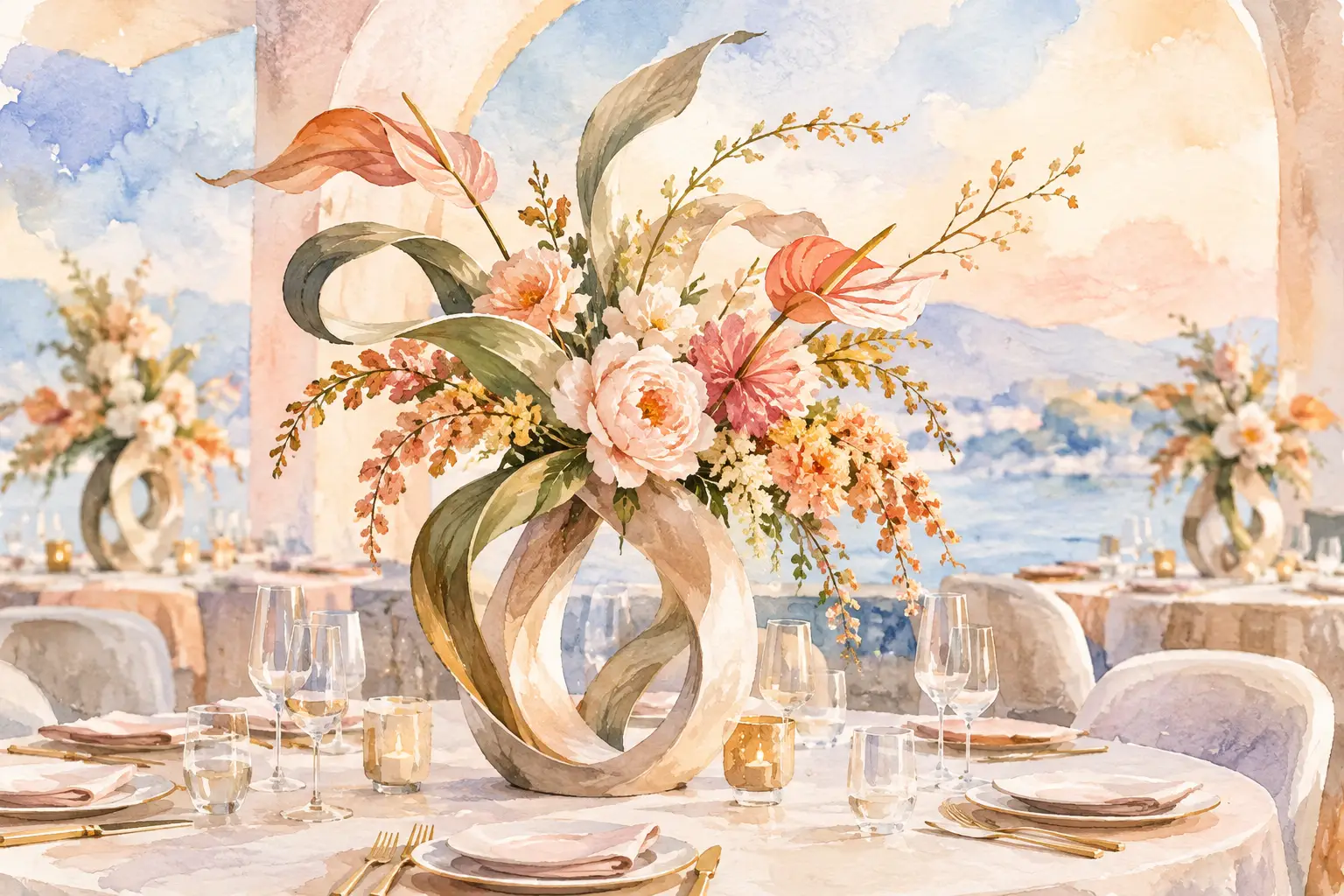
A reception table can be beautiful without being memorable. The most exciting sculptural centerpiece trends 2027 are moving beyond the expected floral arrangement toward pieces that give a room shape, rhythm, and a stronger point of view. For weddings and meaningful celebrations, the centerpiece is becoming less of a table accessory and more of a small installation that helps define the atmosphere.
That does not mean every table needs a dramatic, oversized design. The strongest looks are thoughtful about proportion, guest comfort, color, and the feeling the event is meant to hold. A formal ballroom wedding, an intimate henna night, and an elegant Eid gathering may all use sculptural elements differently, but each can feel complete when the tablescape has intention.
Sculptural Centerpiece Trends 2027: Shape Leads the Design
For years, centerpieces were often described by their flowers: roses, hydrangeas, orchids, greenery. In 2027, silhouette is likely to lead the conversation. The outline a centerpiece creates from across the room matters as much as the individual materials within it.
Expect to see more curved compositions, asymmetrical forms, and arrangements with visible movement. Instead of placing flowers in a standard round vase, designs may rise from a sculptural base, arc gently across the table, or appear to float above candlelight. The goal is not to make every centerpiece look unusual. It is to create a form that feels intentional and connected to the rest of the décor.
A curved centerpiece can soften a modern room with clean architectural lines. A more vertical design can add presence in a ballroom with high ceilings. Low, branching forms can bring interest to a long family-style table while keeping conversation open. Shape should respond to the room and the table, not simply follow a trend seen in a photo.
The return of the statement vessel
Vessels are becoming part of the visual story rather than disappearing beneath the flowers. Ceramic forms with soft texture, fluted glass, metallic bowls, stone-inspired finishes, and sculptural pedestal bases can give a centerpiece its own character before a single bloom is added.
This approach works especially well for clients who want a refined look without relying on dense floral coverage at every table. A distinctive vessel paired with carefully selected blooms, branches, or candlelight can feel polished and substantial. It also creates a more cohesive visual connection when the same finish appears in chargers, table numbers, stage décor, or focal displays.
Height Will Be More Considered, Not Just Higher
Tall centerpieces are not new, but the next direction is less about height for its own sake. The emphasis is on varied elevation across the room. A reception can feel flat when every table has the exact same profile, even when the flowers are beautiful.
Mixing high and low arrangements creates visual pacing. Tall pieces draw the eye upward and help fill expansive spaces, while low sculptural centerpieces invite closer appreciation of texture and color. The transition between them matters. A room looks more composed when the designs share a common floral palette, vessel finish, or candle treatment.
There is also a practical trade-off. High centerpieces should remain visually light enough that guests can see one another comfortably. Low designs should have enough dimension that they do not disappear once the room is filled. Clear stands, open frameworks, and elevated branching forms can provide height without placing a dense arrangement directly at eye level.
Layered tables, not crowded tables
The 2027 look is likely to favor layers over clutter. A sculptural centerpiece is often strongest when it has room around it: coordinated candles, a textured runner, elegant place settings, and perhaps a few smaller accent pieces that extend the design along the table.
This is different from filling every available inch. A table needs breathing room for menus, glassware, and the simple comfort of dining. When a centerpiece has a clear shape and the supporting pieces are placed with restraint, the result feels richer, not busier.
Color Stories Become More Dimensional
Single-color tablescapes will always have a place, especially for classic weddings. Yet one of the more interesting sculptural centerpiece trends for 2027 is tonal contrast. Rather than using one exact shade throughout, designers are working within a color family and adding depth through material, finish, and shadow.
Think warm ivory with caramel glass and soft gold candleholders, or deep plum paired with mauve, smoked glass, and muted metallic details. A white floral palette can feel entirely different when paired with textured stone vessels rather than clear glass. The colors may be restrained, but the layers keep the design from feeling plain.
For cultural celebrations, color can hold special meaning or reflect a family’s personal style. Rich jewel tones, gold finishes, luminous fabrics, and floral details can be incorporated in a way that feels celebratory without reducing a meaningful occasion to a theme. The best design begins with listening to which details matter most, then building a visual direction around them.
Organic Materials Meet Polished Finishes
A compelling contrast for 2027 is the pairing of natural, tactile elements with more refined surfaces. This might include delicate blooms against a smooth metallic vessel, flowering branches beside polished glass, or soft draping fabric paired with a structured tabletop form.
Organic elements bring warmth to formal spaces. Polished finishes prevent the design from becoming too rustic or casual. Together, they create a centerpiece that feels collected and welcoming while still being appropriate for a dressed-up celebration.
This balance can be especially effective in New England settings, where historic ballrooms, waterfront spaces, country estates, and contemporary venues each bring a distinct atmosphere. The décor should complement the existing room rather than compete with it. A grand traditional space may call for graceful, elevated forms, while a cleaner modern setting may benefit from rounded vessels and softer floral movement.
Candlelight Becomes Part of the Sculpture
Candlelight is no longer simply an addition placed around the centerpiece at the end. It is becoming part of the composition. Grouped votives, slender tapers at varied heights, and glass hurricanes can create a glow that gives sculptural arrangements more depth after sunset.
The key is to treat candlelight as a design element with its own rhythm. Repeating a warm glow down a long table can visually connect individual centerpieces. A cluster of candles at the base of an elevated arrangement can make the entire piece feel grounded and inviting.
The exact approach depends on the venue’s rules and the overall event setting. Where open flame is not appropriate, other lighting options can still create a soft, layered effect. What matters most is that the light feels integrated with the table design rather than added as an afterthought.
How to Choose a Sculptural Centerpiece That Still Feels Like You
Trend-forward décor should never erase personality. Before choosing a dramatic form, consider what guests should notice when they enter the room. Is the feeling romantic and airy, warm and celebratory, sleek and modern, or richly layered with color and texture? That answer should guide the centerpiece more than any single image.
It also helps to consider the event’s full visual picture. A sculptural centerpiece has more impact when it speaks to the ceremony décor, backdrop, stage, linens, and tabletop details. Repeating one shape, finish, or color in small ways creates the sense that the room was designed as a whole.
At Sue’s Elegant Events, the most successful centerpieces begin with that larger vision. A custom design can be expressive without overwhelming the table, meaningful without becoming literal, and current without feeling temporary. The right centerpiece should look beautiful in photographs, but it should feel even better when guests are seated among it.
As 2027 approaches, the most lasting trend may be this: choose centerpieces with presence, but also purpose. When shape, scale, color, and light are working together, a table becomes part of the celebration rather than simply a place to sit.