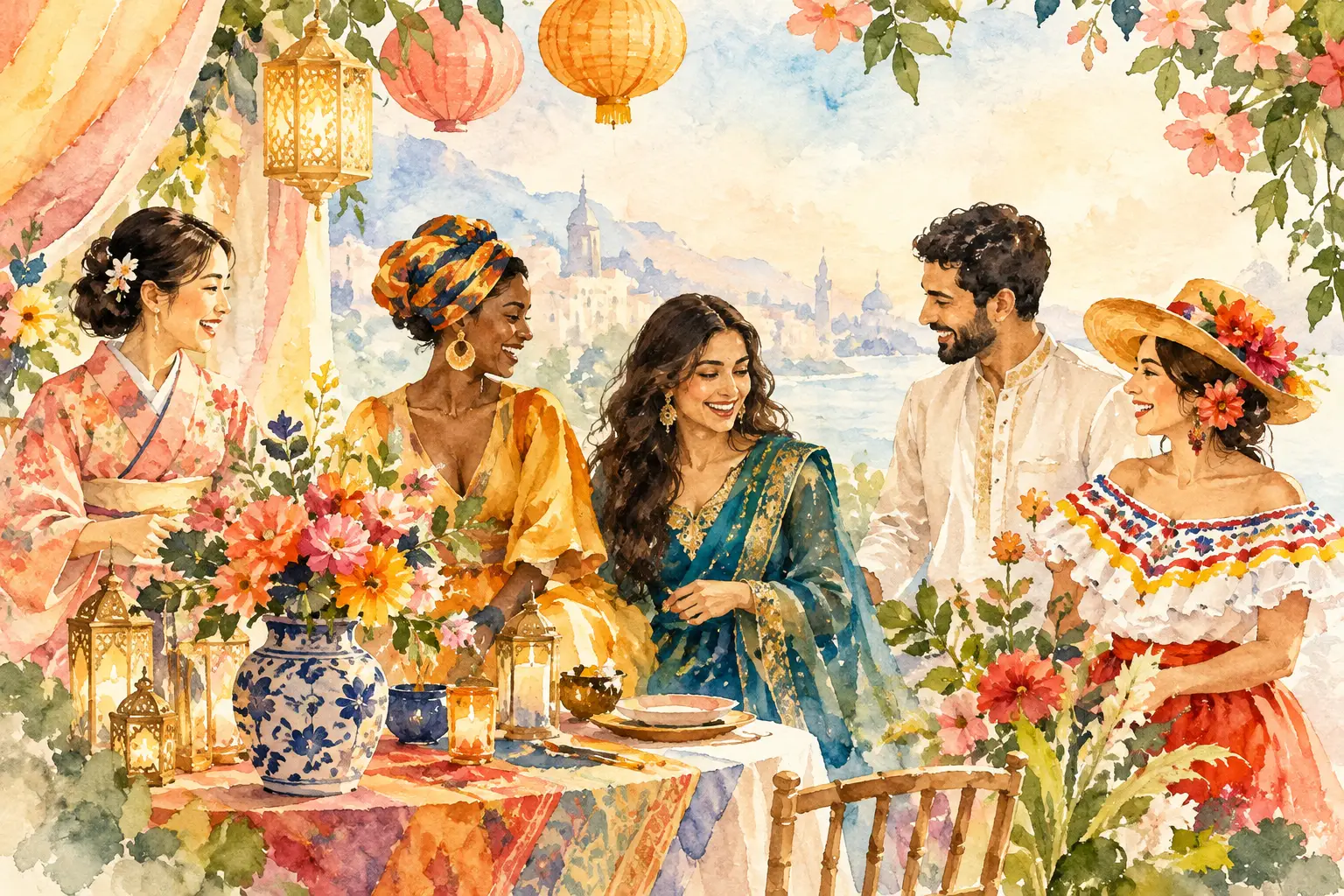
A beautifully styled cultural celebration should feel like it belongs to the people being celebrated. This cultural celebration styling guide focuses on the visual choices that help a room feel personal, polished, and connected to the occasion, whether you are preparing for a Sudanese or Arab wedding, a henna night, an Eid gathering, an engagement, or another meaningful family event.
The most memorable spaces are not crowded with décor simply for the sake of it. They use color, texture, florals, tables, and focal pieces with intention. When these elements work together, guests feel the atmosphere before they take in any single detail.
Start With Meaning, Then Build the Design
Cultural celebrations often carry traditions that are deeply personal to a family, region, faith, or community. Even within the same culture, colors, symbols, clothing, rituals, and gathering styles can vary. The right approach is not to assume that one look represents everyone. It is to begin with the details that matter to the hosts.
A favorite fabric, a meaningful color palette, family heirlooms, traditional dress, or the tone of the celebration can all inspire the décor. Some clients want a setting that honors tradition through rich color and ornate detail. Others prefer a softer, more contemporary room with only a few cultural references. Both can be beautiful when the design reflects the people in the room.
Think about the feeling you want guests to carry with them. A henna night may call for warmth, layered textiles, glowing lanterns, and a statement backdrop that frames the celebration. An Eid dinner may feel refined and welcoming with elegant table styling, soft candlelight, and thoughtful floral accents. A wedding can combine cultural touches with a formal reception design, allowing the ceremony, entrance, sweetheart table, or stage to feel especially significant.
Choose a Clear Visual Direction
Before choosing centerpieces or backdrops, give the event a visual direction. This is the thread that keeps the room from feeling pieced together. It can be as simple as a color story and a few descriptive words, such as “soft ivory, gold, and blush with floral texture” or “deep emerald, warm brass, and candlelit richness.”
Color is often the fastest way to establish mood. Jewel tones can create depth and celebration, particularly when paired with gold, brass, or clear glass. Cream, champagne, and soft pastels can make a ballroom or banquet space feel airy and romantic. A monochromatic palette can be striking, but it benefits from varied materials so the design still has dimension.
Texture adds the second layer. Consider the contrast between smooth linens, reflective charger plates, velvet accents, floral arrangements, acrylic signage, metallic candleholders, or draped fabric. A room does not need every texture at once. Two or three repeated materials usually create a more elegant result than a table filled with unrelated pieces.
Lighting should be considered as part of the décor, even when the venue provides the fixtures. Candles, lanterns, uplighting, and reflective details can make florals and tablescapes feel warmer after sunset. In a bright daytime space, clear vessels, fresh blooms, and lighter linens may have more impact than dark, dense arrangements. The setting matters as much as the palette.
Cultural Celebration Styling Guide: Design Around the Focal Moment
Every celebration has a place where eyes naturally land. It may be a stage, a sweetheart table, a henna seating area, a family photo moment, a dessert display, or the entrance. Styling this focal area well gives the entire event a sense of purpose.
A backdrop is most effective when it does more than fill a wall. It should frame the people and moments that matter. Floral installations can soften a formal room, while draping can add height and movement. Architectural panels, patterned screens, or layered fabric can bring detail without competing with attire or photography. The best choice depends on the space, the scale of the guest count, and how the area will be used throughout the event.
For a wedding reception, the couple’s table or stage often deserves a distinct treatment while still matching the guest tables. This might mean fuller florals, a more layered backdrop, or coordinated candles and linens. For a henna night, a styled seating area can create a beautiful central setting for the guest of honor and family photographs. The goal is visual emphasis, not a separate theme dropped into the middle of the room.
Keep the focal point visible from key angles. Tall arrangements or oversized structures can be stunning, but they should not overwhelm a low ceiling or make a smaller venue feel crowded. A strong focal design can be quiet and refined when the materials, proportions, and placement are right.
Make the Tables Feel Considered
Guest tables are where people spend much of the celebration, so they deserve more than a single decorative item placed at the center. A well-styled table creates an inviting view without interrupting conversation or competing with food service.
Centerpieces are often the foundation. Low floral arrangements encourage easy conversation and can make a room feel lush when repeated across the space. Taller arrangements bring drama and help fill a larger ballroom, especially when they are airy enough to preserve sightlines. Many events benefit from a mix of heights, provided the vessels, flowers, and palette remain consistent.
The layers around the centerpiece matter just as much. Candles can add glow and soften the table. Chargers, napkins, runners, and place settings help establish the overall color story. Small details, such as gold-rimmed glassware or a floral bud vase, can bring the table together without making it feel busy.
When cultural elements are included at the table, restraint is often more effective than repetition. A pattern, color, textile, or meaningful decorative accent can be incorporated in a way that feels intentional rather than themed. The most successful designs let these details feel naturally woven into the celebration.
Balance Tradition With the Venue
A décor concept should honor the occasion while responding to the room itself. A grand ballroom can hold tall centerpieces, draped backdrops, and layered lighting. A restaurant private room may need a more focused design with beautifully dressed tables, refined florals, and one carefully styled focal area. A home celebration may call for a warm, intimate approach that enhances the space rather than trying to transform every corner.
This is where proportion becomes essential. Large arrangements may be appropriate for a spacious venue but can feel heavy in a low-ceilinged room. Deep colors can create a dramatic effect in a bright space, while soft tones and clear details may be better suited to a smaller room. There is no universal formula. Good styling listens to the room.
In Greater Boston and throughout Massachusetts, celebrations are often held in venues with very different personalities, from formal reception spaces to contemporary event rooms and private homes. Bringing a few photographs and room dimensions to a décor conversation can help shape more thoughtful recommendations for backdrops, centerpieces, and table layouts.
Leave Room for the Celebration Itself
A meaningful design supports the event without becoming the main character. Guests should be able to see one another across the table, move comfortably through the space, and enjoy the focal areas without feeling surrounded by obstacles. This is especially important for celebrations with traditional attire, family processions, dancing, or moments that naturally gather people in one area.
It also helps to decide where visual energy belongs. A statement stage, elegant guest tables, and a welcoming entrance may be enough. Adding a large installation to every wall can dilute the impact of the most important areas. Thoughtful editing is part of sophisticated décor.
At Sue’s Elegant Events, the most rewarding transformation is watching a room begin to reflect the family it is welcoming. Bring forward the colors, memories, and details that feel true to your celebration, then let the décor give those meaningful elements a beautiful place to be seen.